
Last updated:
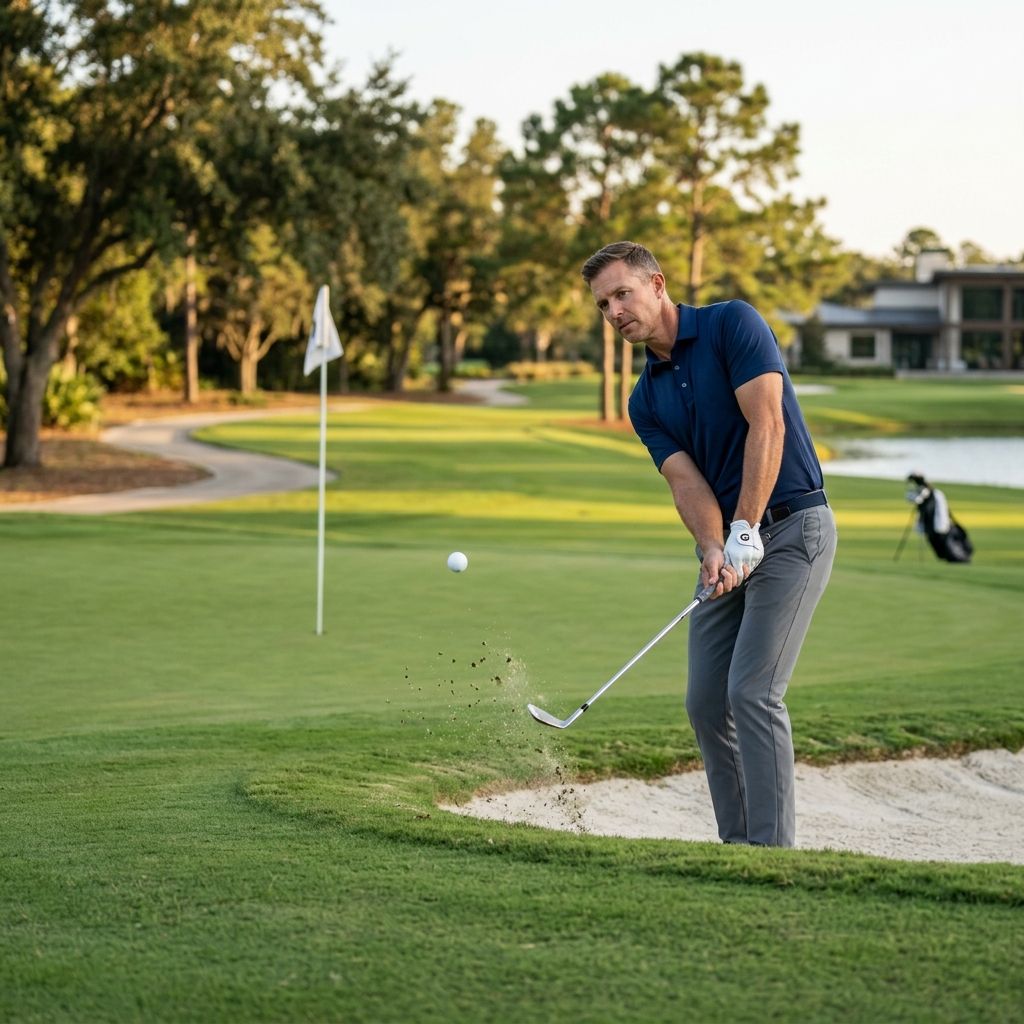
A small golf chipping net is a target, not a complete ball-containment system. Choose one only after checking the practice area, intended shots and the manufacturer’s setup instructions. It can provide a visible landing objective, but catching a ball in a basket does not teach you how that ball would roll across a real green. This guide separates the target purchase from the space and containment decisions needed for useful practice.
Link disclosure: This guide links directly to manufacturer and retailer information. No commission is assumed from these links.
Guide checked: 8 September 2026. This article uses the linked manufacturer and retailer information. We have not carried out hands-on product testing. Confirm the exact specification and current offer before buying.
| Equipment or task | Purpose | Important limit |
|---|---|---|
| Chipping target | A visible landing or collection objective | Misses can travel beyond the target |
| Containment net or cage | A separately specified barrier system | Must suit the intended shots and installation |
| Green practice | Observe landing and subsequent roll | A basket cannot reproduce the whole result |
| Practice plan | A clear distance and shot intention | More balls alone do not establish improvement |
Table of Contents
A verified target example: FORB chipping-net basket
The checked FORB target has a 60cm diameter, a pop-up fibreglass support, four pegs and a carry bag. Its instructions state that the pegs are not for hard surfaces. Confirm the exact supplied product and follow its setup method rather than improvising an indoor fixing arrangement.
This is a compact chipping target. We do not describe it as a barrier that safely contains full swings or every missed chip, and we have not tested its durability or catching performance.
Read the product details for FORB Golf Chipping Net Basket at Net World Sports
Assess the area before choosing the target
Consider where an ordinary miss, an unexpected strike or a ball passing over the basket could go. The small target does not define the full area needed for the activity. Use only a suitable, permitted practice space with an arrangement appropriate to the shots and equipment.
Keep other people outside the practice area and follow the venue’s rules. A garden, park or shared space is not automatically suitable merely because the basket fits on the ground. If the intended practice needs a separate containment system, specify that system properly before relying on the target.
A different category: FORB home driving cage
The separately registered FORB home cage is a larger frame-and-net system with its own installation and inspection instructions. It is an example of a different equipment category, not an accessory automatically required for every chip or proof that any small space becomes suitable for golf.
Check the complete installation, surrounding clearance and the shots the system is intended to handle. Do not borrow a cage’s claims to describe the small chipping basket, or assume adding a target removes the need to follow the cage’s own instructions.
Give the target a clear practice purpose
Choose a manageable shot intention and a suitable starting point within the approved setup. Use the basket as a visible landing objective and observe a small group of attempts. Keep the club and starting arrangement consistent while learning what the task is telling you.
Record a simple result, such as whether the ball reached the intended target area, rather than inventing a precise performance score from an informal session. If you change the distance, club and trajectory together, note that it is a new task rather than a direct continuation of the same comparison.
Separate basket success from green performance
A caught ball ends its movement in the target, while a chip on a green normally includes landing and roll. A successful basket attempt therefore does not establish the final distance control you would have shown on a particular green. The target covers only part of the short-game question.
When you have access to a suitable practice green, work on the relationship between landing area and subsequent roll under those conditions. Keep those observations separate from basket results. We do not promise that a given number of net sessions will produce a particular scoring improvement.
Choose the ball and surface from the instructions
Use equipment that the target and practice-area setup are intended to accommodate. A different practice ball changes the conditions of the task; do not assume its flight or stopping behaviour reproduces a standard golf ball. Nor should a softer-looking ball be treated as automatic permission to use an unsuitable area.
Protect the practice surface and obtain permission where needed. Follow the target’s pegging and stability instructions; the checked FORB pegs are specifically unsuitable for hard surfaces. If the target cannot be secured as intended, use an appropriate alternative location rather than forcing the setup.
Pack away with the next session in mind
Inspect the target as directed, remove it using the intended method and store it in the supplied arrangement when appropriate. Check for damage before the next use. A convenient pop-up format is useful only if it remains intact and can be set up correctly.
Our home-practice equipment guide covers another practice category. Buy a chipping target for a defined landing task in a suitable space, and keep containment, ball choice and real-green rollout as separate decisions.