
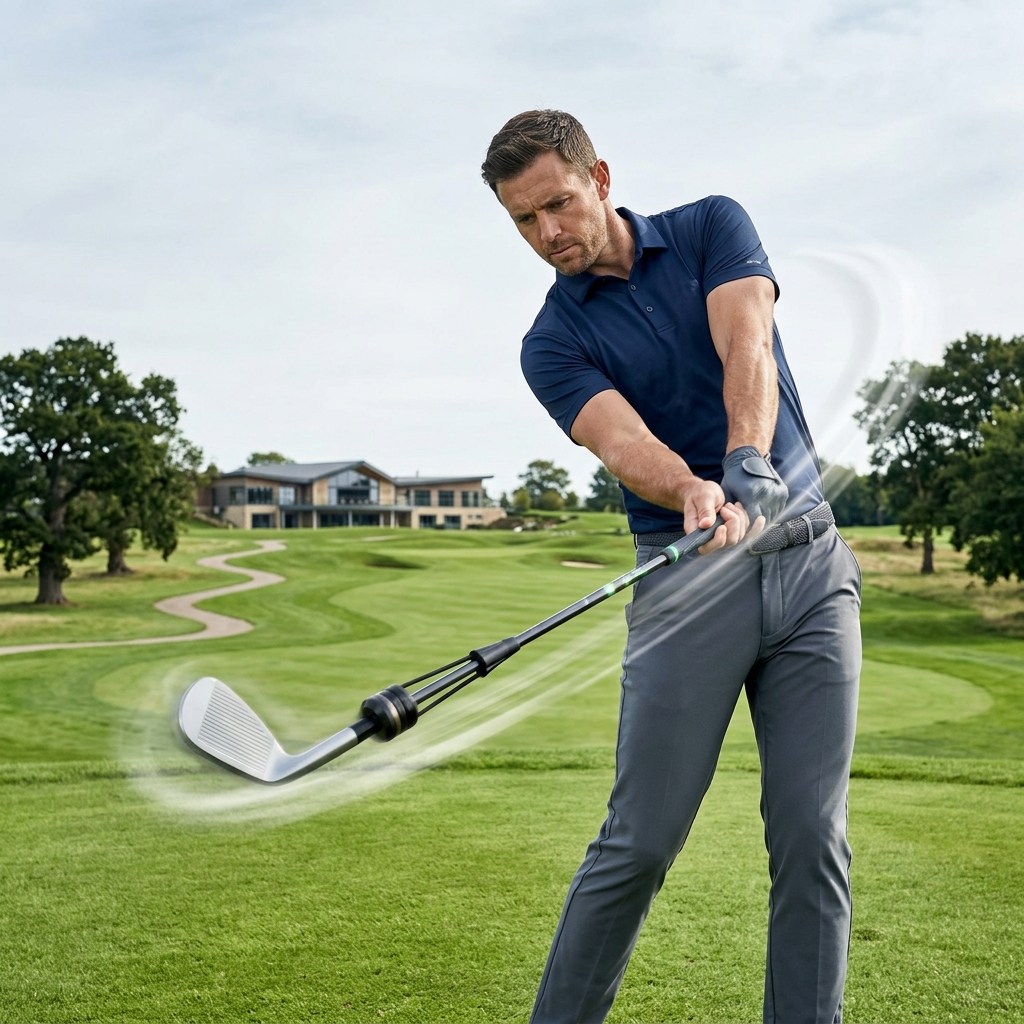
A golf swing speed aid is useful only if you can use it consistently and tell what has changed. Weighted training clubs, a speed radar and a lesson solve different parts of that problem. Start by deciding whether you need a structured practice programme, a way to record speed, or help turning a faster practice swing into a usable shot on the course.
Link disclosure: The manufacturer and retailer links in this guide are direct information links. We have not added affiliate tracking to them.
Guide checked: 8 September 2026. This guide uses the linked manufacturer and retailer information. We have not carried out hands-on product testing. Specifications describe the identified models; confirm the selected variant before ordering.
| Equipment | Main purpose | Check before buying |
|---|---|---|
| Weighted training clubs | Provide the implements for a specific programme | Correct weight set and adequate swing clearance |
| Speed radar or monitor | Record a defined speed measurement | Whether it reads club speed without a ball |
| Your own driver | Check the change in actual golf shots | Strike pattern, carry and dispersion together |
Table of Contents
Choose the programme before the equipment
The SuperSpeed Original Speed Training System uses three weighted training clubs. Its UK product page describes different weight combinations for different sets, so the colour sequence matters when comparing listings. Buy the set the programme recommends for you, rather than assuming that the heaviest option represents a useful upgrade. An incomplete second-hand set may make the prescribed sequence difficult to follow.
Read what is included in the training access. A free programme, a temporary premium trial and an ongoing paid app subscription are different purchases. Save the instructions that accompany the exact system and check any recurring cost before enrolling. A well-described programme is more useful than an unexplained collection of weighted shafts, particularly if you have never practised speed deliberately before.
Measure the space with the training club
A driver-length trainer needs clearance throughout the whole movement, including the finish and the space behind you. A room that accommodates a putting mat tells you very little about whether it accommodates a full swing. Make a slow clearance check with the actual implement before any faster movement, and include ceiling fittings, walls, furniture and nearby people in that check.
Think about where the equipment will be used in winter. A garden that works on a dry afternoon may be unsuitable when the surface is slippery or the only available light leaves the club difficult to see. Storage also matters: keep the clubs where they cannot become a trip hazard, with the grip and head protected from damage between sessions.
Keep club speed separate from ball speed
Check a radar's supported measurements before buying it. Clubhead speed, ball speed and calculated distance are different numbers; an increase in one cannot simply be copied into another column. In particular, a device intended to measure a ball in flight may not record a no-ball training swing. Obtain written confirmation for the combination of trainer and measuring device you intend to use.
Record the same measurement under a repeatable setup. Note the device position, the implement used and whether a ball was struck. Comparing your fastest training-club reading with a previous driver reading mixes two tests. Keep the training result in one record and a small sample of ordinary driver shots in another, so improvements in either are visible without confusing their meaning.
Check whether speed transfers to useful shots
A faster driver swing is only one part of a better tee shot. After a block of training, compare contact, normal carry and the spread of shots with your own driver. Include ordinary strikes rather than reporting only the longest one. If the faster swings repeatedly find the edge of the face, the next useful step may be a coached session on delivery.
Avoid changing driver, shaft, ball and training routine at the same time if you want to understand the result. Keep a familiar equipment baseline, then test one change deliberately. Our golf club fitting guide explains the questions to take into a fitting when equipment suitability becomes the next decision. Training progress alone does not establish a particular shaft flex.
Make the buying decision practical
Before ordering, write down the exact set, the included programme, the measurement method and the place where you will practise. Check replacement-grip and component support if you expect regular use. A cheaper set that lacks clear instructions or an appropriate weight progression is difficult to evaluate; a more expensive bundle is unnecessary if you already own a compatible measuring device.
Use the manufacturer's progression and seek individual coaching where the exercises or equipment are unfamiliar. Stop if a movement hurts rather than treating discomfort as proof of productive work. Our recommendation is to choose a manageable, documented setup and measure it honestly. We have not tested these systems, and a product's advertised speed gain is not a prediction of your personal result.