
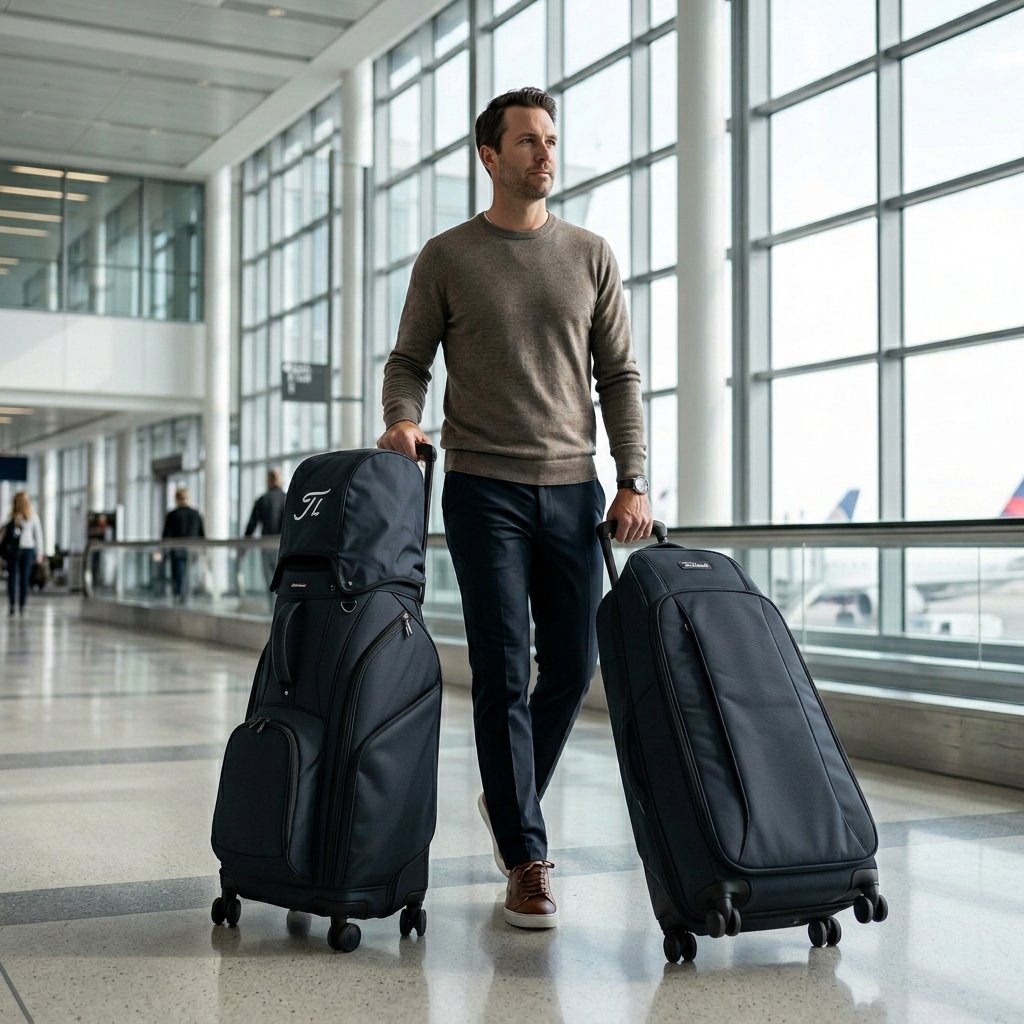
Choose a golf travel bag by the protection it provides to your particular equipment and how easily you can handle the packed load. Check internal fit, padding, restraints and wheels, then compare the finished dimensions and weight with your carrier’s current rules. A padded cover is useful protection, but it does not guarantee damage-free transport or replace checking the terms for sports equipment.
Link disclosure: This guide links directly to manufacturer and retailer information. No commission is assumed from these links.
Guide checked: 8 September 2026. This article uses the linked manufacturer and retailer information. We have not carried out hands-on product testing. Confirm the exact specification and current offer before buying.
| Area | Check before buying | Check after packing |
|---|---|---|
| Fit | Internal dimensions and opening size | Bag enters without forcing vulnerable parts |
| Protection | Padding, restraints and rigid areas | Clubs cannot move freely inside |
| Handling | Wheels, lifting handles and support design | You can manage the load through normal transfers |
| Carrier conditions | Current sports-equipment policy | Actual packed weight, size and booking details |
Table of Contents
Measure the equipment that is going inside
Measure your golf bag with the clubs and covers in the position you intend to use for travel. Check length, width and any bulging pockets. Compare these with the travel cover’s internal dimensions, not just its overall outside size. Leave room to close it properly without forcing a zip around the longest club.
If you are planning to remove an adjustable head, use the club manufacturer’s instructions and keep the correct components together. Do not assume every head is designed to detach. An unfamiliar travel accessory should not become a reason to dismantle a club without knowing how it is meant to be handled.
ClubGlider Meridian: investigate its supported rolling design
Sun Mountain describes the ClubGlider Meridian with a support-leg mechanism, pivoting wheels and padding around the upper section. Its published internal dimensions are 52 by 14 by 14 inches. These details make it a useful example when you want to compare how much of the load remains supported while rolling.
The linked page is the manufacturer’s US information page. A UK seller, exact version and delivered price need separate confirmation. Try the mechanism with a realistic load before deciding whether it makes your transfers easier. Also check how the legs retract for loading and how you would lift the packed cover where wheels cannot be used.
Read the product details for Sun Mountain ClubGlider Meridian at Sun Mountain
Padding and restraint work together
Padding is most useful when the equipment stays where it is intended to sit. Read how the cover’s internal straps or supports should be used and check for spaces that allow substantial movement. Keep loose accessories organised so they do not become hard objects moving around beside clubheads. Do not overfill pockets until the bag loses its intended shape.
Ask the seller to demonstrate the recommended packing method for the exact cover. If an additional protective support is suggested, confirm its compatibility and how it is positioned. No cover can justify a promise that clubs will survive every handling event, so treat protection features as risk-reduction choices rather than guarantees.
Test the difficult parts of the journey
Rolling across a smooth shop floor is only one part of travel. Consider lifting into a car, turning through a doorway, using a check-in scale and storing the empty cover at the destination. Make sure handles are reachable without lifting from a wheel assembly or a part not intended to bear the load.
A large rigid shape may offer one kind of convenience while taking more room in transport and accommodation. A folding cover may store more easily but depend more on careful packing. Choose around the journey you make, including the person who will handle it, rather than treating one construction as automatically best for everyone.
Check the airline’s current policy for your booking
Read the sports-equipment section for the actual airline and fare before departure. Confirm whether advance booking is required, which weight and size limits apply and whether the charge is separate from your usual luggage allowance. Do the same for connecting flights where a different carrier may operate part of the journey.
We have not quoted an airline fee or allowance because it must be checked against your current booking. Weigh the fully packed cover with the items that will actually travel inside it. Keep a copy of the relevant booking confirmation and equipment description, and do not rely on last year’s trip or a retailer’s general statement about airline suitability.
Pack so inspection and unpacking are straightforward
Photograph the equipment and packed arrangement before travel. Keep small removable parts, labels and any required tools organised where they are easy to identify. Put your contact details on the luggage as appropriate and retain the baggage receipt. Inspect the clubs promptly when you arrive so any problem can be recorded while the journey details are clear.
A travel cover should fit the golf bag you actually use. If you are also replacing that bag, our golf bag overview helps you choose the playing format first. Then build a travel system around its dimensions and the current carrier requirements.