
As an Amazon Associate I earn from qualifying purchases.
JPX ONE and JPX ONE SELECT both use 460cc heads, but their shapes, flight positioning and available loft-handedness combinations differ. Begin with the option that addresses your normal miss, then compare it in the same shaft and playing length where the fitting permits.
Research-based guide, checked September 13, 2026. We used the linked official information. We have not tested these products; suggested comparisons are editorial guidance.
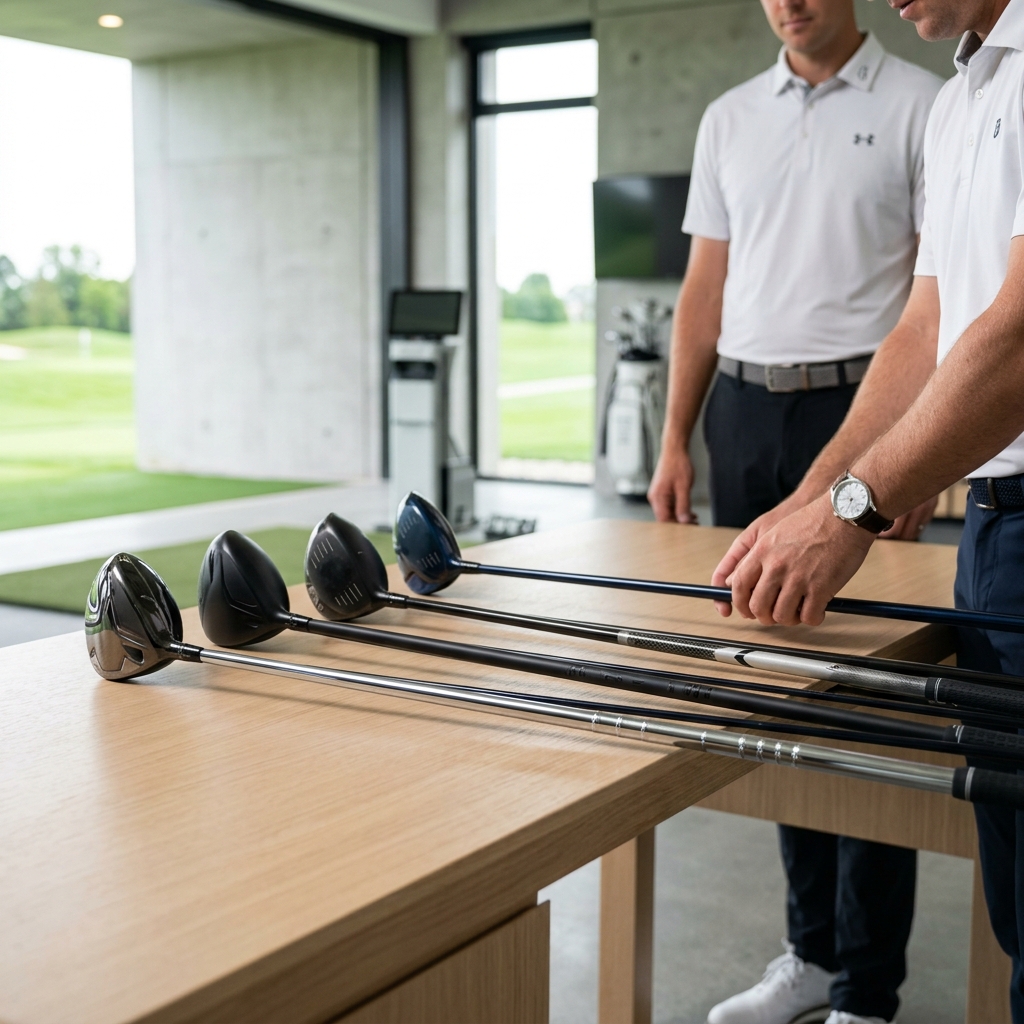
Table of Contents
Start with the actual US options
Mizuno positions the standard JPX ONE around stability and easier launch, while SELECT has a more compact-looking profile and a straight-to-slight-fade emphasis. These are manufacturer design descriptions, not measured results from our own test.
| Model | Nominal head lofts | Published handedness | Standard length |
|---|---|---|---|
| JPX ONE | 9, 10.5, 12 degrees | 10.5 RH/LH; 9 and 12 RH only | 45.75 inches |
| JPX ONE SELECT | 9, 10.5 degrees | 9 RH/LH; 10.5 RH only | 45.75 inches |
The official Mizuno US chart lists both at 460cc. SELECT’s compact appearance should therefore not be described as a smaller-volume head. The chart also lists different lie ranges, another reason to record the final fitting settings rather than comparing loft labels alone.
Which problem are you trying to solve?
Write down your usual tee-shot problem before hitting either model. Is it a low strike, an occasional large curve, too little useful carry, or a pattern that changes with fatigue? Those observations help a fitter choose a starting configuration and prevent the lowest spin reading from becoming the sole target.
A player looking for a straighter-looking result should not assume SELECT will remove a left miss. The intended bias is only one part of the system. Compare where shots start, how they curve and where the ordinary misses finish. Keep the severe misses visible in the result sheet.
If the standard head launches more comfortably, establish whether its dispersion remains acceptable. If SELECT produces a flatter flight you prefer, verify that the lower shots still carry the hazards you regularly face. Neither profile is automatically appropriate because a player has a particular handicap.
Control length before judging the head
Both standard listings use 45.75 inches, but your test clubs may have different shafts or custom lengths. Ask the fitter to measure them. A head comparison becomes difficult to interpret if one club is easier to strike because it is shorter.
Our driver length guide explains the tradeoff to discuss. Start with a comfortable build and look at strike consistency. If a shorter configuration works better, include that exact length and the builder’s proposed balance adjustment on the quote.
Also record the complete shaft name, weight class and flex. A shaft’s color alone does not identify it. The shaft weight guide provides background for trying different complete builds without assuming that lighter always means faster or heavier always means straighter.
Left-handed buyers need an exact head check
The US chart makes this especially important: the left-handed nominal loft differs between the two models. Adjustable loft ranges do not make every configuration equivalent. Ask the fitter to show you the address appearance and actual settings on the left-handed head you would receive.
Do not reserve a right-handed demonstration result as proof of how a left-handed order will set up. The supplying shop should confirm the requested head, shaft and adapter setting together, especially if your local demonstration selection is limited.
Compare the complete purchase
Request a quote that includes any fitting fee, shaft upgrade, grip change and applicable tax. Check the return conditions for a customized club and whether the shop will help verify the delivered measurements. A nominal head price is not the full cost if the successful fitting used a different build.
These affiliate links open Amazon US search results for the named equipment or accessories.
Check the exact model, generation and seller. Results can include alternatives; a search link does not confirm availability. Use the official supplier links for specialist products and services.
Choose the model whose complete configuration gives you the more useful pattern. Keep a photograph of the adapter setting and a copy of the specifications so you can restore the setup after travel or maintenance without guessing.
Sources and method
Specifications and product distinctions come from Mizuno US JPX ONE and SELECT specifications. Order availability and personal fitting results need confirmation for your chosen configuration.