
Table of Contents
As an Amazon Associate, we earn from qualifying purchases. This means we may receive a small commission at no extra cost to you when you buy through links on this page.
What is Golf Ball Compression?
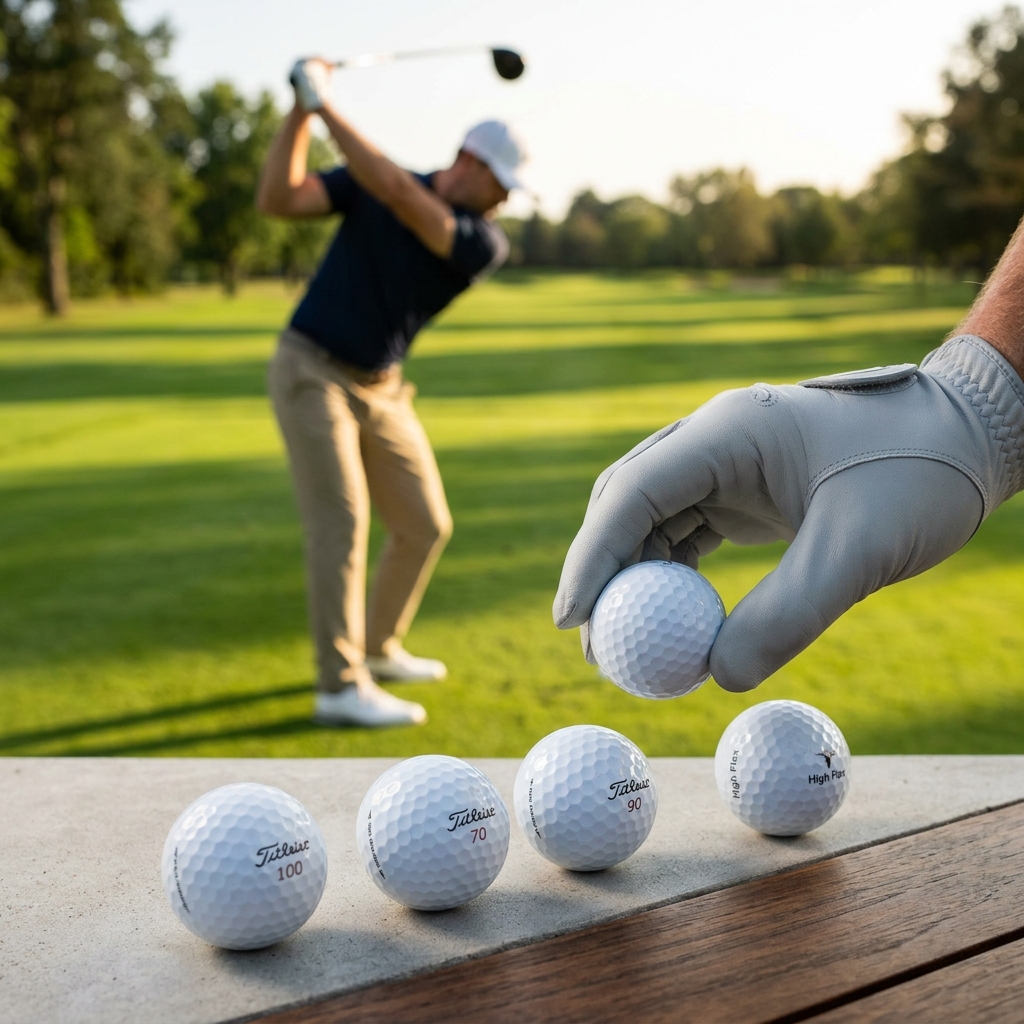
Golf ball compression, at its simplest, refers to how much the ball deforms when struck by a golf club. Think of it like this: a lower compression ball feels softer, ‘squishing’ more on impact, while a higher compression ball feels firmer and resists deformation more. It’s all about the firmness of the ball’s core. This isn’t just about feel; it directly impacts how the ball performs during flight, affecting distance, spin, and overall trajectory. Don’t worry about complicated physics just yet – we’ll get to that!
How Compression Affects Performance
The amount a golf ball compresses on impact is crucial to transferring energy from the clubhead to the ball. Here’s how it breaks down:
- Distance: A ball that compresses well (matching your swing speed) maximizes energy transfer, leading to greater distance. Too little compression and you lose energy; too much and energy is wasted in deformation.
- Spin: Compression influences spin rates, particularly with irons. Higher compression balls generally generate more spin for greater control, while lower compression balls may offer less spin.
- Feel: This is the most immediately noticeable difference. Lower compression balls feel softer, while higher compression balls feel firmer.
- Launch Angle: Compression can subtly affect launch angle. A properly compressed ball will launch optimally for your swing.
The physics behind it relates to the ‘coefficient of restitution’ (COR) – essentially a measure of how much energy is retained after a collision. A well-compressed ball has a higher COR, meaning more energy is transferred, and thus, more distance. Your swing speed determines how well a ball will compress. A slower swing will struggle to compress a high-compression ball adequately, while a fast swing might overwhelm a low-compression ball.
Compression Ratings: A Guide for UK Golfers
Golf ball compression is generally categorised into three main ratings:
- Low Compression (below 80): Designed for slower swing speeds, offering a softer feel and increased distance for golfers who don’t generate a lot of clubhead speed.
- Medium Compression (80-100): The most versatile option, suitable for a wide range of swing speeds. Provides a balance between distance, spin, and feel.
- High Compression (above 100): Intended for faster swing speeds, delivering maximum distance and control for experienced players who can fully compress the ball.
Here’s a quick reference guide based on typical UK golfer swing speeds (driver):
| Swing Speed (Driver) | Recommended Compression |
|---|---|
| Below 85 mph | Low Compression |
| 85 – 95 mph | Medium Compression |
| 95 – 105 mph | Medium/High Compression |
| 105+ mph | High Compression |
Finding the Right Compression for Your Swing Speed
Determining your swing speed is the first step. You can:
- Self-Assessment: Use a launch monitor app on your smartphone (though accuracy varies). Several free options are available.
- Professional Fitting: The most accurate method. A qualified club fitter will use a launch monitor to measure your swing speed with both the driver and irons and recommend the best ball for your game. Many golf retailers across the UK offer this service – expect to pay around £75 – £150 for a full ball fitting.
Remember to consider your iron swing speed too, as compression impacts iron play significantly.
Low Compression Golf Balls: Benefits & Best Options (2026)
Benefits: Softer feel, increased distance for slower swings, more forgiving on off-center hits.
Wilson Staff Model R
Price: £38 per dozen
Pros: Excellent value for money, very soft feel, good distance for slower swing speeds.
Cons: May lack the control of higher compression balls for skilled players.
Vice Pro Plus
Price: £35 per dozen
Pros: Durable cover, excellent value, surprisingly good performance for a low compression ball.
Cons: Not ideal for very fast swing speeds.
Medium Compression Golf Balls: The All-Round Choice (2026)
Benefits: Versatile performance, good balance of distance, spin, and feel, suitable for a wide range of handicaps.
Bridgestone Tour B RX
Price: £45 per dozen
Pros: Great all-around performance, excellent control around the greens, responsive feel.
Cons: Can be slightly more expensive than some alternatives.
Srixon Z-Star XV
Price: £48 per dozen
Pros: Exceptional spin and control, durable cover, consistent performance.
Cons: May require a faster swing speed to fully utilize.
High Compression Golf Balls: For Faster Swing Speeds (2026)
Benefits: Maximum distance and control for faster swings, increased spin for precise shot-making.
Titleist Pro V1
Price: £55 per dozen
Pros: Industry standard, excellent all-around performance, consistent quality.
Cons: Most expensive option, may not be suitable for slower swing speeds.
Callaway Chrome Soft X
Price: £50 per dozen
Pros: Soft feel despite high compression, excellent distance and control, popular choice among tour professionals.
Cons: Can be expensive.
TaylorMade TP5x
Price: £52 per dozen
Pros: High launch, low spin off the driver, excellent greenside control, durable.
Cons: Firm feel may not suit all players.
Beyond Compression: Other Factors to Consider
Compression isn’t the only thing that matters! Dimple patterns, cover materials (urethane, Surlyn), and core technology all play a role. Urethane covers generally offer more spin and a softer feel, while Surlyn covers are more durable and affordable. Dimple patterns affect aerodynamics and flight characteristics. A proper ball fitting will consider all these factors to find the best ball for your individual swing and playing style.
Golf Ball Compression FAQs
Q: Does a higher compression ball always mean more distance?
Not necessarily. A higher compression ball *can* provide more distance, but only if you have the swing speed to compress it properly. If your swing speed is too slow, you’ll actually lose distance.
Q: What if I’m unsure of my swing speed?
The best option is to get a professional ball fitting. It’s a worthwhile investment to ensure you’re playing with the right equipment.
Q: Can I use different compression balls for different clubs?
While not common, some players experiment with lower compression balls for their irons to increase spin and control, and higher compression balls for their driver to maximize distance. It’s something to explore once you understand your swing and ball flight.
Q: Are expensive golf balls always better?
Price doesn’t always equate to performance. While premium balls often offer advanced technology and consistent quality, there are many affordable options that can perform well for the average golfer. It’s about finding the right ball for *your* game, not necessarily the most expensive one.
Q: How often should I replace my golf balls?
It depends on how often you play and the condition of the ball. Scuffs and cuts can affect performance. Generally, a golf ball should be replaced after a few rounds, or whenever it shows significant wear and tear.