
Last updated:
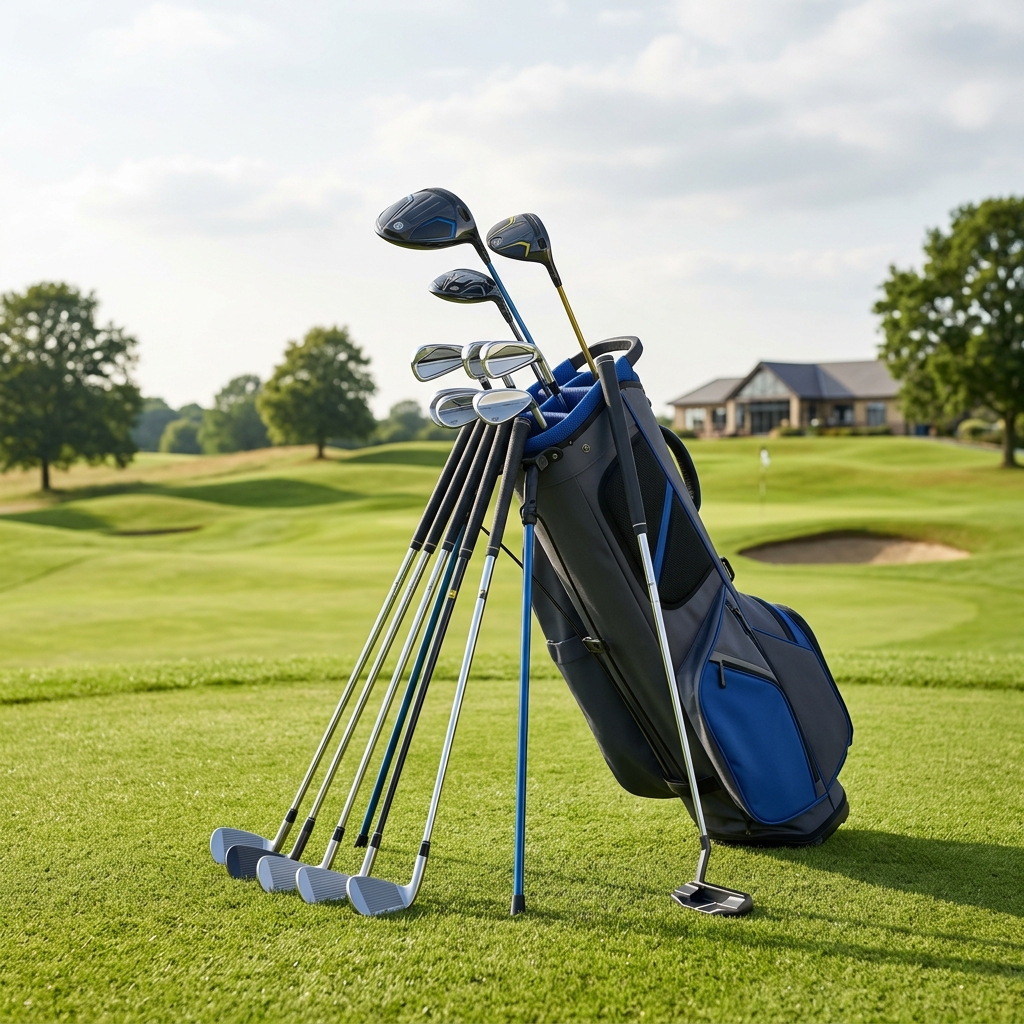
A half set is a deliberate smaller selection of clubs, not necessarily an exact seven-club product. It can make a first setup simpler or a carrying bag lighter, provided the remaining clubs cover the course you play. Choose by useful shots: a dependable long option, several approach distances, a short-game club and a putter are more important than preserving every other number from a full set.
Link disclosure: The manufacturer and retailer links in this guide are direct information links. We have not added affiliate tracking to them.
Guide checked: 8 September 2026. This guide uses the linked manufacturer and retailer information. We have not carried out hands-on product testing. Specifications describe the identified models; confirm the selected variant before ordering.
| Role | Possible starting choice | Question to test |
|---|---|---|
| Long shot | A manageable wood or hybrid | Can it serve the tee shots you need? |
| Longer approach | One useful mid-long club | Does it separate from the next club? |
| Middle and short approach | A spaced selection of irons | Can you manage the in-between distances? |
| Short game | A suitable wedge | Can it handle the common lies and sand? |
| Putting | Your normal putter | Does the reduced bag preserve familiarity? |
Table of Contents
Choose fewer clubs for a clear purpose
A beginner may want fewer decisions while learning basic contact, whereas an experienced golfer may want an easier bag for a short walking round. Those purposes can produce different selections. State the reason first. If the course has a repeated forced carry or a particular bunker demand, include a club that can address it rather than following an arbitrary half-set recipe.
The R&A equipment rule sets a maximum club allowance; it does not require every golfer to carry the maximum. A smaller set can therefore be planned intentionally within the applicable rules. Check any event-specific requirements if uncertain, but do not fill empty slots solely because space remains. The useful test is whether each carried club earns its weight through a recognisable job.
Build from your existing dependable shots
Start with the putter and a long club you already use confidently. Add a small number of irons whose ordinary distances are clearly separated, then preserve a suitable short-game option. The table is a planning framework, not a compulsory list. Someone who relies on a hybrid may choose differently from someone who prefers an iron from the tee.
Try the selection on a practice round before buying anything. Note the situations where you repeatedly lack a usable shot and those where you hardly miss the removed club. A larger distance gap may be manageable with a shorter swing, but that should be learned and tested rather than assumed. Keep a record of the most common missing role so the next addition is purposeful.
Read a ready-made half package carefully
The Fazer CTRX graphite half-package reference illustrates a ready-made route with a fairway, hybrid, three irons and a putter. Check which irons the selected listing supplies and whether the wedge choice suits the course you use. A half-package name alone does not guarantee a particular club count or that a sand wedge is included.
Compare the bag and accessories separately from playable clubs. If you already own a comfortable bag and putter, assembling a smaller set from existing equipment may be more economical than replacing them through a package. If starting from nothing, a coherent package can be convenient. Judge the complete shopping list rather than the headline cost of clubs alone.
Make the lighter bag genuinely lighter
Reducing club count has limited value if every pocket stays full of spare balls, heavy accessories and equipment from previous rounds. Pack for the actual course and conditions. Check the loaded bag on your shoulders and make sure fewer clubs do not fall awkwardly across an unsuitable divider layout. A compact carrying bag may help, but it should be tried rather than bought simply to match the idea.
Keep rain protection and necessary basics practical. The purpose is a manageable load, not omitting equipment you reasonably need for the weather. Use a simple inventory so the pared-down bag does not gradually fill again. If the round involves a trolley, the benefit may be simpler decisions rather than reduced carrying weight; that is still a valid reason when chosen deliberately.
Expand only where play reveals a need
After a few rounds, identify one recurring gap that costs you options. That may be a second wedge, an intermediate approach club or a different long club. Add it because it solves the observed problem, then reassess the set. Do not assume that progressing in golf means replacing the half set with a full bag on a fixed date.
Our beginner club guide covers broader first-purchase choices. A successful half set offers enough usable shots with fewer items to carry and maintain. Keep the selection personal, verify any packaged contents and allow course experience to shape additions. The value comes from purposeful coverage, not from reaching a precise number of clubs or accepting an unsupported promise of lower scores.