
Last updated:
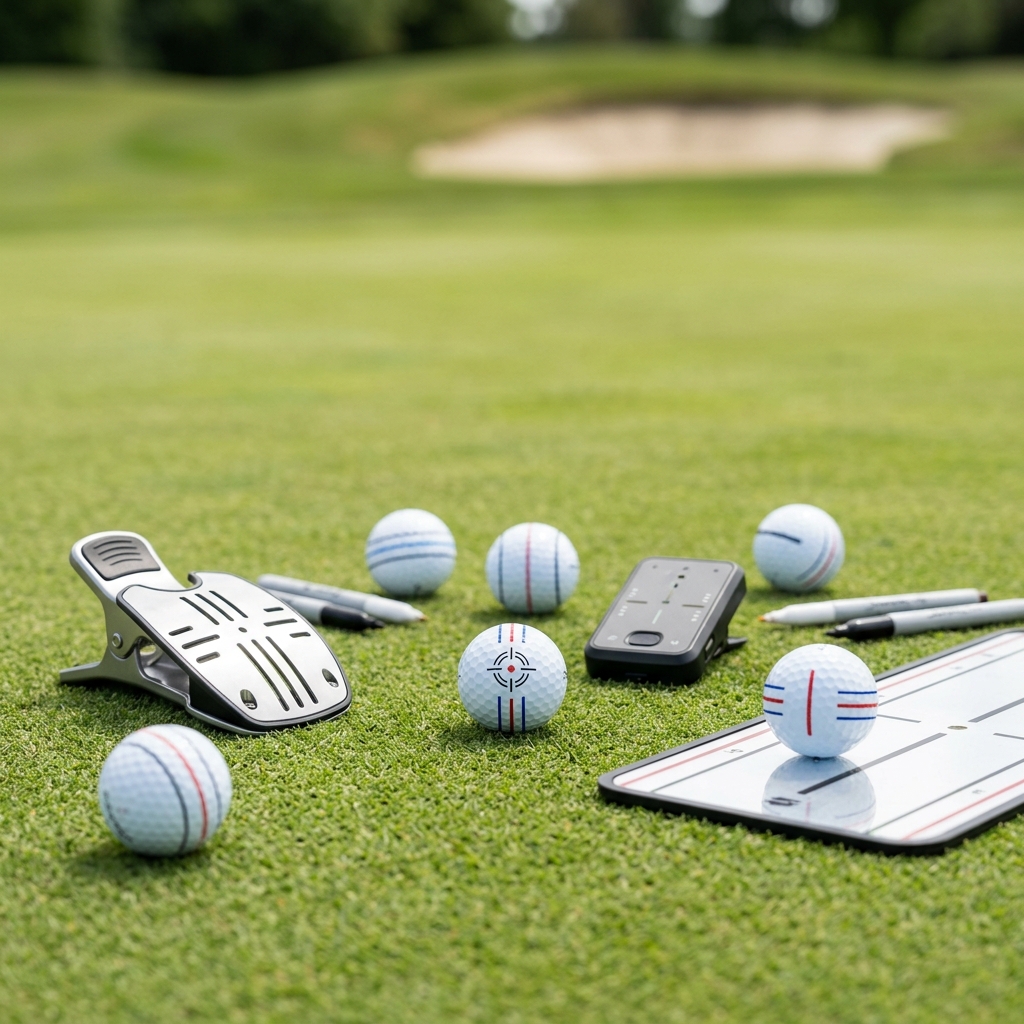
A golf-ball alignment line can support a putting routine by giving you a visible reference for the start direction you have chosen. It does not read the green, choose pace or make the stroke for you. Use it only when the ball may be positioned or replaced under the Rules. Practise a short repeatable sequence so the marking helps you commit rather than encouraging endless small adjustments over the ball.
Link disclosure: This guide links directly to manufacturer and retailer information. No commission is assumed from these links.
Guide checked: 8 September 2026. This article uses the linked manufacturer and retailer information. We have not carried out hands-on product testing. Confirm the exact specification and current offer before buying.
| Part | Decision | Role of the ball line |
|---|---|---|
| Read | Choose intended pace and start direction | No automatic answer |
| Set | Orient the permitted ball position | Provides a visible reference |
| Address | Settle comfortably to the chosen direction | Check without endless revision |
| Stroke | Roll at the intended pace | Reference supports, but does not create, the stroke |
Table of Contents
Choose a start direction before using the marking
Look at the putt and decide how you intend the ball to begin travelling at the pace you have selected. The visible line on the ball should refer to that decision. Pointing it at the hole automatically is not the same as choosing an appropriate start direction for a breaking putt.
Practise this distinction on a familiar green. Choose a putt, make a clear decision and then use the line as a reference. If the result differs from expectation, review pace, read and starting direction separately. Do not assume that every miss means the printed line was set incorrectly.
Follow marking and replacing procedures
Under Rule 13, a ball on the putting green may be lifted and cleaned, with the relevant marking and replacing procedures followed. Rule 14 explains those procedures, including marking the spot before lifting when the ball must be replaced there. Rotating a ball is included in deliberate lifting for this purpose.
Replace the ball on its required spot and remove the ball-marker before making the stroke. Do not rotate a ball elsewhere on the course merely because you want the line facing a target; you need permission under the applicable Rule. If a competition situation is unclear, ask the referee or committee before proceeding.
A factory-marked example: Titleist TruFeel AIM 360
Titleist lists a TruFeel AIM 360 variant with a factory alignment marking. It is an example of buying a ball with a built-in visual reference. Choose it only if you also want the underlying ball and enjoy the appearance at address.
Try the marking during practice before committing to a large quantity. A broader reference may suit one golfer while another prefers a smaller line or the ball’s existing side stamp. The useful criterion is whether it supports a comfortable, repeatable routine.
Read the product details for Titleist TruFeel AIM 360 at Titleist UK
Another visual format: Callaway ERC Soft Triple Track
The checked ERC Soft listing includes Triple Track marking. It is a different visual arrangement on a different ball model. A comparison with TruFeel changes both ball and marking, so keep your observations about appearance separate from feel and roll.
This guide does not rank pens, templates or marking tools. Its focus is how you use an existing visible reference once the putting decision and permitted ball position are clear.
Read the product details for Callaway ERC Soft Triple Track at Callaway UK
Practise pace without making the line the entire task
Use an appropriate practice area and alternate a few putts with and without relying on the line. Keep the same chosen pace objective. Notice whether the marking helps you settle or whether it makes you repeatedly doubt the direction once you stand over the ball.
If you find yourself making several tiny resets, simplify the sequence. Choose the direction, set the reference, take address and commit. A coach can help if the visual view at address consistently feels different from the view behind the ball. Do not force yourself to use a prominent line merely because other golfers prefer one.
Review the routine, not just whether a putt dropped
After a practice attempt, ask whether the ball began as intended and whether the pace matched your decision. A holed putt can still conceal an uncertain routine, while a miss may provide useful information about the read. Keep the feedback specific and avoid drawing a sweeping conclusion from one result.
Our alignment-aid guide considers equipment choices separately. Keep a line when it makes your preparation clearer and remains quick to use within the Rules. The marking is a reference within your routine; the decisions about read, pace and commitment remain yours.