
For decades, Ping has been synonymous with innovation and quality in golf equipment. Their commitment to fitting and a scientifically-driven approach to design has made them a favourite amongst professionals and amateurs alike. A well-fitted putter is arguably the most important club in your bag, and Ping consistently delivers options that can shave strokes off your score. This in-depth review will explore the Ping putter range in 2026, helping you find the perfect model to suit your game.
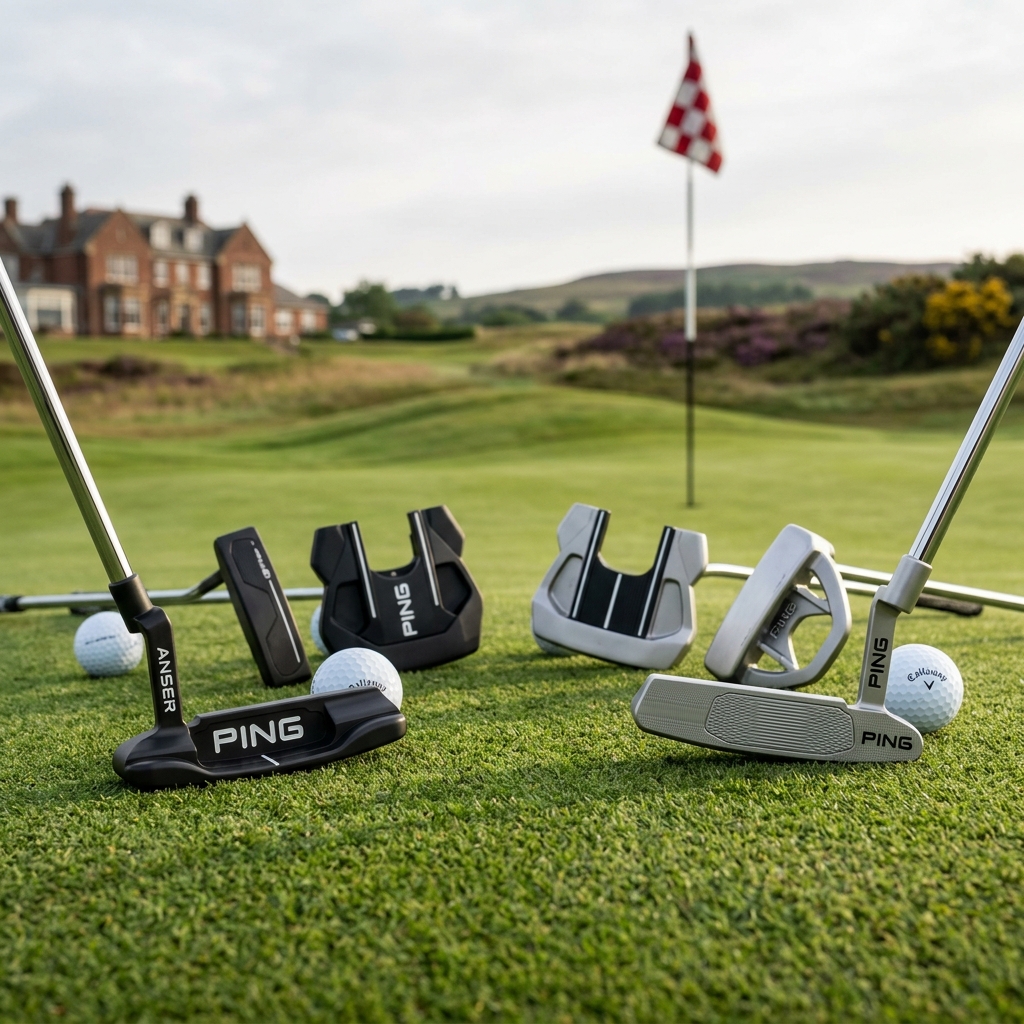
Table of Contents
Ping Putter Technology Explained (2026)
Ping continues to push the boundaries of putter technology. Here’s a breakdown of the key innovations found in their 2026 range:
Adjustable Sole Weighting (ASW)
Many Ping putters now feature ASW, allowing you to fine-tune the putter’s balance and alignment. By adding or removing weights in the heel and toe, you can influence the stroke path and feel. This is hugely beneficial for players looking to optimise their putting performance.
True Roll Face Technology
True Roll grooves are a core feature of many Ping putters, particularly the Scottsdale TR series. These variable-depth grooves are designed to normalise ball speed across the face, resulting in improved distance control regardless of where you strike the ball. For 2026, the grooves have been further refined for even more consistent roll.
Multi-Material Construction
Ping utilises a combination of materials, including aluminum, steel, and tungsten, to optimise weight distribution and achieve desired MOI (Moment of Inertia) levels. Higher MOI generally equates to greater stability and forgiveness on off-centre hits.
PEBAX Polymer
New for 2026, Ping has incorporated PEBAX polymer into several models, particularly in the face. This material allows for a softer feel and improved energy transfer, enhancing feedback during putting.
Ping Putter Models Reviewed (2026)
Let’s take a closer look at some of the most popular Ping putter models available in 2026.
Ping PLD Anser Review (2026)
The PLD Anser is a timeless blade design loved by golfers for its classic look and feel. It’s a refined, tour-inspired putter with a focus on precision and control.
Design: A classic, no-nonsense blade shape with a plumber neck hosel. The 2026 model features a slightly updated milling pattern on the face for enhanced feel.
Performance: Suits golfers with a consistent, repeatable stroke. Requires precise alignment and a good touch. Offers excellent feedback.
Suitability: Low to mid-handicap players who prefer a traditional blade putter.
Pros:
- Classic design
- Excellent feel and feedback
- Precise alignment
Cons:
- Less forgiving than mallet-style putters
- Requires a consistent stroke
Price: £229
Ping Tyne 4 Review (2026)
The Tyne 4 is a popular mallet-style putter known for its stability and easy alignment.
Design: A modern, clean mallet design with a distinct alignment line. Features ASW for customisable weighting.
Performance: Offers excellent stability and forgiveness, making it a good choice for players who struggle with consistency. The alignment features help promote a square face at impact.
Suitability: Mid to high-handicap players, or those who prefer a mallet design for its stability.
Pros:
- Excellent stability
- Easy to align
- Adjustable sole weighting
Cons:
- May not appeal to players who prefer a blade putter
- Can feel slightly less responsive than a blade.
Price: £199
Ping Scottsdale TR Ketsch Review (2026)
The Scottsdale TR Ketsch combines the benefits of True Roll technology with a forgiving mallet design.
Design: Mallet shape designed with True Roll grooves. Features a contrasting alignment aid.
Performance: True Roll grooves improve distance control across the face. The mallet design provides stability, while the weighting promotes a smooth stroke.
Suitability: Golfers of all skill levels who want improved distance control and forgiveness.
Pros:
- True Roll technology for consistent distance control
- Forgiving mallet design
- Attractive aesthetics
Cons:
- Can be slightly more expensive than other models
Price: £249
Ping Ketsch Review (2026)
The Ping Ketsch is designed for forgiveness and ease of use. It’s a great option for golfers who want a putter that will help them consistently get the ball rolling towards the hole.
Design: A high-MOI mallet shape with a focus on stability.
Performance: Provides excellent forgiveness on off-centre hits. The weighting helps to promote a smooth, consistent stroke.
Suitability: High-handicap players or those who struggle with consistency.
Pros:
- Highly forgiving
- Easy to align
- Promotes a smooth stroke
Cons:
- May feel less responsive than other putters
Price: £189
Ping Sigma 2 Valor Review (2026)
The Sigma 2 Valor is a premium mallet putter with adjustable weighting for ultimate customisation.
Design: A sophisticated mallet shape with adjustable weights in the heel and toe.
Performance: Adjustable weighting allows you to fine-tune the putter’s balance and alignment. Offers excellent feel and feedback thanks to the PEBAX polymer face insert.
Suitability: Experienced golfers who want a highly customisable putter.
Pros:
- Adjustable weighting
- Excellent feel and feedback
- High-quality construction
Cons:
- Most expensive model in the range
Price: £279
Ping Putter Fitting: Finding the Right Model for You
Getting fitted for a putter is crucial to maximising your performance on the green. Ping offers both in-store and online fitting options. Key factors to consider include lie angle, length, grip size, and weighting. A GolfBox Ping Putter Fitting Voucher costs £50 and can be a worthwhile investment.
Ping Putters: Pricing and Where to Buy in the UK (2026)
You can find Ping putters at leading golf retailers in the UK, including:
- American Golf
- Direct Golf
- GolfBox
- Scotty Cameron (select stockists)
Price ranges typically fall between £189 and £279, depending on the model and features. Financing options are often available through retailers.
Alternatives to Ping Putters (2026)
While Ping offers excellent putters, other brands also provide strong contenders:
| Brand | Strengths | Weaknesses |
|---|---|---|
| Odyssey | Wide range of models, innovative technologies (Stroke Lab) | Can sometimes lack the refined feel of Ping or Scotty Cameron. |
| Scotty Cameron | Premium feel, iconic designs, excellent resale value | Higher price point, limited forgiveness in blade models. |
| TaylorMade | Advanced technology, focus on performance and customisation | Can sometimes feel less consistent than Ping. |
Conclusion: Is a Ping Putter Right for You?
Ping putters consistently deliver on quality, innovation, and performance. Whether you’re a seasoned pro or a beginner, there’s a Ping putter to suit your game. If you value forgiveness, adjustability, and a scientifically-driven approach to design, a Ping putter is definitely worth considering. Investing in a proper fitting will ensure you get the most out of your purchase and start rolling the ball with more confidence. Don’t forget a new Ping Cadet Carry Bag (£79) to complete your setup, and perhaps even some new Ping i230 Irons (£899 per set) for a full upgrade!
FAQ
Q: How often should I get a putter fitting?
Ideally, you should get fitted for a putter whenever your stroke changes significantly or if you’re consistently struggling with your putting.
Q: What is MOI and why is it important?
MOI (Moment of Inertia) measures a putter’s resistance to twisting on off-centre hits. Higher MOI means greater stability and forgiveness.
Q: Are blade putters more difficult to use than mallet putters?
Yes, generally blade putters require a more precise and repeatable stroke than mallet putters. Mallet putters offer more forgiveness.
Q: What is True Roll technology?
True Roll technology uses variable-depth grooves on the putter face to normalise ball speed across the face, resulting in improved distance control.
Q: Can I adjust the lie angle of a Ping putter?
Some Ping putters have adjustable lie angles, while others have fixed lie angles. It’s best to discuss this with a Ping fitter.