
Last updated:
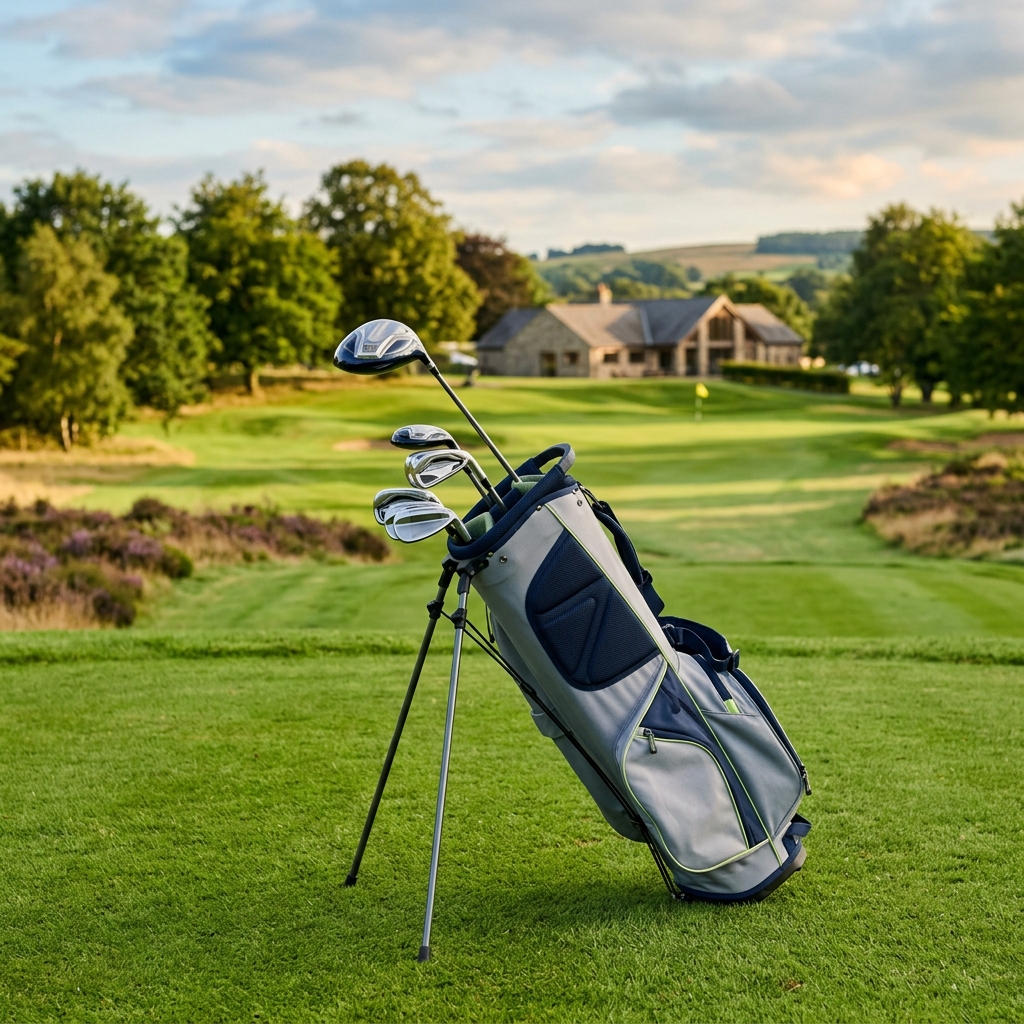
A junior golf bag should fit the child who will use it now and the clubs they currently carry. Measure player height using the chosen brand’s instructions, then distinguish that height band from the bag’s own height. U.S. Kids Golf, for example, lists a 26-inch UL7 bag for its 51–54-inch player-height range. A larger bag bought for later can make today’s clubs and straps awkward to reach.
Link disclosure: The manufacturer and support links below are direct information links. No affiliate commission is assumed from them.
Guide checked: 8 September 2026. This article uses the linked manufacturer information. We have not carried out hands-on testing. Confirm the exact version and current buying terms before ordering.
| U.S. Kids example | Bag dimension or format | Practical check |
|---|---|---|
| UL7 39–42-inch player range | 20-inch carry bag | Can the child reach and carry the selected clubs? |
| UL7 51–54-inch player range | 26-inch dual-strap stand bag | Strap adjustment and top access |
| UL7 60–63-inch player range | 30.5-inch stand bag | Longest and shortest clubs sit usefully |
Table of Contents
Begin with the bag and clubs the child already uses
Ask the child to show you the most difficult part of their current routine. Perhaps the putter sinks below the top, the straps slide, or they need an adult to retrieve a ball from a low pocket. Those observations help distinguish a poorly sized bag from too much equipment or an awkward packing arrangement.
Take the actual clubs to a fitting comparison. A bag should support them while leaving their handles and heads accessible in the intended way. Do not use the bag’s height as a substitute for deciding club length; that is a separate fitting question. Equally, do not assume an adult bag will work merely because a junior driver reaches above its top.
Read the brand’s two measurements correctly
The UL7-51 stand bag page specifies a 51–54-inch player range and a 26-inch bag. It describes a dual strap, four-way top and six zipped pockets. The manufacturer asks for player height measured with shoes on. Those details are specific to that size and system, not a conversion rule for every junior bag maker.
Measure afresh when shopping and record both the player range and the bag dimension beside the product name. The same brand’s collection lists different bag heights for larger and smaller player bands. If the child sits near a boundary, ask the coach or supplier to compare the neighbouring options with the existing clubs rather than automatically moving up a size.
Test how the child puts the bag on and takes it off
Adjust the straps for the child, then let them demonstrate lifting the bag, getting both shoulders settled and setting it down. Give enough time for a few repetitions. An adult holding the bag in position can hide a reach problem the child will meet on the course.
Load only the clubs and essentials used for the planned session. Check whether a drink bottle or hard accessory presses against the child’s back, and whether the bag remains balanced when a club is removed. There is no universal load percentage established by the product pages here, so we do not invent one. Comfortable handling and advice from the child’s coach are more useful than an arbitrary numerical limit.
Choose a stand because it helps the routine
The U.S. Kids range separates its smallest carry option from several stand-bag sizes. Stand legs can make club retrieval easier for a child who repeatedly puts the bag down, but the opening and lifting routine still needs to work at their height. Ask for a demonstration on suitable ground before deciding.
Check that pockets are reachable without tipping the bag or stretching around sharp-looking attachments. A bag with more storage is not automatically more suitable if it encourages unnecessary items to accumulate. Give balls, a drink and a spare layer simple places that the child can remember. A short packing routine helps them take responsibility for their own equipment without making the bag harder to carry.
Confirm what comes with a set or a replacement bag
U.S. Kids distinguishes club-only configurations, standard bags and Classic Stand options within the Ultralight range. Read the actual basket contents when buying a set: the picture of a bag does not establish that every club-only offer includes it. For a separate replacement, check the shoulder straps, hood if specified and any personalisation option before ordering.
Review fit as the child grows, especially if clubs have been changed. A bag can remain useful longer than one club size when everything is still accessible, but growth alone is not a reason to keep equipment that has become awkward. Choose the smallest workable arrangement for the present playing routine, leaving space for a useful additional club rather than buying empty capacity without a purpose.
Check the named products
View UL7-51 stand bag information
View U.S. Kids bag sizes information
For an adult buying equipment alongside a junior, our beginner set guide explains why supplied pieces and actual clubs should be counted separately.