
Table of Contents
Introduction: Why Golf Grip Repair Matters
Your golf grip is the only point of contact between you and your club. Maintaining its condition isn’t just about comfort; it directly impacts your performance, control, and consistency. Worn grips can lead to slippage, weakened grip pressure, and ultimately, inaccurate shots. Even subtle changes in grip condition can affect your swing plane and clubface control. Remember, modifying your clubs, including grips, must adhere to the Rules of Golf – ensuring they don’t unduly influence your play. This guide will take you through everything you need to know about repairing and maintaining your golf grips in the UK.
Identifying When Your Grip Needs Repair or Replacement
Knowing when to repair or replace your grips is crucial. Here’s a breakdown of the key signs:
- Cracking: Visible cracks, especially around the edges, are a clear indication of degradation.
- Hardening: Over time, rubber grips become hard and lose their tackiness.
- Wear Patterns: Uneven wear, particularly in areas where your hands frequently grip, suggests loss of material and reduced effectiveness.
- Slickness: A slippery grip, even after cleaning, means the material is breaking down.
- Size Changes: Grips can shrink or swell with use and temperature changes, altering their size and feel.
[Image: A collage showing a golf grip with cracking, hardening, and wear patterns]
Tools You’ll Need for Golf Grip Repair (UK Specific)
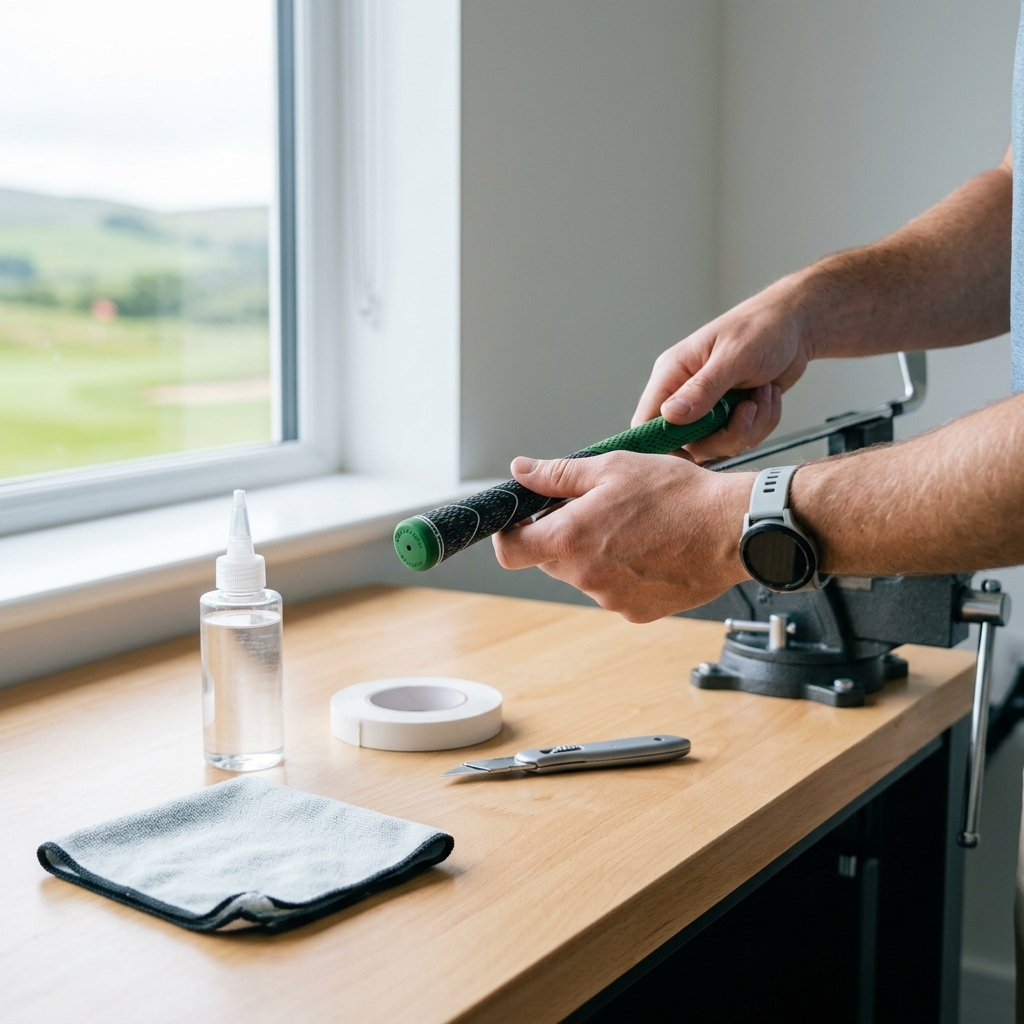
To tackle grip repair yourself, you’ll need a few essential tools. Luckily, these are readily available from UK retailers like American Golf, Golf Poser, and Direct Golf:
- Grip Remover Fluid: Used to dissolve the adhesive holding the old grip in place. (e.g., Golfsmith Grip Remover Fluid (473ml) – £18.99).
- Grip Tape: Adds a layer of tackiness and thickness if the grip isn’t too worn. (e.g., Tourna Grip Tape (10 Rolls) – £12.50)
- Vice: A sturdy vice is essential for securely holding the club head during grip removal and installation.
- Solvent: For cleaning away residue after grip removal – isopropyl alcohol works well.
- New Grips: Choose grips that suit your playing style and hand size. (e.g., Golf Pride MC4 Midsize Grip (Set of 13) – £69.99, Lamkin Crossline Standard Grip (Single) – £9.75)
- Grip End Caps: To seal the end of the grip and prevent water ingress.
- Installation Tools: A grip applicator can make installation easier, but isn’t essential.
For a complete starter kit, consider: Vice Golf Grip Kit (Includes Remover, Tape, Grips) – £45.0
Step-by-Step: Removing Your Old Golf Grip
- Secure the Club: Firmly secure the club head in a vice, protecting the finish with soft jaws or cloth.
- Apply Grip Remover: Generously apply grip remover fluid along the entire length of the grip, under the lip. Allow it to soak for 5-10 minutes.
- Remove the Grip: Starting from the butt end of the grip, gently twist and pull the grip upwards. A grip removal tool can aid this process.
- Clean the Shaft: Use solvent and a clean cloth to remove any remaining adhesive residue from the shaft.
[Image: A diagram illustrating the process of removing a golf grip, showing where to apply remover and the direction of pull]
Preparing the Golf Shaft for a New Grip
Proper shaft preparation is key for a secure and long-lasting grip installation.
- Cleaning: Ensure the shaft is completely clean and free of any dirt, oil, or adhesive residue.
- Checking for Damage: Inspect the shaft for any nicks or dents. Address these before installing the new grip.
- Grip Tape (Optional): If you’re adding grip tape for a build-up, apply it evenly and smoothly around the shaft, overlapping slightly.
Step-by-Step: Installing a New Golf Grip
- Prepare the Grip: Lightly moisten the interior of the grip with water or grip solvent.
- Align the Grip: Position the grip on the shaft with the correct orientation (logo facing as desired).
- Slide the Grip On: Starting from the butt end of the shaft, carefully slide the grip onto the shaft. Use a grip applicator if available.
- Secure the Grip: Work the grip down the shaft, ensuring it’s evenly seated.
- Install End Cap: Secure the end cap onto the butt end of the grip.
[Image: A diagram illustrating the process of installing a golf grip, showing alignment and sliding technique]
Different Types of Golf Grips Available in the UK (2026)
Choosing the right grip material and texture is vital for comfort and performance.
Grip Material Comparison
| Material | Pros | Cons | Suitable For |
|---|---|---|---|
| Rubber | Durable, comfortable, good all-weather performance, affordable. | Can become slick when wet or worn. | Beginners, players seeking comfort and all-round performance. |
| Cord | Excellent tackiness, even when wet, durable, provides a firm feel. | Can be abrasive for some players, may require more frequent cleaning. | Players who prefer maximum control and a secure grip in all conditions. |
| Composite | Combines the benefits of rubber and cord, offering comfort, tackiness, and durability. | Generally more expensive than rubber grips. | Players seeking a balance of comfort, performance, and durability. |
Popular UK Brands (2026)
- Golf Pride
- Lamkin
- SuperStroke
- Winn
- Vice Golf
Golf Grip Repair vs. Replacement: Which is Right for You?
Sometimes, a simple repair can extend the life of your grips. However, there’s a limit to what you can achieve.
Repair (Adding Grip Tape)
- Cost: £10-£20
- Suitable for: Grips that are slightly worn but still have some tackiness.
- Limitations: Doesn’t address cracking or significant hardening.
Replacement
- Cost: £8 – £15 per grip (DIY), £15-£30 per club (Professional)
- Suitable for: Grips that are cracked, hardened, excessively worn, or significantly changed in size.
- Benefits: Restores optimal grip performance and feel.
UK Golf Grip Replacement Services: When to Call a Pro
If you’re uncomfortable performing the repair yourself, or if you want a professional finish, consider using a golf club repair service. Many UK golf shops and custom fitting studios offer grip replacement services.
Average Costs (2026):
- Standard Grip Replacement: £15-£20 per club
- Midsize/Jumbo Grip Replacement: £20-£30 per club
Benefits of Professional Installation:
- Proper alignment and installation
- Access to a wider range of grips
- Expert advice on grip selection
Maintaining Your New Golf Grips
To prolong the life of your new grips, follow these tips:
- Clean Regularly: Wipe down your grips after each round with a damp cloth and mild soap.
- Avoid Harsh Chemicals: Don’t use abrasive cleaners or solvents.
- Store Properly: Store your clubs in a dry, cool place, away from direct sunlight.
- Inspect Regularly: Check your grips for wear and tear every few rounds.
FAQ
How often should I replace my golf grips?
This depends on how often you play and the conditions you play in. As a general rule, replace your grips every 40-50 rounds, or at least once a year.
Can I replace a golf grip myself?
Yes, with the right tools and a bit of patience, you can definitely replace your golf grips yourself. This guide provides a detailed step-by-step process.
What grip size should I choose?
Grip size is a personal preference. Standard grips are the most common, but midsize and jumbo grips are available for players with larger hands or those who prefer a thicker grip.
What is the best way to clean my golf grips?
Use a damp cloth and mild soap to clean your grips after each round. Avoid harsh chemicals or abrasive cleaners.
Are cord grips more durable than rubber grips?
Generally, cord grips are more durable than rubber grips, as they are less prone to breakdown from UV exposure and moisture. However, they can be more abrasive and may require more frequent cleaning.