
Table of Contents
Why Regrip Your Golf Clubs?
Your golf club grips are the only point of contact between you and your clubs, making them arguably the most important component for consistent shots. Over time, grips wear down, impacting your performance and potentially leading to injury. Worn grips reduce your ability to maintain a secure hold, leading to club twisting during the swing, inconsistent ball strikes, and a loss of power. The damp UK climate accelerates this wear, with moisture and temperature fluctuations causing grips to harden, crack, and lose their tackiness. Regripping restores that crucial connection, improving your control, comfort, and ultimately, your game.
When Should You Regrip Your Golf Clubs?
Knowing *when* to regrip is key. Don’t wait until your grips are completely shot. Here’s what to look for:
- Cracking: Visible cracks, especially around the edges, indicate the grip is deteriorating.
- Hardening: If the grip feels hard and less pliable, it’s losing its ability to absorb shock and provide a comfortable feel.
- Fading: Discolouration is a sign of UV damage and material breakdown.
- Excessive Wear: Look for thinning or flat spots where your hands repeatedly grip the club.
- Slippage: If your hands feel like they’re slipping during the swing, even with a normal grip pressure, it’s time for a change.
Frequency Recommendations:
- Casual Golfer (Less than 20 rounds/year): Every 2-3 years.
- Regular Golfer (20-50 rounds/year): Every year.
- Serious Golfer (50+ rounds/year): Every 6-9 months.
UK Climate Considerations: Due to the higher levels of moisture and temperature variation in the UK, grips may wear faster than in drier climates. Inspect your grips more frequently, particularly after winter storage.
Tools You’ll Need to Regrip Your Clubs
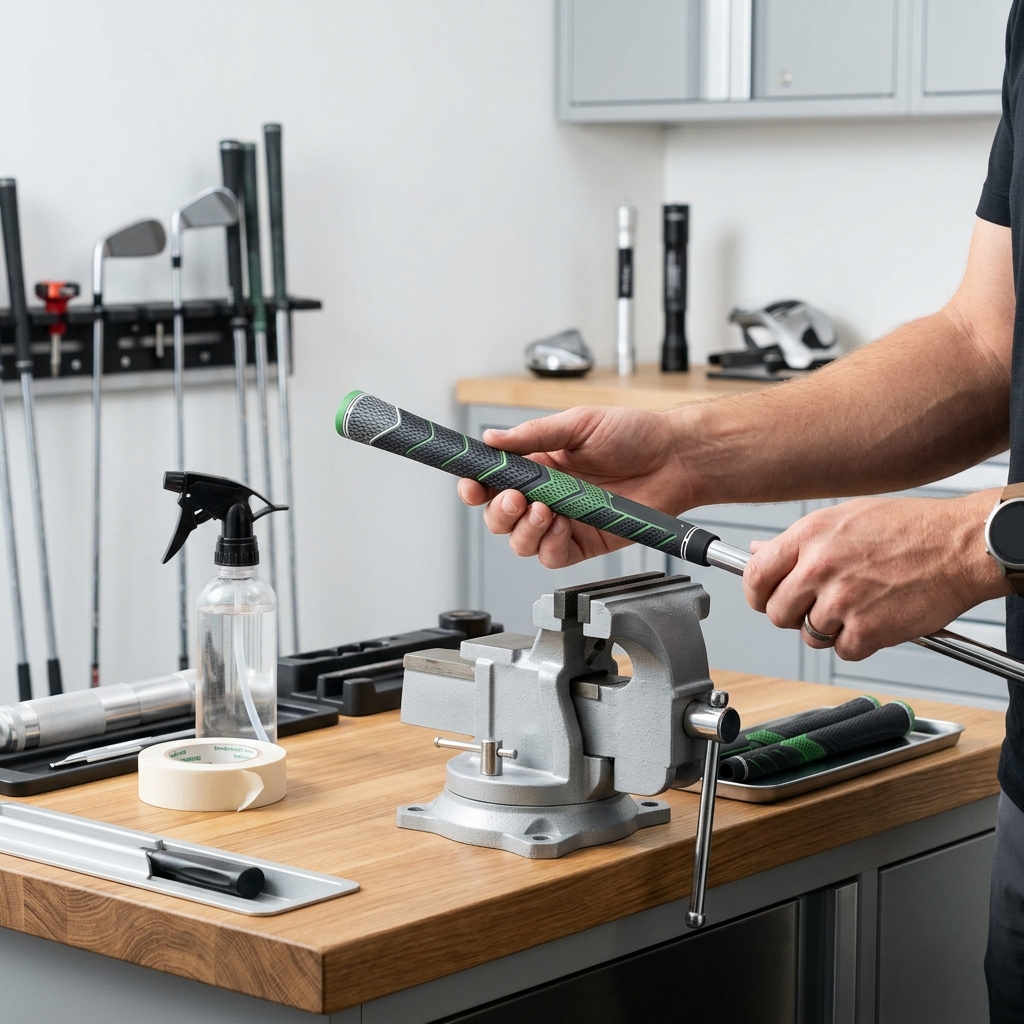
Regripping at home is achievable with the right tools. Here’s a comprehensive list:
- Grip Remover Fluid: Helps loosen the adhesive. (e.g., Pro-Fit Golf Grip Solvent – £8.99)
- Grip Stripping Tool: Designed to quickly remove old grips without damaging the shaft. (e.g., GripMaster Grip Remover Tool – £14.99)
- Vice: Essential for securely holding the club shaft. (£25 – £80 depending on quality)
- Grip Tape: Used to build up the shaft diameter if needed, especially for woods. (e.g., Golfworks Grip Tape (1 Roll) – £6.99)
- Solvent: For cleaning the shaft after grip removal. (e.g., Pro-Fit Golf Grip Solvent – see above)
- Installation Tool: A specialised tool for smoothly sliding on new grips. (Included in Callaway Golf Grip Installation Kit – £29.99)
- Utility Knife: For trimming excess grip material. (£5 – £15)
- Compressed Air (Optional): To blow out debris from the shaft. (£15 – £30)
Where to find these tools: American Golf, Direct Golf, eBay UK, Amazon UK.
Choosing the Right Golf Club Grips for You
Grips aren’t one-size-fits-all. Consider these factors:
Grip Materials
- Rubber: The most common and affordable option, providing good tackiness and durability.
- Cord: Offers excellent tackiness, even in wet conditions, and a more textured feel. Popular with golfers who sweat a lot.
- Wrap: Provides a soft, cushioned feel and is often used by beginners or golfers with sensitive hands.
Grip Size & Thickness
Correct size is crucial. Too small, and you’ll grip too tightly. Too large, and you’ll lose control.
- Standard: The most common size, suitable for most golfers.
- Midsize: Offers a slightly larger diameter, ideal for golfers with larger hands or those who prefer a more comfortable grip.
- Jumbo: Provides the largest diameter, offering maximum comfort and control for golfers with very large hands or arthritis.
Determining Grip Size: Measure the length of your hand from the heel of your palm to the tip of your middle finger. Consult a grip size chart (available online) to find the recommended size. American Golf often provides grip fitting services.
Popular Choices in the UK (2026)
- Golf Pride MultiCompound Grip (Set of 13) – £89.99
- Lamkin Crossline Standard Grip – £9.99 per grip
- Tourna Grip (3 Pack) – £14.99
- SuperStroke Traxion Tour Golf Grip – £11.99 per grip
- MCC Plus4 Align Golf Grip (Set of 13) – £99.99
Step-by-Step Guide: How to Regrip Golf Clubs at Home
- Remove the Old Grip: Apply grip remover fluid liberally. Use a grip stripping tool to carefully lift the grip from the shaft, working your way around.
- Clean the Shaft: Remove any remaining adhesive with solvent and a cloth. Ensure the shaft is completely clean and dry.
- Prepare the Shaft: If building up the shaft with tape (for woods), apply grip tape evenly, overlapping each layer.
- Install the New Grip: Apply solvent liberally inside the new grip. Slide the grip onto the shaft, ensuring it’s aligned correctly. Use an installation tool to slide it on smoothly.
- Trim Excess Material: Use a utility knife to trim any excess grip material from the butt end of the club.
- Allow to Dry: Allow the solvent to fully evaporate before using the club (at least 24 hours).
Safety Precautions: Wear gloves and eye protection when using solvent. Work in a well-ventilated area.
Regripping Irons vs. Woods & Putters: What’s the Difference?
While the basic process is the same, there are nuances:
- Woods: Often require grip tape to build up the shaft diameter to match the larger grip size.
- Putters: Often have thicker, more textured grips (e.g., Pistol grips). Be careful not to damage the putter head during the process. Consider using a putter-specific grip installation tool.
Cost of Regripping: DIY vs. Professional
Let’s compare:
| Option | Cost per Club | Total Cost (Set of 14 Clubs) | Pros | Cons |
|---|---|---|---|---|
| DIY | £5 – £10 (grips + materials) | £70 – £140 | Cost-effective, control over grip choice, satisfying skill. | Requires tools and skill, time-consuming, potential for mistakes. |
| Professional | £10 – £20 | £140 – £280 | Convenient, professional results, no skill required. | More expensive, less control over grip choice. |
Where to Buy Golf Grips in the UK (2026)
- American Golf: https://www.americangolf.co.uk/ (Online & Physical Stores)
- Direct Golf: https://www.direct-golf.co.uk/ (Online & Physical Stores)
- eBay UK: https://www.ebay.co.uk/ (Online)
- Amazon UK: https://www.amazon.co.uk/ (Online)
- Local Pro Shops: Your local golf club pro shop will offer regripping services and a selection of grips.
Troubleshooting Common Regripping Problems
- Grips Sliding: Ensure the shaft is thoroughly cleaned and that enough solvent is used.
- Uneven Grip Installation: Use an installation tool and ensure the grip is aligned correctly before fully sliding it on.
- Solvent Damage: Avoid using harsh solvents that can damage the club shaft finish.
Maintaining Your New Grips
Keep your new grips clean and in good condition:
- Clean Regularly: Wipe down your grips after each round with a damp cloth and mild soap.
- Store Properly: Store your clubs in a dry place, away from direct sunlight and extreme temperatures.
- Avoid Harsh Chemicals: Do not use harsh chemicals or abrasive cleaners on your grips.
FAQ
Q: How often should I replace my golf club grips?
As a general rule, replace your grips annually if you’re a regular golfer (20+ rounds per year). Inspect them frequently for wear and tear.
Q: Can I regrip my own clubs if I’m not very handy?
Yes, but it requires patience and attention to detail. Watch some online tutorials and take your time. If you’re unsure, it’s best to have a professional do it.
Q: What’s the best grip material for wet weather?
Cord grips tend to perform best in wet conditions as they maintain tackiness even when damp.
Q: Does grip size really matter?
Absolutely. Incorrect grip size can lead to tension, loss of control, and inconsistent shots.
Q: Where can I get my grips professionally regripped?
American Golf, Direct Golf and most local golf pro shops offer professional regripping services.