
Table of Contents
Introduction: Why Cleaning Your Golf Clubs Matters
Keeping your golf clubs clean isn’t just about aesthetics; it directly impacts your performance and the lifespan of your equipment. Dirt, grass, and grime build up on club faces, reducing friction and therefore diminishing spin – crucial for controlling your shots, particularly with irons and wedges. A dirty grip compromises your hold, potentially leading to mishits. Regular cleaning also prevents corrosion, particularly important given the damp and muddy conditions frequently encountered on UK golf courses. The UK’s climate, with its persistent drizzle and often heavy mud, means clubs are exposed to a constant barrage of cleaning challenges. Ignoring this can lead to premature wear and tear, costing you money in the long run. A clean club is a happy club, and a happy club helps you shoot lower scores!
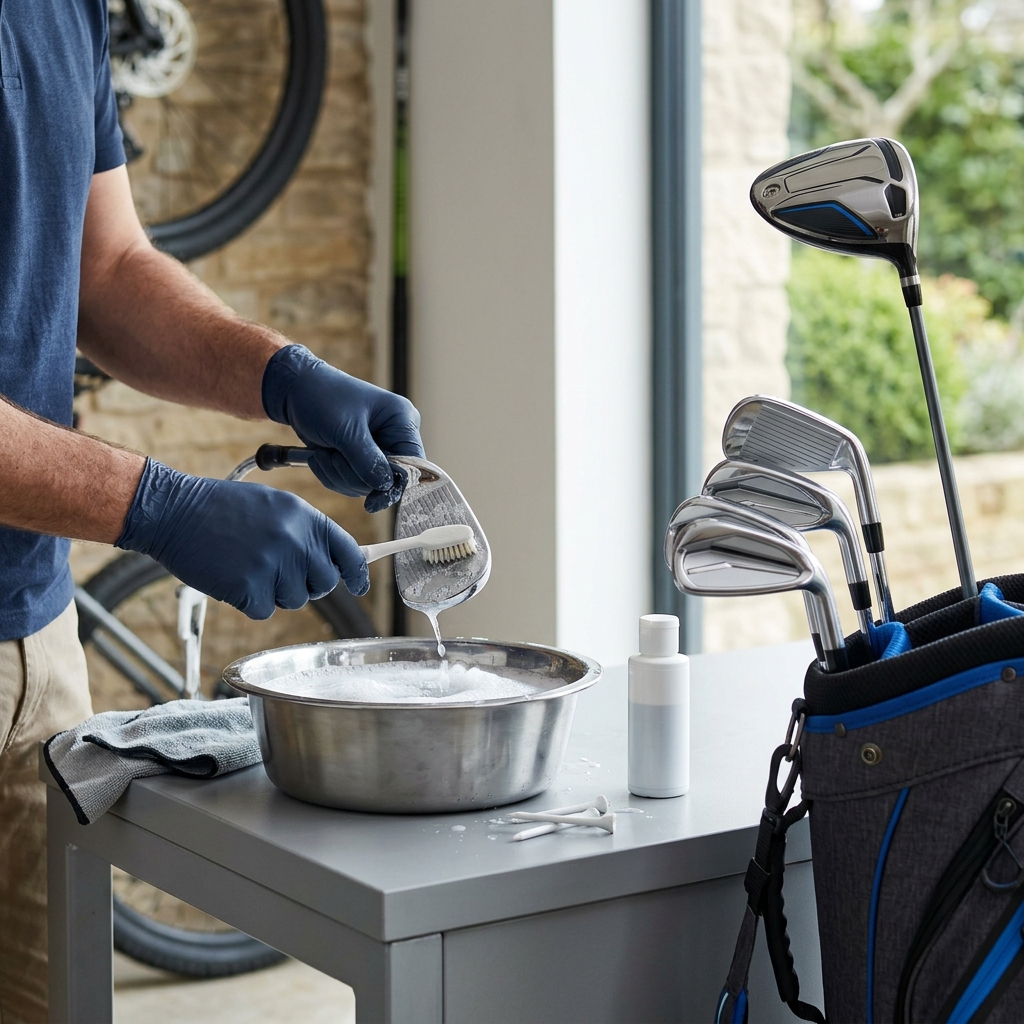
What You’ll Need: Essential Cleaning Supplies
You don’t need a garage full of expensive tools to keep your clubs in top condition. Here’s a list of the essentials, all readily available from UK retailers like American Golf, Sports Direct, and online stores:
- Soft Brushes: A variety of sizes – a larger one for club heads, and smaller ones for grooves and grips. (Available from £5)
- Mild Dish Soap: Fairy Liquid or similar. Avoid harsh detergents.
- Warm Water: A bucket is ideal.
- Soft Cloths: Microfiber cloths are excellent for drying and polishing. (Pack of 5 from £6)
- Golf Club Groove Cleaner: Essential for removing stubborn dirt from grooves.
- Bucket: For the soapy water.
- Optional: Golf club cleaning solutions (specifically formulated for clubs), polishing compounds (for steel clubs), and club head covers.
Step-by-Step Guide: Cleaning Your Golf Club Heads
Cleaning Irons
Irons are generally more robust and can withstand a bit more scrubbing. Follow these steps:
- Fill your bucket with warm water and a small amount of mild dish soap.
- Dip your brush into the soapy water and gently scrub the club head, paying attention to the face and grooves.
- For stubborn dirt, use a golf club groove cleaner to dislodge any debris.
- Rinse the club head thoroughly with clean water.
- Dry the club head immediately with a soft cloth.
Cleaning Woods & Drivers
Woods and drivers require a more delicate approach due to their more sensitive finishes.
- Mix warm water and a tiny amount of dish soap.
- Dampen a soft cloth with the soapy water and gently wipe the club head. Avoid excessive pressure.
- Use a separate clean, damp cloth to rinse.
- Dry immediately with a soft, clean cloth.
Cleaning Your Golf Grips: Maintaining a Secure Hold
Clean grips are paramount for a secure hold. Different grip materials require different approaches:
Rubber Grips
Use warm water and mild dish soap. Scrub gently with a soft brush. Rinse thoroughly and dry immediately. Grip cleaning solutions like Grip Master Golf Grip Cleaning Solution (500ml) – £9.99 are also effective.
Corded Grips
Corded grips are more susceptible to dirt buildup. A soft brush and soapy water are best. Avoid soaking the grips, as this can damage the cords. Rinse carefully and allow to air dry completely.
Important: Always ensure your grips are completely dry before using your clubs. Slippery grips can be dangerous.
Shaft Cleaning: Keeping it Looking Sharp
Cleaning your shafts is primarily about aesthetics, but it also prevents grime from becoming ingrained.
- Dampen a soft cloth with warm water and a tiny amount of dish soap.
- Gently wipe the shaft from top to bottom.
- Use a separate clean, damp cloth to rinse.
- Dry immediately with a soft, clean cloth.
Be particularly careful with graphite shafts, as they are more prone to scratching. Avoid abrasive cleaners.
Deep Cleaning: Removing Stubborn Dirt and Rust (UK Considerations)
The UK’s damp climate can lead to rust formation on steel clubs. Addressing this promptly is crucial.
- Rust Removal: Use a rust remover specifically designed for golf clubs. Follow the product instructions carefully. Light rust can sometimes be removed with a paste of baking soda and water, gently scrubbed with a soft brush.
- Groove Cleaning: The MacKenzie Golf Groove Cleaner Tool – £7.50 is invaluable for removing packed-in dirt and debris from grooves.
- Polishing: For steel clubs, a polishing compound like Scotchgard Golf Club Polish – £19.99 can restore shine and provide a protective layer.
Preventative Maintenance: Keeping Clubs Clean Longer
Prevention is better than cure! Here are some tips to keep your clubs cleaner for longer:
- Club Head Covers: Invest in a set of club head covers like Proactive Sports Golf Club Head Covers (Set of 14) – £39.99. These protect your clubs from dirt, scratches, and damage during transport and storage.
- Wipe After Each Round: Take a few minutes after each round to wipe down your clubs with a damp cloth.
- Proper Storage: Store your clubs in a dry place, away from direct sunlight and moisture.
- Regular Cleaning: Incorporate regular cleaning into your golf routine—even a quick wipe-down can make a big difference.
Choosing the Right Cleaning Products (UK Market)
Here’s a comparison of popular golf club cleaning products available in the UK:
| Product | Price (GBP) | Pros | Cons |
|---|---|---|---|
| Wilson Staff Golf Club Cleaning Brush Kit | 14.99 | Comprehensive kit, includes brushes and cleaning solution, good value. | Cleaning solution scent may not be to everyone’s taste. |
| Grip Master Golf Grip Cleaning Solution (500ml) | 9.99 | Specifically formulated for grips, effective at removing dirt and oils. | Only suitable for grips, not club heads. |
| MacKenzie Golf Groove Cleaner Tool | 7.50 | Affordable, effective at cleaning grooves, durable. | Requires manual effort. |
| Scotchgard Golf Club Polish | 19.99 | Provides a protective layer, enhances shine, suitable for steel clubs. | More expensive, not suitable for all club materials. |
FAQs: Common Questions About Cleaning Golf Clubs
Q: How often should I clean my golf clubs?
Ideally, after every round. Even a quick wipe-down will prevent dirt buildup. A more thorough cleaning should be done every month or as needed, depending on how often you play and the conditions you play in.
Q: Can I put my golf clubs in the dishwasher?
Absolutely not! The harsh detergents and high temperatures can damage the club heads, grips, and shafts.
Q: What do I do about stubborn stains on my club faces?
Try a paste of baking soda and water, gently scrubbed with a soft brush. For more persistent stains, use a golf club cleaning solution specifically designed for removing tough dirt.
Q: Will cleaning my clubs void the warranty?
Generally, no. However, avoid using harsh chemicals or abrasive cleaners, as these could potentially cause damage that voids the warranty. Always refer to the manufacturer’s warranty information.
Q: How can I prevent rust on my steel clubs?
Dry your clubs thoroughly after each use, especially if they’ve been exposed to moisture. Store them in a dry place and consider applying a protective coating like Scotchgard Golf Club Polish.