
Choosing the correct golf shaft is paramount to achieving your potential on the course. While the clubhead often gets the most attention, the shaft is the engine that delivers the clubhead to the ball, significantly influencing launch angle, spin rate, accuracy, and distance. This isn’t a one-size-fits-all decision; the ideal shaft is deeply personal and depends on your swing characteristics, physical capabilities, and desired ball flight. This guide will break down the differences between graphite and steel shafts, helping you understand which material best suits your game in 2026.
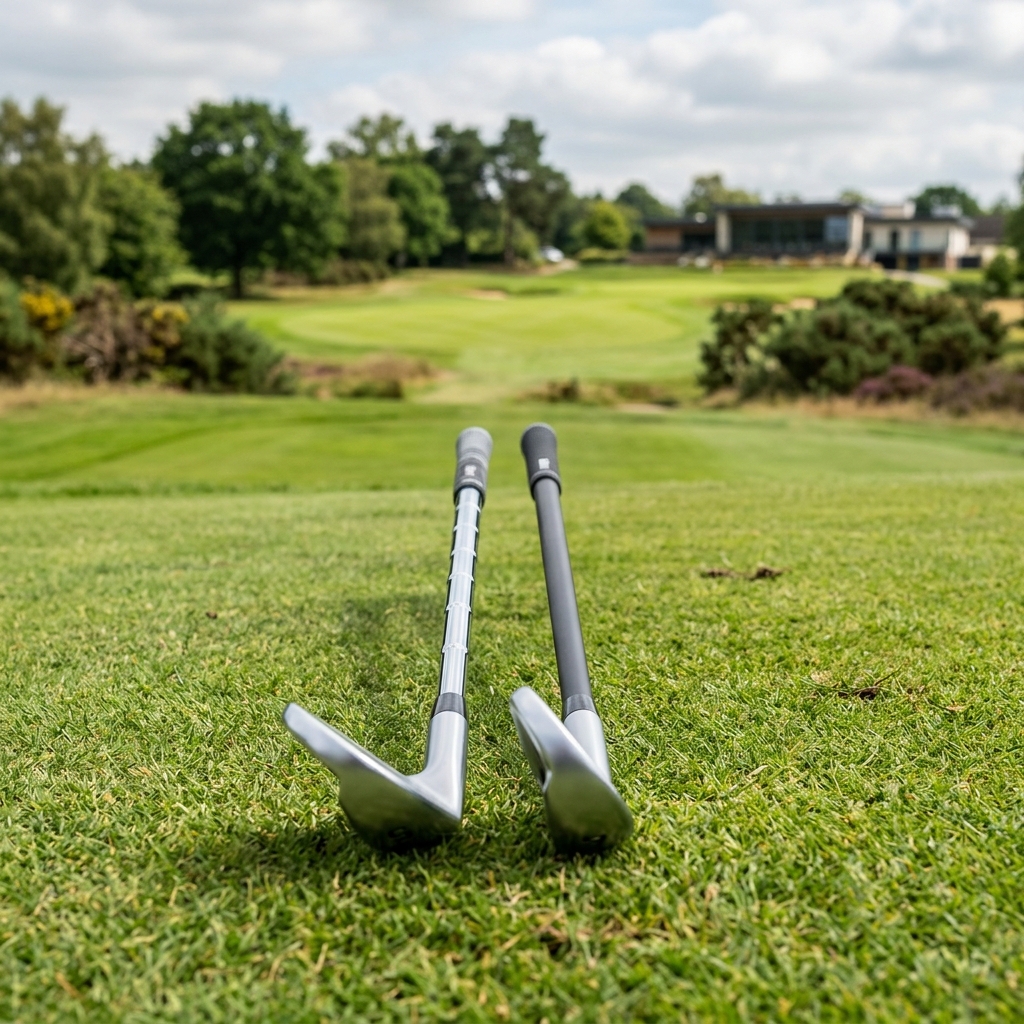
Table of Contents
What is a Steel Golf Shaft?
Steel golf shafts have been the industry standard for decades, and remain incredibly popular. They are typically constructed from various carbon steel alloys, most commonly 1020 carbon steel, providing strength and consistency. Stainless steel is also used, offering enhanced corrosion resistance and a slightly softer feel. The manufacturing process involves drawing the steel through progressively smaller dies to achieve the desired diameter and wall thickness. This process also influences the shaft’s strength and flexibility.
Typical Properties:
- Weight: Generally heavier, ranging from 80g to 140g.
- Durability: Extremely durable and resistant to damage.
- Feel: Provides a more direct and responsive feel, allowing players to better ‘feel’ the clubhead throughout the swing.
- Cost: Generally less expensive than graphite shafts.
What is a Graphite Golf Shaft?
Graphite shafts are constructed from carbon fiber reinforced polymers. The process involves layering sheets of graphite fibers, pre-impregnated with resin, in specific orientations. The number of layers, the type of graphite used (varying in modulus – stiffness – and strength), and the resin type all contribute to the shaft’s final characteristics. Higher modulus graphite is stiffer, while different resin types affect the shaft’s feel and dampening properties. Modern graphite shafts frequently incorporate multiple materials like Torayca® carbon fiber and advanced resin formulations for enhanced performance.
Typical Properties:
- Weight: Lighter than steel, typically ranging from 40g to 80g.
- Feel: Dampens vibrations, providing a smoother feel and reducing fatigue.
- Flex: Offers a wider range of flex options to accommodate various swing speeds.
- Cost: Generally more expensive than steel shafts.
Key Differences: Graphite vs. Steel – A Head-to-Head Comparison
Here’s a detailed comparison of the two materials:
| Feature | Steel Shaft | Graphite Shaft |
|---|---|---|
| Weight | Heavier (80-140g) | Lighter (40-80g) |
| Flex | Good range, but less variation | Wider range, more precise tuning |
| Feel | More feedback, responsive | Smoother, dampened vibrations |
| Torque | Lower torque, more control | Higher torque, potential for distance (can also mean less control) |
| Cost | £149.99 – £169.99 (typical range) | £219.99 – £249.99 (typical range) |
Who Should Use Steel Shafts?
Steel shafts are an excellent choice for:
- Consistent Swingers: Players who consistently hit the sweet spot will benefit from the feedback and control steel provides.
- Players Who Prefer Feel and Control: Those who want to ‘feel’ the clubhead and have precise control over their shot.
- Golfers on a Budget: Steel shafts offer excellent performance at a more affordable price point.
- Stronger Players: Players with faster swing speeds who can handle the heavier weight and lower torque.
Who Should Use Graphite Shafts?
Graphite shafts are generally a better fit for:
- Slower Swing Speeds: The lighter weight allows for easier clubhead speed generation.
- Golfers Seeking More Distance: The increased torque can contribute to higher launch angles and greater distance.
- Players with Joint Issues: The dampened vibration can reduce stress on wrists, elbows, and shoulders.
- Golfers Wanting More Forgiveness: Graphite’s flexibility can sometimes help mitigate off-centre hits.
The Impact of Shaft Flex on Performance
Shaft flex refers to the amount the shaft bends during the swing. It’s crucial to match the flex to your swing speed. Common flex designations include:
- Ladies (L): For swing speeds under 65 mph.
- Senior (A/M): For swing speeds between 65-75 mph.
- Regular (R): For swing speeds between 75-85 mph.
- Stiff (S): For swing speeds between 85-95 mph.
- Extra Stiff (X): For swing speeds over 95 mph.
Using a shaft that is too flexible will result in a higher launch and excessive spin, potentially leading to a loss of control. A shaft that is too stiff will feel hard and unresponsive, resulting in a lower launch and reduced distance. Using a launch monitor to measure your swing speed and ball flight is the best way to determine the optimal flex for your game.
Modern Shaft Technology: Innovations in 2026
Both steel and graphite shaft technology have advanced significantly. In 2026, we’re seeing:
- Multi-Material Shafts (Steel): Steel shafts now incorporate materials like tungsten weighting to fine-tune the centre of gravity and improve launch conditions.
- Advanced Graphite Layering: Manufacturers are using increasingly sophisticated layering techniques with different graphite moduli to create shafts with precisely tuned performance characteristics.
- Variable Face Technology: Some graphite shafts now feature a variable face geometry designed to optimize energy transfer at impact, maximizing distance and forgiveness.
- AI-Powered Shaft Design: Artificial Intelligence is used to analyse swing data and create custom shaft designs based on individual player profiles.
Cost Comparison: Steel vs. Graphite Shafts (UK 2026)
Here’s a price breakdown (approximate):
| Shaft Type | Entry Level | Mid-Range | Premium |
|---|---|---|---|
| Steel | £89.99 – £129.99 (e.g., True Temper Speedflex) | £149.99 – £199.99 (e.g., KBS Tour 130) | £200+ (e.g., Project X LZ) |
| Graphite | £169.99 – £209.99 (e.g., Mitsubishi Tensei Red) | £219.99 – £249.99 (e.g., Fujikura Ventus TR Blue 2026, Aldila NV 2KXV 2026) | £250+ (e.g., Graphite Design Tour AD MF) |
These prices are for individual shafts. Replacing all the shafts in a club set will significantly increase the cost. Consider the cost of labour if you’re not doing the re-shafting yourself.
Replacing Your Golf Shafts: Is it Worth it?
Re-shafting can be a cost-effective alternative to buying new clubs. If your clubhead is in good condition but the shaft doesn’t suit your swing, re-shafting can breathe new life into your clubs. However, it’s important to consider:
- Cost: Re-shafting typically costs £50-£100 per club, including labour.
- Clubhead Compatibility: Ensure the clubhead is compatible with the new shaft.
- Professional Fitting: A professional club fitter is essential to ensure the correct shaft is installed correctly.
Finding a reputable club fitter in the UK is crucial. Look for fitters certified by organizations like the Professional Golfers’ Association (PGA).
Conclusion: Making the Right Choice for Your Game
The choice between graphite and steel shafts isn’t about which is “better” overall, but rather which is best for *you*. Steel shafts offer feel, control, and affordability, making them ideal for consistent swingers and stronger players. Graphite shafts provide lighter weight, vibration dampening, and a wider range of flex options, appealing to slower swing speeds and golfers seeking more distance and comfort.
Our Top Pick: For most golfers in 2026, we recommend starting with a professional club fitting. However, for an excellent all-around performer, the Fujikura Ventus TR Blue 2026 (£229.99) offers a great blend of feel, control, and distance for a wide range of swing speeds.
Ultimately, the best way to determine the ideal shaft for your game is to get fitted by a qualified professional. Don’t hesitate to invest in a fitting session – it could be the most significant improvement you make to your golf game.
FAQ
- Q: Can I use a graphite shaft in an iron club?
A: Yes, while traditionally less common, graphite shafts in irons are becoming increasingly popular, particularly for golfers seeking more distance and comfort. - Q: How often should I replace my golf shafts?
A: There’s no fixed timeframe. If you notice a decrease in performance, feel changes, or any signs of damage to the shaft, it’s time to consider a replacement. - Q: What is shaft torque and why is it important?
A: Shaft torque refers to the shaft’s resistance to twisting during the swing. Lower torque generally provides more control, while higher torque can contribute to more distance (but potentially less accuracy). - Q: Does shaft weight affect swing speed?
A: Yes, a lighter shaft allows for a faster swing speed, assuming the golfer can maintain control. Conversely, a heavier shaft can help with tempo and control for those with faster swings. - Q: What is kick point?
A: Kick point refers to the part of the shaft that bends the most during the swing. It influences launch angle – a low kick point promotes a higher launch, while a high kick point promotes a lower launch.