
Last updated:
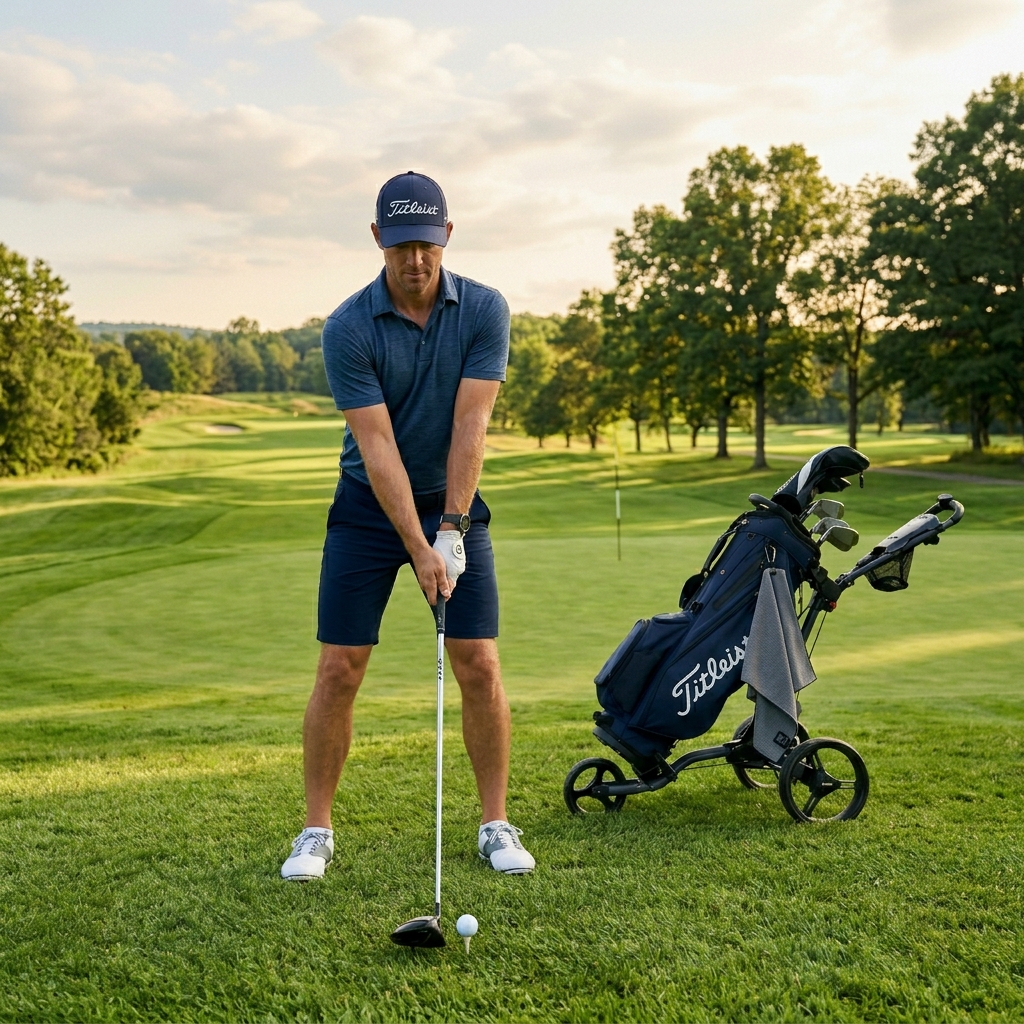
Good golf shorts fit comfortably at the waist and seat, allow you to bend towards the ball and meet the requirements of the course you are visiting. Choose length and cut deliberately rather than relying on the word “tailored”. Test the pockets with the items you normally carry. A pair that looks tidy while empty may behave quite differently once you add tees, a marker and a phone.
Link disclosure: This guide links directly to manufacturer and retailer information. No commission is assumed from these links.
Guide checked: 8 September 2026. This article uses the linked manufacturer and retailer information. We have not carried out hands-on product testing. Confirm the exact specification and current offer before buying.
| Detail | Practical check | Buying implication |
|---|---|---|
| Waist and rise | Sit, bend and take address | Belt should not rescue poor fit |
| Leg length | Measure a pair you like | Inside seam differs from total length |
| Pockets | Add your usual small items | Check access and bulk |
| Venue rules | Read current visitor guidance | Golf branding is not permission |
Table of Contents
Check the course before choosing a holiday pair
If the shorts are for a particular trip, read the venue’s dress guidance and ask about any unclear length or style requirement. Clubhouse expectations may differ from the course. A retailer’s category label cannot decide whether a specific design is acceptable at your destination.
Pack a suitable alternative if your itinerary includes several venues with different expectations. This avoids making one pair of shorts responsible for every round and meal. Do not infer that rules at your home club apply everywhere else, or buy an unfamiliar length solely because it appears in a golf catalogue.
A stretch example: Glenmuir g.JACKSON
The checked g.JACKSON shorts use 92% polyester and 8% elastane, with an elasticated waist and a listed 21.5cm inside seam. Those details provide a concrete comparison for fabric and length. They do not tell you exactly where the hem will sit on your body.
Use the shorts’ own specification rather than a generic trouser leg-length chart elsewhere on a product page. Check the chosen size and current details before ordering. We have not tested the fit, drying time or durability, so the recommendation is to investigate this design if its stated format matches your preferences.
Read the product details for Glenmuir g.JACKSON shorts at Glenmuir
Fit the seat and rise as well as the waist
Try sitting, bending to pick up a ball and taking address. Notice pulling across the seat, pressure at the front or a waistband that moves excessively. A belt can make a small adjustment but should not be the only thing keeping an unsuitable pair in position. Consider another cut if one size is tight in one area and loose in another.
Compare your measurements with the relevant manufacturer’s chart. If you have a pair that works well, measure it using the same method stated by the retailer. Distinguish body measurements from garment measurements and inside-leg length from the whole garment length. Those small distinctions make online comparisons more useful.
Load the pockets before deciding
Put your normal pocket contents into the shorts during a clean trial. Check whether a phone presses when you sit and whether tees or a ball marker are easy to retrieve. Avoid judging a pocket only by how deep it appears in a photograph. Opening angle, lining and position all affect how convenient it feels.
You do not need to carry every accessory in clothing pockets. Moving a bulky item to the bag may make a preferred pair more comfortable, but do not use that as an excuse to accept poor basic fit. Decide what must be accessible during play and choose a pocket arrangement that supports that routine.
Choose a useful fabric and care routine
Read the actual composition and care label. Stretch content can be helpful information but does not establish how thick, smooth or breathable the shorts feel. If you are sensitive to a particular texture, inspect the garment or buy one pair before a multi-buy. Treat performance claims as prompts to investigate, not measured comparisons between brands.
Check how the colour works with your existing polos and footwear, and compare the delivered cost rather than the discount percentage. For cooler or wetter days, our wet-weather trouser guide covers a different need. Buy the pair that remains comfortable through ordinary movement and that you can wear at your intended venues.