
Last updated:
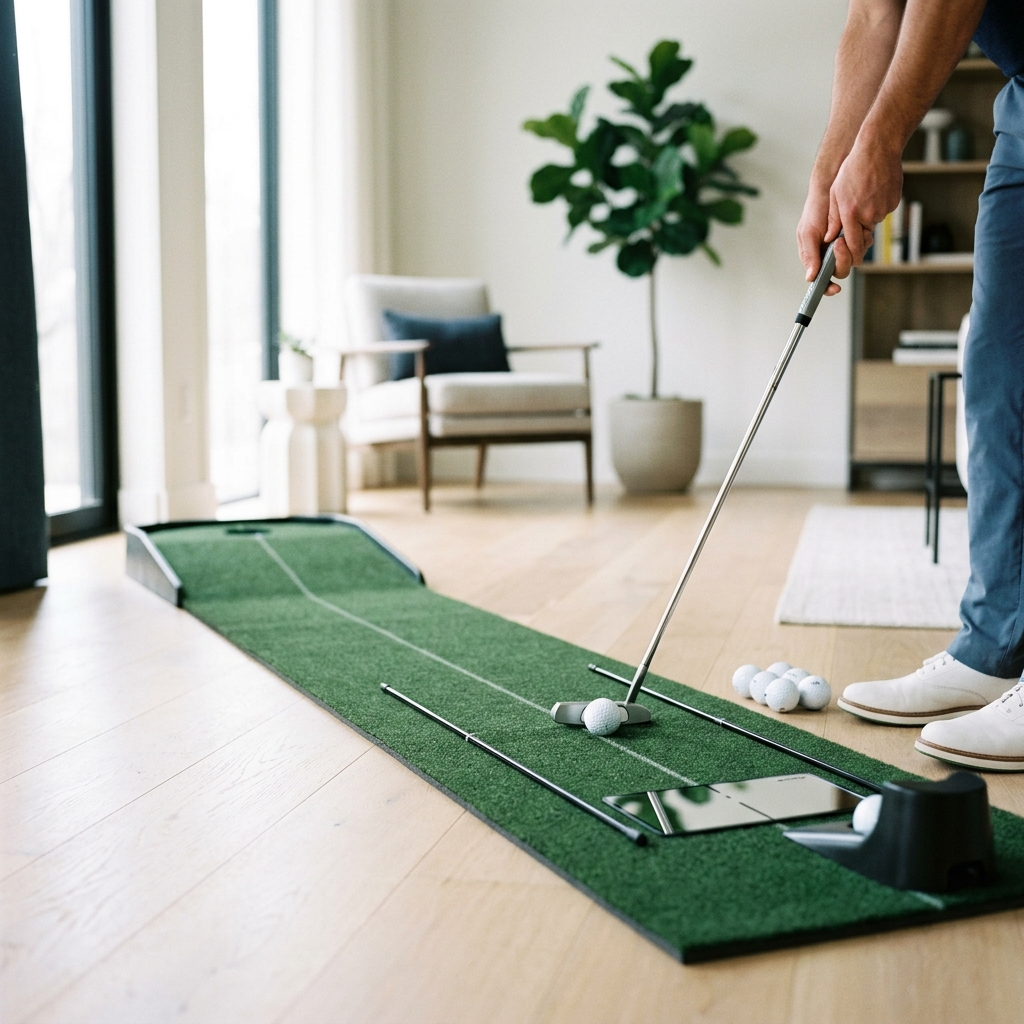
A putting mirror gives a visible reference for parts of your setup. Choose it by what fits in the reflection and how the reference will support a specific practice task. A small mirror does not necessarily show the shoulders, and a clear image at address does not prove the putterface will return square at impact. Use the aid to observe a coach-agreed setup, then check whether you can repeat the routine after removing it.
Link disclosure: This guide links directly to manufacturer and retailer information. No commission is assumed from these links.
Guide checked: 8 September 2026. This article uses the linked manufacturer and retailer information. We have not carried out hands-on product testing. Confirm the exact specification and current offer before buying.
| Feature | Question to ask | Limit to remember |
|---|---|---|
| Reflective area | Which parts of the setup are visible? | Small models may not show shoulders |
| Reference lines | What task will these lines support? | Lines do not prescribe one posture for everyone |
| Gate holes | Are they for the putter or another reference? | Passing a gate is not a full stroke diagnosis |
| Portability | Does it fit your practice space and storage? | A compact aid still needs correct setup |
Table of Contents
The verified example: EyeLine Putting Alignment Mirror Small
The checked small EyeLine mirror has putter-gate holes and a carry bag, and is described for right- and left-handed use. Its compact format is a feature to assess for your practice setup.
The small model does not show the shoulders without a separate attachment, so we do not transfer that capability from a larger mirror or a general drill description. The linked page is US manufacturer information; confirm the exact product and a suitable UK supplier before buying.
Read the product details for EyeLine Putting Alignment Mirror, Small at EyeLine Golf US
Decide what you want to observe
Choose one setup reference that you understand, preferably with guidance from a coach if you are changing technique. The mirror can help you see whether that position is repeated, but it does not establish one universal eye position or posture that every golfer must adopt.
Check the mirror’s position relative to the intended practice line before interpreting your reflection. A neatly aligned body reference on a misplaced mirror can still be misleading. The aid needs a deliberate setup of its own, rather than being placed casually wherever there is room on the mat.
Use the reflection without chasing every movement
Settle into the agreed setup, observe the relevant reference and make a small number of deliberate putts. Keep the observation focused. Trying to monitor eyes, shoulders, hands and the whole stroke simultaneously can make it unclear which task the session is meant to address.
If the mirror reveals something unexpected, record it and ask for appropriate coaching guidance instead of forcing a posture to match a line immediately. The aim is a useful observation, not a rigid position chosen solely because it looks tidy in a reflection.
Understand the difference between a mirror and a gate
EyeLine’s mirror-and-gate drill combines a visual reference with a putter gate. These are separate sources of feedback. The mirror concerns what you can see; a putter gate tells you whether the head clears the set opening in that attempt.
Neither result alone measures every factor in the stroke. A putter passing through a gate does not prove its face angle is ideal at impact, and a tidy reflection does not guarantee correct pace. Use each aid for the information it can actually provide.
Choose the surface and accessories carefully
Place the mirror as instructed on a suitable practice surface and check that it sits securely. If a drill uses tees, obtain permission and use only a surface where that method is appropriate. Do not force tees into a hard indoor floor or assume the same setup works everywhere.
Confirm which attachments and accessories come with the selected product. A photograph containing a shoulder attachment or other aid does not establish that it is supplied with the small mirror. Compare the complete kit you will receive with the drill you intend to perform.
Remove the mirror for a second observation
After the reference work, put the mirror aside and repeat the setup routine on the same suitable practice line. Notice what changes without the visual prompt. That step gives you a practical reason to use the aid rather than measuring success only by how comfortable you become with it under the ball.
Keep training-aid use in permitted practice. The R&A’s Rule 4.3 restricts using aids to help prepare for or make a stroke during a round. Ask the committee if you are uncertain about a proposed use.
Buy the view and workflow you need
Our home putting-practice guide covers the broader session. Choose a mirror whose reflective area, accessories and storage suit the observation you want to make. A bigger product is useful only if the extra view serves that task.