
Table of Contents
Why Use a Golf Putting Mat at Home?
In 2026, golf is more popular than ever, but finding the time – and the budget – for regular range visits can be challenging. A golf putting mat offers a fantastic solution for golfers of all levels. The benefits are numerous. Convenience is key; you can practice whenever you have a few minutes, regardless of the weather. Compared to paying for range time (typically £15-£30 per hour in 2026), a putting mat is a one-time investment. You can practice year-round, improving your consistency without seasonal limitations. Most importantly, consistent putting practice significantly impacts your scoring. Studies show that a large proportion of strokes are lost on the green, making it the perfect area to focus on for improvement. Even 15-20 minutes of focused practice a few times a week can yield noticeable results.
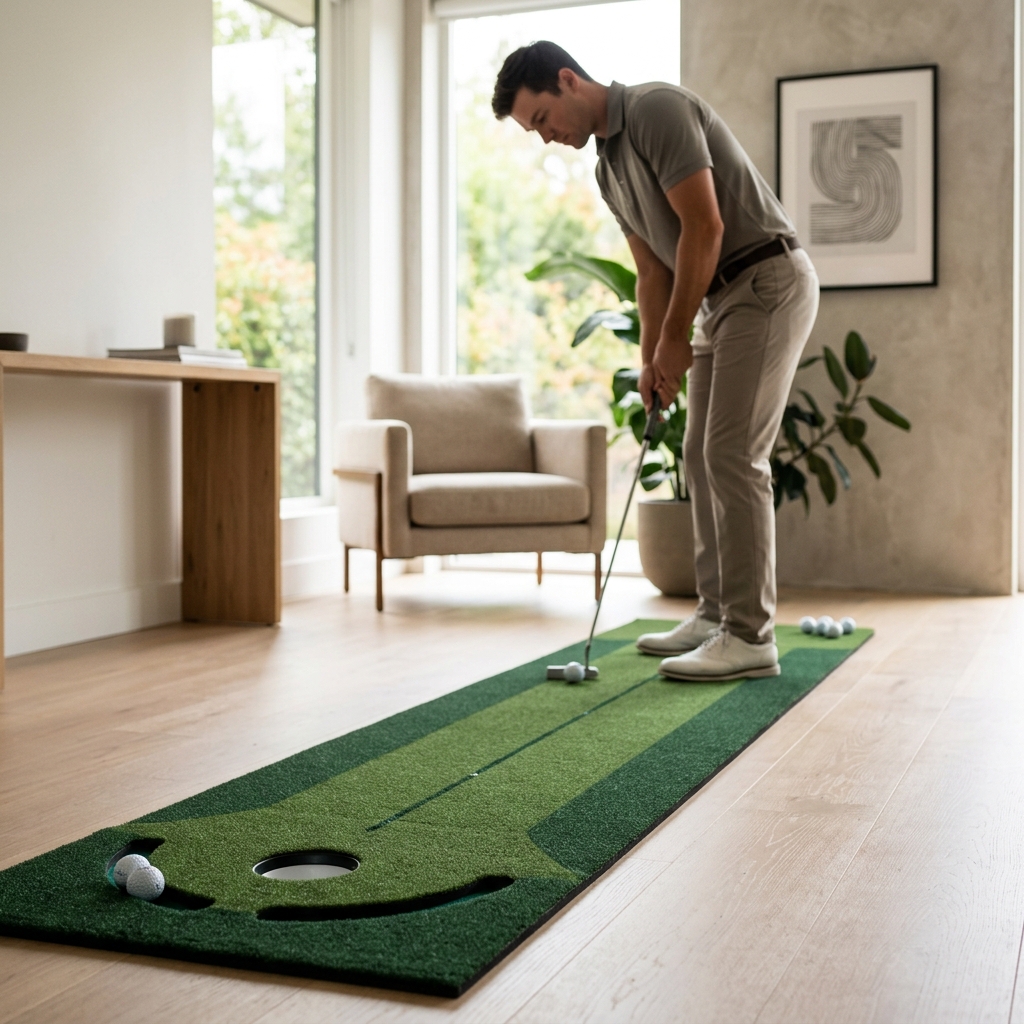
What to Look for in a Home Putting Mat (2026 Buying Guide)
Choosing the right putting mat requires considering several key features. Here’s a breakdown:
- Size: Mats range from compact (around 1m x 3m) to larger greens mimicking a real putting surface. Consider the space you have available.
- Material: Common materials include felt, nylon, and synthetic grass. Felt is the most affordable but least realistic. Nylon offers a smoother, faster surface. Synthetic grass, particularly high-quality options, provides the most authentic feel.
- Speed: Speed is measured using the Stimpmeter reading. Higher numbers mean faster greens. Tour-grade mats often aim for speeds of 10-14, while standard mats are slower.
- Cup Size/Location: A standard 4.25-inch cup is the norm. Some mats have multiple cup locations for varied practice.
- Backing: Rubber or non-slip backing is essential to prevent the mat from sliding during your stroke.
- Alignment Aids: Many mats include alignment lines or markers to help you visualise your putting stroke and ensure consistent aiming.
- Smart Mat Technology: In 2026, we’re seeing more “smart mats” incorporating pressure sensors and Bluetooth connectivity. These mats provide detailed feedback on your stroke, including face angle, swing path, and putting tempo. Prices for these start around £150.
Types of Golf Putting Mats
Here’s a look at the different types of putting mats available:
- Standard Mats: The most affordable option, ideal for beginners or those with limited space. Typically made of felt or nylon.
- Tour-Grade Mats: Designed to simulate the speed and feel of a professional golf green. Often feature synthetic grass and higher Stimpmeter readings. Suitable for more experienced golfers.
- Large Putting Greens: Offer a more immersive practice experience, allowing you to practice a wider variety of putts and breaks. Require significant space.
- Portable/Travel Mats: Compact and lightweight, perfect for taking your practice on the go. Often roll up for easy storage.
Top 5 Golf Putting Mats for Home Practice (Reviewed for 2026)
1. PuttOUT Pressure Putt Trainer + Putting Mat Bundle – £119.99
Pros: Excellent for distance control practice. The pressure putt trainer provides immediate feedback. High-quality synthetic grass surface. Realistic feel.
Cons: Relatively small mat size. Pricey compared to basic options.
Suitability: Intermediate to advanced golfers who want to focus on pressure putting and distance control.
2. Birdie Golf Putting Mat Pro – £79.99
Pros: Large size for varied practice. Good quality synthetic grass. Includes multiple cup locations. Excellent value for money.
Cons: The putting surface isn’t quite as fast as some tour-grade options. May require flattening on initial unrolling.
Suitability: Golfers of all levels, particularly those looking for a larger practice area.
3. RealFeel Golf Putting Mat – £89.99
Pros: Very realistic putting surface, closely mimicking a well-maintained green. Includes alignment aids. Robust construction. Excellent feedback on putting stroke.
Cons: Slightly smaller than the Birdie Golf Mat. Can be prone to creasing if not stored correctly.
Suitability: Serious golfers who prioritise a realistic putting experience.
4. SKLZ Accelerator Putting Mat – £39.99
Pros: Affordable and compact. Good for basic putting practice. Includes alignment markings. Ideal for beginners.
Cons: The putting surface is relatively slow and not very realistic. Limited practice options due to size.
Suitability: Beginner golfers or those with very limited space and a tight budget.
5. Putting Wizard Portable Putting Green – £54.99
Pros: Highly portable and easy to set up. Good for travel or practice in small spaces. Convenient and versatile.
Cons: The putting surface is not as smooth as a dedicated mat. Smaller size limits practice variety.
Suitability: Golfers who travel frequently or have limited space for a permanent setup.
Putting Mat Accessories to Enhance Your Practice
Complement your putting mat with these accessories:
- Putting Cups: Having extra cups allows you to create different hole locations. (Approx. £5-£15 each)
- Ball Return Systems: Save time and effort by automatically returning the ball to your starting position. (Approx. £20-£50)
- Alignment Sticks: Help you visualise your target line and ensure proper alignment. (Approx. £10-£20 for a set)
- Putting Mirrors: Provide feedback on your setup and stroke mechanics. (Approx. £20-£40)
- Swing Trainers: Devices designed to improve your putting stroke technique. (Approx. £30-£80)
Setting Up Your Home Putting Green: Tips & Tricks
Maximise your practice experience with these tips:
- Location: Choose a flat, level surface away from high-traffic areas.
- Surface: Use a rug pad or thin carpet underneath the mat to provide cushioning and prevent sliding.
- Lighting: Ensure adequate lighting to clearly see the putting line.
- Breaks: Experiment with slight inclines by placing a book or small object under one side of the mat to simulate real-green breaks.
- Distractions: Minimise distractions during practice to maintain focus.
Putting Drills to Improve Your Game with a Home Mat
Here are a few effective drills:
- Gate Drill: Place two alignment sticks slightly wider than your putter head to create a “gate.” Practice putting through the gate to improve your stroke path.
- Coin Drill: Place a coin a few feet from the hole. Focus on consistently hitting the coin to improve distance control.
- Lag Putting Drill: Practice long putts, focusing on getting the ball close to the hole.
- Speed Control: Vary your stroke length to control the distance the ball travels.
- Alignment Drill: Focus on correctly aligning your putter face to the target line.
Frequently Asked Questions (FAQs)
Q: How do I clean my golf putting mat?
A: Most putting mats can be cleaned with a damp cloth and mild detergent. Avoid harsh chemicals. Let the mat air dry completely before use.
Q: How should I store my putting mat?
A: Roll up the mat loosely and store it in a cool, dry place. Avoid folding it, as this can create creases.
Q: How durable are golf putting mats?
A: Durability varies depending on the material and quality. High-quality synthetic grass mats are the most durable. Expect a well-maintained mat to last for several years.
Q: Which putting mat is best for a beginner?
A: The SKLZ Accelerator Putting Mat is a great option for beginners due to its affordability and simplicity. It provides a good starting point for developing basic putting skills.
Q: Can I use real golf balls on my putting mat?
A: Yes, you can use real golf balls. However, avoid using heavily scuffed or dirty balls, as they may damage the putting surface.