
Table of Contents
Introduction: The Quest for Distance with Irons
Distance is paramount in modern golf. Reaching greens in regulation, shortening par-4s, and simply enjoying the game more all benefit from increased yardage. While power comes from swing mechanics, the right golf irons can unlock significant distance potential. By 2026, iron technology has advanced further, with materials science and design innovations leading to irons that are easier to launch and deliver greater ball speeds. This guide will walk you through everything you need to know to choose the best irons for maximising your distance on the UK courses.
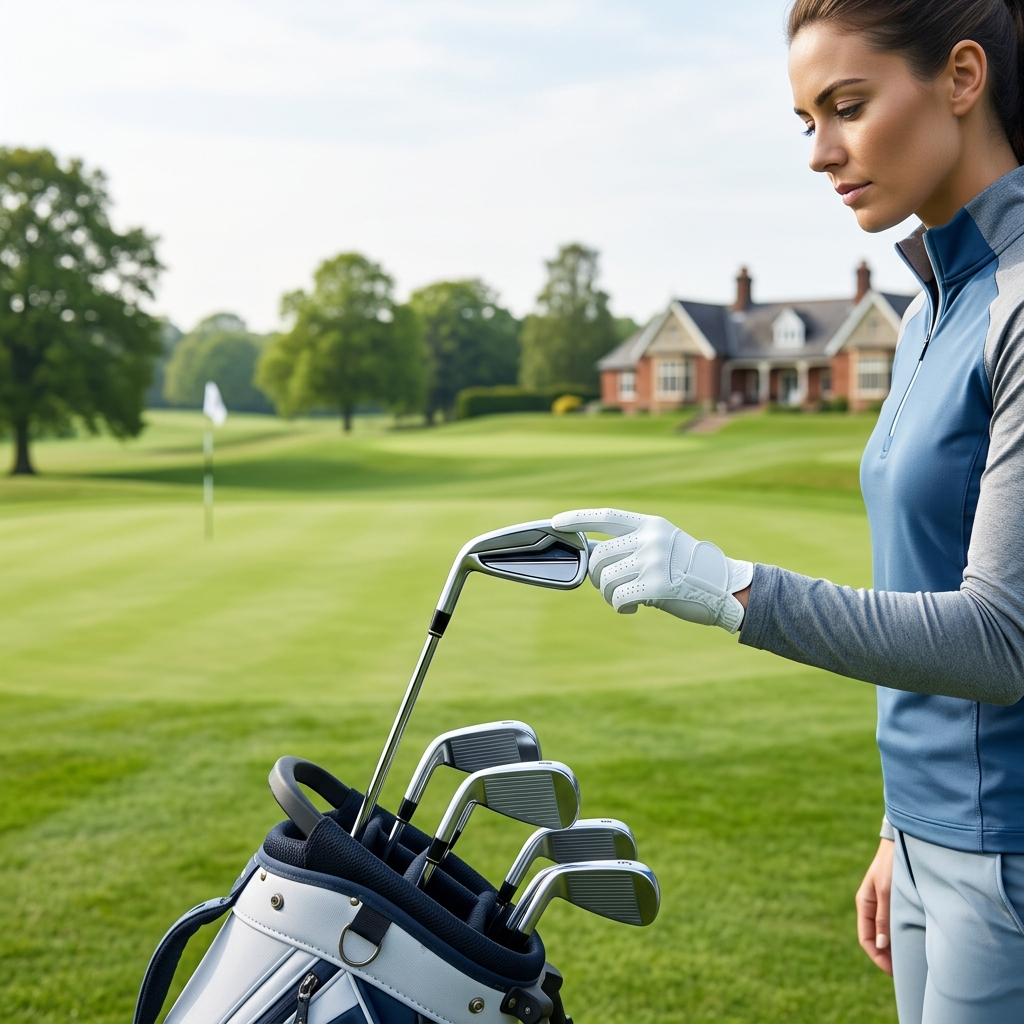
Understanding Iron Loft and Distance
The loft of an iron is the angle of the clubface, and it fundamentally affects ball flight and distance. Higher lofted irons (like wedges) launch the ball higher with more spin, resulting in shorter distances. Lower lofted irons (like long irons) launch the ball lower with less spin, for maximum distance potential.
Here’s a standard loft progression for a typical iron set:
| Iron | Loft (Approx.) | Typical Distance (Yards – Average) |
|---|---|---|
| 3-Iron | 19° | 180-210 |
| 4-Iron | 21° | 170-190 |
| 5-Iron | 23° | 160-180 |
| 6-Iron | 25° | 150-170 |
| 7-Iron | 28° | 140-160 |
| 8-Iron | 31° | 130-150 |
| 9-Iron | 34° | 120-140 |
| Pitching Wedge (PW) | 44° – 48° | 100-120 |
Gap Wedge Considerations: A gap wedge (around 50-52°) is crucial for filling the distance gap between your pitching wedge and sand wedge. Many golfers benefit from including a gap wedge in their set. Some iron sets now include a gap wedge, but it’s worth considering purchasing one separately to ensure the right lofts for your game.
Iron Head Materials: Forged vs. Cast
The material used in the iron head significantly impacts feel, distance, and forgiveness.
| Feature | Forged Irons | Cast Irons |
|---|---|---|
| Manufacturing | Made from a single piece of steel, hammered into shape. | Molten steel is poured into a mould. |
| Feel | Generally softer, providing more feedback. | Can vary, generally firmer than forged. |
| Distance | Traditionally focused on precision; distance has improved in modern forged designs. | Often designed for maximum distance due to larger head sizes and perimeter weighting. |
| Forgiveness | Less forgiving on off-centre hits. | More forgiving due to perimeter weighting and cavity back designs. |
| Cost | Typically more expensive. | Generally more affordable. |
2026 Material Advancements: By 2026, we’re seeing new alloys emerging – particularly with the inclusion of tungsten and other dense metals strategically placed within the iron head. These materials allow manufacturers to lower the centre of gravity (CG) for higher launch, increase MOI (Moment of Inertia) for greater stability, and maintain a satisfying feel. Expect to see more irons using multi-material construction, combining different alloys for optimal performance.
Shaft Material & Flex: Finding the Right Fit
Shaft Materials:
- Steel: The most common shaft material, offering consistency, control, and a heavier feel.
- Graphite: Lighter than steel, promoting faster swing speeds and higher launch, particularly beneficial for slower swingers.
- Multi-Material: Increasingly popular, combining graphite and steel elements for a blend of performance characteristics.
Shaft Flex: The flex of the shaft determines how much it bends during the swing. Choosing the right flex is crucial for maximizing distance and accuracy.
- Extra Stiff (XS): For players with very fast swing speeds (over 93 mph).
- Stiff: For players with fast swing speeds (88-93 mph).
- Regular: For players with moderate swing speeds (82-88 mph).
- Senior/Light: For players with slower swing speeds (under 82 mph).
- Ladies: Designed for women’s swing speeds.
Getting Professionally Fitted: A professional iron fitting is *essential*. A qualified fitter will analyse your swing speed, launch angle, spin rate, and ball flight to recommend the optimal shaft material and flex for your game. Don’t guess – get fitted!
Iron Design Features That Boost Distance (2026 Trends)
Several design features contribute to distance:
- Cavity Backs: Remove weight from the centre of the clubhead, redistributing it to the perimeter, increasing forgiveness and MOI.
- Perimeter Weighting: Concentrates weight around the edges of the clubhead, enhancing stability on off-centre hits.
- Undercut Cavities: A section removed from underneath the clubface, allowing the face to flex more at impact, increasing ball speed.
- Progressive Offset: Longer irons have more offset (the clubface is set back from the shaft), aiding in launch and forgiveness. Shorter irons have less offset for greater control.
2026 Innovations: We’re seeing increasingly sophisticated face technologies. ‘Variable Face Thickness’ is now commonplace, but by 2026, manufacturers are employing AI-designed face patterns – like Callaway’s Ai Smoke technology – that precisely optimise ball speed across the entire face. Expect to see more irons incorporating ‘internal weighting’ using advanced materials to fine-tune launch conditions and optimise CG placement.
Best Golf Irons for Distance in 2026 (UK Market)
Here’s a look at some of the top irons available in the UK market in 2026, categorised by player type:
Beginner
Cobra Darkspeed Irons: (£799) Designed for ease of launch and forgiveness. Large cavity back design and wide soles make them incredibly user-friendly.
Pros: Very forgiving, high launch, affordable.
Cons: May not offer the workability preferred by more experienced players.
Mid-Handicap
PING G430 Irons: (£849) A classic choice known for its exceptional forgiveness and distance. The PurFlex Face technology delivers impressive ball speeds.
Pros: Excellent forgiveness, consistent distance, good feel.
Cons: Can feel slightly heavier than other options.
TaylorMade Qi10 Irons: (£899) This iron offers a fantastic blend of distance and forgiveness, with a focus on improved sound and feel.
Pros: Improved feel, good distance, forgiving.
Cons: May not appeal to players seeking a traditional look.
Low-Handicap
Titleist T200 Irons: (£1099) A players’ distance iron that balances power with control. Features a refined cavity back design and tungsten weighting for optimal launch and forgiveness.
Pros: Improved distance, enhanced feel, good workability.
Cons: More expensive, less forgiving than game-improvement irons.
Callaway Paradym Ai Smoke HL Irons: (£999) These irons leverage advanced AI-designed face technology for exceptional ball speed and distance. Designed for higher launch, they’re ideal for players seeking to maximise yardage.
Pros: Exceptional distance, high launch, improved feel.
Cons: Premium price point.
Getting Fitted for Irons: The Importance of Customisation
A professional iron fitting is the single most important step in choosing the right irons. It ensures that the irons you purchase are perfectly suited to your swing and body type. During a fitting session, you can expect:
- Static Measurement: Wrist-to-floor measurement to determine lie angle.
- Dynamic Measurement: Analysis of your swing using launch monitors (TrackMan, FlightScope) to assess ball speed, launch angle, spin rate, and carry distance.
- Shaft Testing: Trying different shaft materials and flexes to find the optimal combination.
- Head Selection: Testing different iron heads to find the best fit for your skill level and preferences.
Reputable Fitting Centres in the UK:
- American Golf (Nationwide)
- Golf Shack (Nationwide)
- Custom Golf Solutions (Various Locations)
- Clubhouse Golf (Various Locations)
Frequently Asked Questions (FAQs)
- What iron set should I buy if I’m a beginner? Focus on game-improvement irons like the Cobra Darkspeed or PING G430. These irons are designed to be forgiving and easy to launch.
- How much do iron fittings cost? Iron fittings typically range from £75 to £150 depending on the centre and the level of detail.
- What is MOI and why is it important? MOI (Moment of Inertia) is a measure of a clubhead’s resistance to twisting on off-centre hits. Higher MOI means more forgiveness and stability.
- Should I prioritise distance over forgiveness? For most golfers, forgiveness is more important than raw distance. Consistent contact with a forgiving iron will result in better scores.
- Can I get custom grips on my irons? Absolutely! Custom grips are highly recommended for optimal comfort and control.
Conclusion: Maximising Your Distance Potential
Choosing the right golf irons for distance requires careful consideration of loft, materials, shaft flex, and design features. The technology available in 2026 offers exciting opportunities to unlock your distance potential. However, the most crucial step is to invest in a professional iron fitting. Don’t settle for off-the-rack irons – get fitted and experience the difference that customisation can make. With the right irons in your bag, you’ll be hitting longer, straighter shots and enjoying the game more than ever before.