
Table of Contents
Introduction: The Importance of Shaft Material
Choosing the right golf club shaft is arguably one of the most important decisions a golfer can make. It’s far more impactful than many realise. While the clubhead gets a lot of attention, the shaft is the engine that delivers the clubhead to the ball. The material, weight, flex, and torque of a shaft significantly influence distance, accuracy, feel, and overall playability. A shaft that doesn’t suit your swing can lead to inconsistent results, frustration, and a higher handicap. Remember that shaft choice is a highly personal one, dictated by your swing characteristics and preferences.
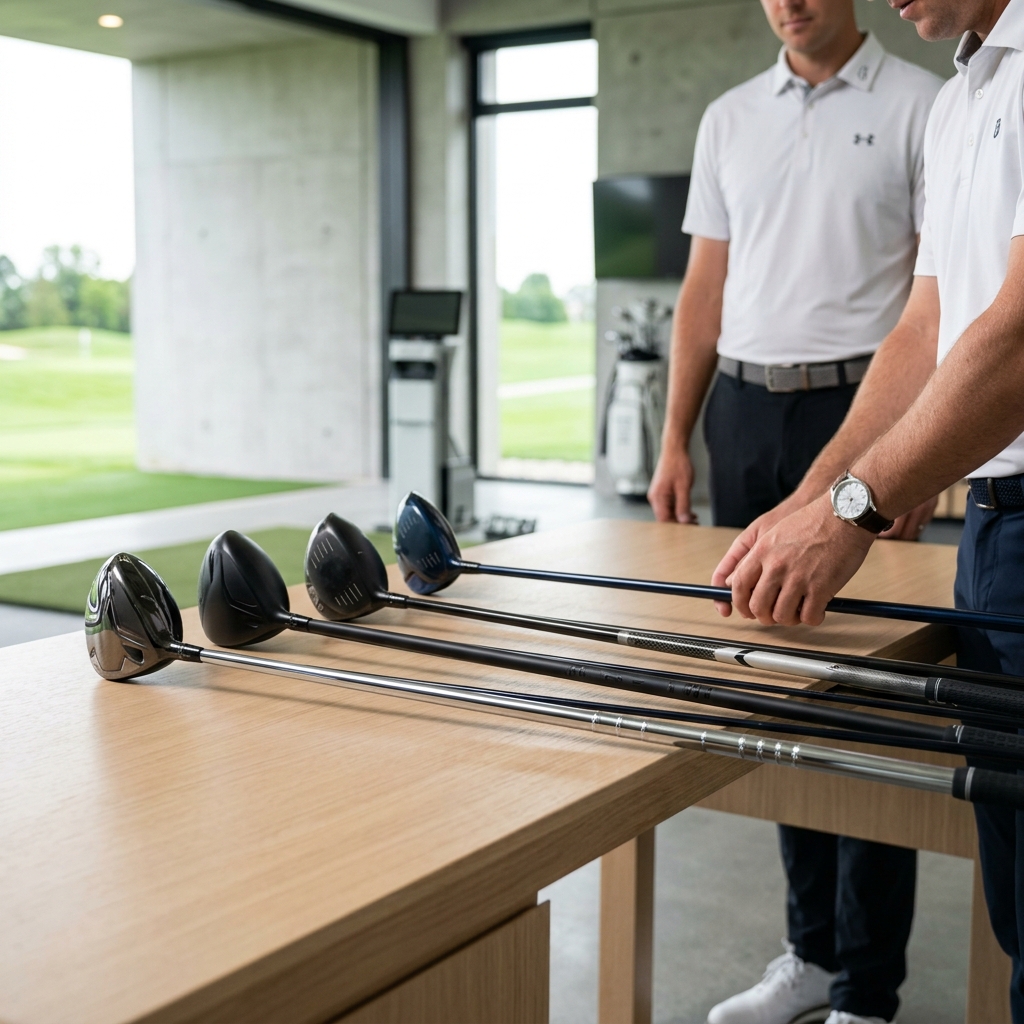
Understanding Golf Club Shaft Materials: A Comprehensive Overview
The golf club shaft market has evolved significantly in recent years. While steel remains a dominant force, graphite, titanium, boron, and increasingly sophisticated multi-material (composite) shafts offer players a wider range of options than ever before. Each material possesses unique properties that cater to different playing styles and swing speeds. In this guide, we’ll delve into the characteristics of each, helping you understand which might be the best fit for your game in 2026.
Steel Shafts: The Traditional Choice
Steel shafts have long been the standard in golf, prized for their durability, consistency, and relatively low cost. They offer a more traditional feel, providing excellent feedback and control throughout the swing. Different types of steel are used, impacting performance.
Types of Steel
- Chrome Moly: A common alloy offering a good balance of strength and flexibility.
- High Strength Steel: Allows for thinner shaft walls, reducing weight without sacrificing strength.
- Carbon Steel: Often found in higher-end shafts, providing a softer feel and enhanced feedback.
Pros:
- Durability: Steel shafts are incredibly durable and can withstand years of use.
- Cost-Effective: Generally more affordable than graphite or other materials.
- Consistency: Provide a predictable feel and consistent performance.
- Control: Offer excellent control and accuracy, particularly for skilled players.
Cons:
- Weight: Heavier than graphite, potentially reducing swing speed for some players.
- Vibration: Transmit more vibration to the hands, which can be uncomfortable for some.
Average Price Range (2026): £150 – £300 (e.g., True Temper Dynamic Gold 120 Shaft – £199.99)
Graphite Shafts: Lightweight Performance
Graphite shafts have gained immense popularity due to their lightweight nature, which can lead to increased swing speed and distance. They also excel at dampening vibrations, providing a smoother, more comfortable swing. The quality of graphite varies significantly depending on the grade and weave of the material.
Graphite Grades & Weaves
- Standard Modulus: A good all-around option, offering a balance of performance and affordability.
- Intermediate Modulus: Lighter and more responsive than standard modulus.
- High Modulus: The lightest and most responsive graphite, often used by professional players.
- Different Weaves (e.g., Torayca, Mitsubishi Rayon): Impact the shaft’s feel and stability.
Pros:
- Lightweight: Increases swing speed and potential distance.
- Vibration Dampening: Reduces vibration, providing a smoother, more comfortable swing.
- Forgiveness: Can help players with slower swing speeds generate more power.
Cons:
- Cost: Generally more expensive than steel shafts.
- Durability: Can be more susceptible to damage than steel.
- Feel: Some players prefer the feedback of a steel shaft.
Average Price Range (2026): £200 – £350 (e.g., Mitsubishi Tensei AV Blue with 60g – £229.99, Fujikura Ventus TR Blue Shaft – £279.99)
Titanium Shafts: Strength and Flexibility
Titanium shafts offer a unique combination of strength and flexibility. They are lighter than steel but generally heavier than graphite. This can provide a powerful and stable feel, making them a good option for players who want a balance between distance and control. However, they are less common than steel or graphite.
Pros:
- Strength: Very durable and resistant to bending.
- Lightweight (compared to steel): Can aid in swing speed.
- Unique Feel: Provides a distinct feel some players prefer.
Cons:
- Cost: Typically expensive.
- Limited Availability: Not as widely available as steel or graphite.
- Can be Harsh: May transmit more vibration than graphite.
Average Price Range (2026): £300 – £500 (availability limited – prices vary significantly)
Boron Shafts: Premium Feel and Control
Boron shafts represent the pinnacle of golf shaft technology. These shafts are incredibly expensive, but they offer exceptional feel, control, and precision. Boron is known for its high modulus of elasticity, meaning it’s incredibly stiff and responsive. They are generally favoured by highly skilled players seeking ultimate control.
Pros:
- Exceptional Feel: Provides unparalleled feedback and control.
- Precision: Allows for incredibly accurate shotmaking.
- Premium Quality: Made with the highest-grade materials.
Cons:
- Cost: Extremely expensive.
- Limited Forgiveness: Requires a consistent swing to maximize performance.
- Not for Beginners: Best suited for highly skilled players.
Average Price Range (2026): £400 – £700+ (e.g., Oban Kiyoshi Purple Shaft – £349.99, with higher-end models exceeding £600)
Multi-Material (Composite) Shafts: The Best of Both Worlds?
Multi-material shafts combine the benefits of different materials, such as graphite and steel blends, to create a shaft with unique performance characteristics. These shafts often feature a graphite body with strategically placed steel reinforcements for added stability and control. They aim to provide the lightweight benefits of graphite with the precision of steel.
Average Price Range (2026): £250 – £400
Shaft Flex: Matching Shaft to Swing Speed
Shaft flex refers to the amount of bend a shaft exhibits during the swing. Choosing the correct flex is crucial for maximizing performance. Here’s a general guide:
- Ladies (L): For swing speeds under 65 mph.
- Senior (A/M): For swing speeds between 65-75 mph.
- Regular (R): For swing speeds between 75-85 mph.
- Stiff (S): For swing speeds between 85-95 mph.
- Extra Stiff (X): For swing speeds over 95 mph.
To accurately determine your swing speed, consider using a launch monitor or visiting a professional club fitter. [Link to a UK Swing Speed Guide/Calculator]
Shaft Weight & Torque: Fine-Tuning Your Feel
Shaft Weight: Lighter shafts generally promote faster swing speeds, while heavier shafts offer more control.
Torque: Torque measures a shaft’s resistance to twisting. Higher torque means more flex, leading to a higher launch and more forgiveness. Lower torque provides more control and accuracy.
Choosing the Right Shaft for Your Game (2026)
Here’s a quick guide to help you narrow down your options:
| Handicap | Swing Speed | Recommended Shaft Material | Flex Recommendation |
|---|---|---|---|
| 20+ (Beginner) | Under 75 mph | Graphite | Ladies/Senior |
| 10-19 (Intermediate) | 75-85 mph | Graphite or Steel | Regular |
| 0-9 (Low Handicap) | 85-95 mph | Steel or Graphite (High Modulus) | Stiff |
| Scratch Player | 95+ mph | Steel or Boron | Extra Stiff |
Where to Buy Golf Club Shafts in the UK (2026)
- American Golf: [American Golf Website]
- GolfBox: [GolfBox Website]
- Direct Golf: [Direct Golf Website]
- Clubhouse Golf: [Clubhouse Golf Website]
- Local Professional Golf Shops: Offer custom fitting services and a wide selection of shafts.
Conclusion: Investing in the Right Shaft
The golf club shaft is a critical component of your game, significantly impacting performance and enjoyment. Don’t underestimate the importance of choosing the right material, weight, and flex. While this guide provides a solid starting point, the best way to find the perfect shaft is to consult with a qualified club fitter. A professional fitting will analyze your swing and recommend a shaft that is tailored to your specific needs and preferences. Investing in a proper shaft fitting is an investment in your game, and can lead to significant improvements in your consistency, distance, and overall performance.
FAQ
1. What is the biggest difference between steel and graphite shafts?
The biggest difference is weight. Graphite shafts are significantly lighter than steel shafts, which can increase swing speed. However, steel shafts generally offer more control and consistency.
2. How important is shaft flex?
Very important! The correct flex allows the shaft to load and unload properly during the swing, optimizing energy transfer to the ball. An incorrect flex can lead to inconsistencies and loss of distance.
3. Are expensive shafts always better?
Not necessarily. While higher-priced shafts often utilize more advanced materials and construction techniques, the best shaft for you depends on your individual swing characteristics, not just the price tag.
4. What is torque and how does it affect my swing?
Torque measures a shaft’s resistance to twisting. Higher torque shafts generally launch the ball higher and offer more forgiveness, while lower torque shafts provide more control and accuracy.
5. Can I reshaft my existing clubs?
Yes, absolutely! Reshafting is a great way to upgrade your clubs without having to buy a whole new set. It’s best to have this done by a qualified club fitter.