
Table of Contents
What is Lie Angle and Why Does it Matter?
Lie angle is the angle between the shaft of a golf club and the sole of the clubhead when the club is grounded. It’s measured in degrees, and a correct lie angle ensures the clubhead sits flat on the ground at address, allowing for consistent contact and optimal ball flight. Imagine aiming a camera – if it’s tilted it won’t capture the scene correctly. A properly adjusted lie angle promotes a square clubface at impact, leading to straighter shots, better accuracy, and increased consistency.
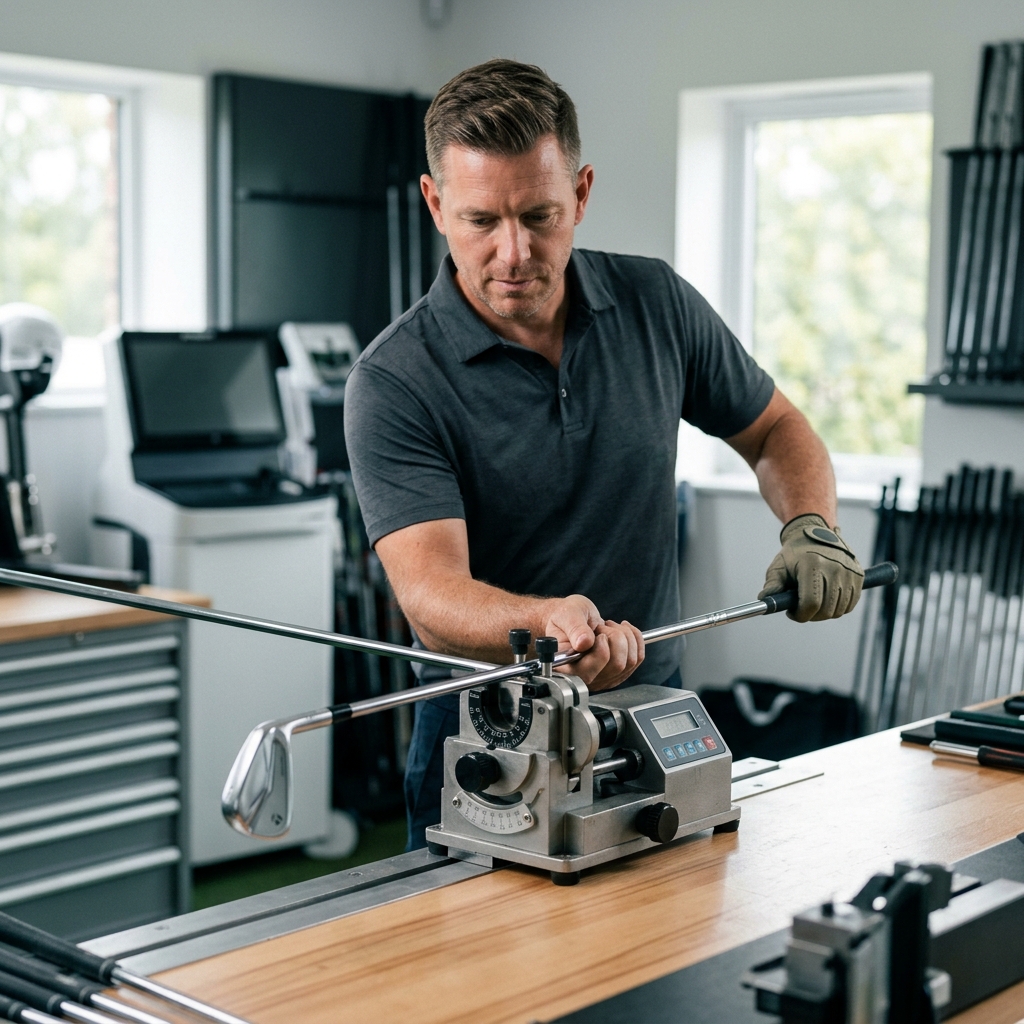
An incorrect lie angle can significantly impact your game. Too flat a lie angle (club points to the left for a right-handed golfer) often causes a pull or hook, as the heel of the club digs into the ground first. Too upright a lie angle (club points to the right) can lead to a push or slice, as the toe of the club makes contact first. This also impacts consistency, leading to unpredictable shot patterns.
Identifying Incorrect Lie Angle: Common Signs
Diagnosing an incorrect lie angle requires careful observation. Here are some telltale signs:
- Heel-Toe Contact: Examine the divots you take. If most of the pressure is on the heel, the lie angle is likely too flat. If it’s on the toe, it’s likely too upright.
- Divot Pattern: Consistent, centred divots indicate a good lie angle. Wide, scattered divots suggest a mismatch.
- Shot Results: Consistent pulls, hooks, pushes, or slices, despite good swing mechanics, can indicate a lie angle issue.
- Clubface at Impact: If you consistently struggle to square the clubface at impact, a lie angle adjustment might be needed.
[Insert image here showing heel-toe contact patterns – heel heavy, toe heavy, and centered]
Tools for Checking Lie Angle
Several tools are available to check your lie angle, ranging in price and complexity:
- Lie Boards: These simple tools allow you to visually assess the lie angle by resting the club on the board and observing how the sole sits. Relatively inexpensive and easy to use.
- Lie Angle Machines: More sophisticated, these machines use adjustable platforms to precisely measure the lie angle. Typically found in golf shops.
- Digital Lie Angle Measurement Tools: Some advanced launch monitors and fitting systems (like TrackMan) incorporate lie angle measurement as part of their analysis.
Here’s a comparison of some common tools:
| Tool | Price (GBP – 2026) | Accuracy | Ease of Use | Pros | Cons |
|---|---|---|---|---|---|
| Mitchell Golf Lie Board 2.0 | £79.95 | Medium | High | Affordable, portable, easy to understand. | Requires visual interpretation, less precise. |
| Golfsmith Lie Angle Tool | £49.99 | Medium | Medium | Compact, versatile for adjusting as well as checking. | Can be tricky to get consistent readings. |
| Professional Lie Angle Machine (at a golf shop) | N/A (Service cost) | High | Medium (requires trained operator) | Most accurate method. | Requires a visit to a golf professional. |
| TrackMan Performance Studio (Fitting Software – Subscription) | £99.0 (annual subscription) | Very High | Low (requires knowledge of the software) | Highly accurate, dynamic lie angle data. | Expensive (subscription cost), steep learning curve. |
DIY Lie Angle Adjustment: Can You Do It Yourself?
Adjusting lie angles at home is possible, but requires caution and the right tools. It’s best suited for minor adjustments (1-2 degrees) on irons and wedges. Attempting to adjust woods at home is generally not recommended due to their complex construction.
Tools Needed:
- Vise (with soft jaws to protect the shaft)
- Lie bending tool (available online or at golf shops, e.g., Pro-Lie Angle Bending Tool – £35.0)
- Towel (to protect the clubhead)
Instructions:
- Secure the clubhead in the vise, protecting it with a towel.
- Position the lie bending tool on the hosel (the part of the clubhead where the shaft enters).
- Apply gentle, consistent pressure to bend the hosel. Bending towards the toe flattens the lie angle; bending towards the heel uprights it.
- Check the lie angle frequently with a lie board.
- Make small adjustments – overbending is easy to do and difficult to correct.
Safety Precautions:
- Wear safety glasses.
- Use soft jaws on the vise to prevent shaft damage.
- Never apply excessive force.
- If unsure, seek professional help.
Professional Lie Angle Adjustment & Club Fitting
While DIY adjustments are possible, a professional club fitting offers significant advantages. A qualified fitter will assess your swing, ball flight, and impact patterns to determine the optimal lie angles for your game. They use sophisticated technology like launch monitors and impact tape to gather precise data, ensuring accurate adjustments.
The Process:
- Static Fitting: Initial assessment of your posture and lie angle using lie boards and visual observation.
- Dynamic Fitting: Hitting shots while data is collected via launch monitors (like TrackMan).
- Adjustment & Re-Testing: Lie angles are adjusted, and the process is repeated until optimal results are achieved.
Lie Angle Adjustment Costs in 2026 (UK)
Costs vary depending on the scope of the fitting and the club type.
- DIY Tools: £35.0 – £80.0 (Lie bending tool, lie board)
- Single Club Lie Angle Adjustment (Professional): £20 – £40 per club
- Full Iron Set Fitting (including Lie Angle Adjustment): £150 – £300
- Full Wedge Fitting (including Lie Angle Adjustment): £80-£150
- Callaway Club Fitting Vouchers: £149.0 (can be used towards a lie angle fitting)
Note: Prices are estimated for 2026 and may vary depending on location and the golf professional.
Adjusting Lie Angle for Different Clubs
- Irons: Relatively straightforward to adjust. Small adjustments are key.
- Wedges: Similar to irons, but be extra careful as they are often used for more aggressive shots.
- Hybrids: More challenging to adjust than irons due to their complex head designs. Professional fitting is highly recommended.
- Woods: Adjusting the lie angle of woods is generally not recommended for DIYers. The process is complex and can easily damage the club. Professional fitting is essential.
Lie Angle vs. Dynamic Lie Angle: Understanding the Difference
Static lie angle is measured when the club is addressed – as it sits on the ground before the swing. Dynamic lie angle, however, is the angle of the shaft during the swing. Dynamic lie angle is far more important, as it dictates how the clubhead interacts with the ball at impact.
Measuring dynamic lie angle is considerably more difficult and requires advanced technology, such as high-speed cameras and impact analysis systems. That’s one major reason why a professional club fitting is so valuable – they can assess both static and dynamic lie angles to provide a truly customized fitting.
Common Mistakes to Avoid When Adjusting Lie Angle
- Overbending: Making large adjustments at once.
- Ignoring Dynamic Lie Angle: Focusing solely on static lie angle.
- Damaging the Shaft: Using excessive force or improper vise jaws.
- Assuming a Universal Lie Angle: Each player has a unique swing and requires a customized fit.
- Adjusting Without Understanding the Impact: Not clearly identifying the shot tendencies caused by an incorrect lie angle.
Maintaining Your Adjusted Lie Angles
Once you’ve adjusted your lie angles (either DIY or professionally), it’s important to maintain them. Avoid dropping or mishandling your clubs. Store them in a protective bag, and avoid stacking them in a way that puts pressure on the hosel. Regular checks (every few months) can help ensure the lie angles remain consistent.
FAQ
Q: How often should I check my lie angles?
It’s generally a good idea to check your lie angles annually, or whenever you notice a significant change in your ball flight or swing.
Q: Can I adjust the lie angle of all my clubs myself?
While you can adjust irons and wedges yourself with care, hybrids and woods are best left to the professionals.
Q: What if I’m still struggling with my shots after adjusting the lie angle?
Lie angle is just one factor in a good golf swing. Consider taking lessons from a qualified golf instructor to address other potential issues.
Q: Is a dynamic lie angle fitting really necessary?
While more expensive, a dynamic lie angle fitting provides far more accurate and valuable data, leading to a better-optimized club fitting.
Q: What is the best time of year to get a club fitting?
Spring or early summer are ideal, as the weather is generally more consistent, allowing for accurate data collection.