
Table of Contents
Understanding Golf Club Corrosion
Rust and corrosion are the bane of any golfer’s existence, slowly degrading the performance and value of their beloved clubs. But what exactly *is* corrosion? Essentially, it’s the deterioration of a material due to chemical reactions with its environment. For golf clubs, this primarily manifests as rust – iron oxide formed when iron reacts with oxygen in the presence of moisture. The UK climate, with its consistently high humidity, frequent rainfall, and, for many, proximity to salt air, provides the perfect breeding ground for corrosion.
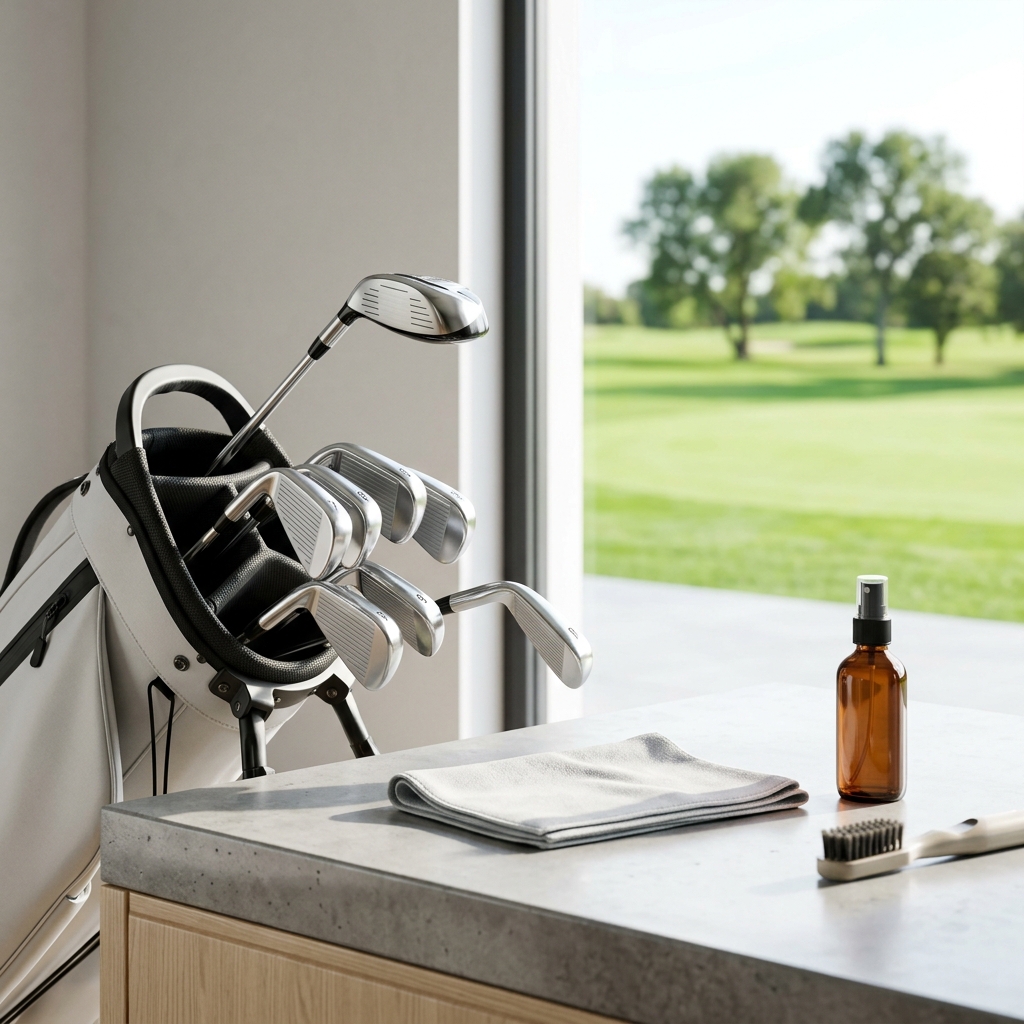
Most golf clubs, particularly iron and steel heads, are susceptible. Even stainless steel isn’t entirely immune, though it’s far more resistant. Different types of corrosion affect clubs in various ways. Surface rust is easily visible and often appears as orange discolouration. Pitting corrosion creates small, localized holes in the metal, significantly weakening the clubface. Perhaps the most insidious is galvanic corrosion, which occurs when dissimilar metals are in contact in the presence of an electrolyte (like saltwater), causing one metal to corrode faster than the other – often seen where a steel shaft meets a different material hosel.
Why Corrosion is a Problem for Golfers
Corrosion isn’t just an aesthetic issue; it directly impacts your game and your wallet. A corroded clubface reduces friction at impact, leading to reduced distance and inconsistent strikes. The altered feel makes judging distance and controlling shots more difficult. Beyond performance, corrosion drastically decreases club value, making resale or trade-in options less appealing. Replacing a full set of clubs can be a significant expense – easily exceeding £800 – £1500. Investing in preventative measures is far more cost-effective in the long run.
Preventative Measures: Before You Even Play
Proactive care is the best defence against corrosion. Start with proper storage. Avoid damp sheds or garages. Ideally, store clubs in a temperature and humidity-controlled environment. If that’s not possible, ensure good ventilation. Always use club covers – a set of 14 from Club Glove will set you back around £79.99, but it’s a worthwhile investment. After each round, meticulously wipe down your clubs with a clean, dry towel to remove dirt, grass, and moisture. Avoid walking through wet grass or lying your clubs in damp sand.
Cleaning Your Golf Clubs: A Step-by-Step Guide
Regular cleaning is crucial. Here’s a step-by-step guide:
- Remove Loose Dirt: Use a soft brush (a toothbrush works well) to remove any loose dirt or debris.
- Wash with Mild Soap and Water: Use warm water and a mild dish soap. Avoid harsh detergents.
- Rinse Thoroughly: Ensure all soap residue is removed.
- Dry Immediately: Use a clean, dry towel to thoroughly dry the club heads and shafts.
- For Steel Heads: Apply a thin coat of lubricant like FrogLube Golf Club Cleaner & Lubricant (£14.99 for 118ml) to provide a protective barrier.
- For Titanium/Graphite: Use a dedicated titanium/graphite cleaner and polish. Avoid abrasive cleaners that can damage the finish.
Important Note: Never use abrasive cleaners, steel wool, or scouring pads, as they can scratch the club finish and potentially accelerate corrosion.
Corrosion Protection Products: A 2026 Review
The market is flooded with corrosion protection products. Here’s a comparison of some top contenders available in the UK:
| Product | Type | Price (GBP) | Pros | Cons |
|---|---|---|---|---|
| Scottdale Rust Remover | Rust Remover | £19.99 (300ml) | Effective at removing existing rust. Relatively easy to use. | Strong chemical odour. Requires careful application. Not a preventative measure. |
| FrogLube Golf Club Cleaner & Lubricant | Cleaner & Lubricant | £14.99 (118ml) | Biodegradable. Excellent lubrication and corrosion protection. Safe for all club materials. | Smaller bottle size. May require frequent reapplication. |
| 303 Aerospace Protectant | UV Protectant & Polish | £24.99 (473ml) | Excellent UV protection. Leaves a durable, water-repellent finish. Suitable for various surfaces. | Can leave a slightly oily residue. Primarily focused on UV protection, less so on rust prevention. |
| NeverDull Golf Club Polish | Polish & Protectant | £29.99 (177ml) | Provides a brilliant shine. Contains rust inhibitors. Easy to apply. | Can be time-consuming to apply and buff. May not offer long-lasting protection. |
| Rust-Oleum Stops Rust Spray | Rust Inhibitor Spray | £12.99 (400ml) | Creates a durable protective coating. Effective rust prevention. | Can alter the club’s appearance. Requires careful masking and application. Strong odour. |
Dealing with Existing Rust: Restoration Techniques
If rust has already taken hold, don’t despair! Mild surface rust can often be removed with household items. Try a paste of vinegar and baking soda, applying it to the rusted areas and letting it sit for 30 minutes before scrubbing gently with a soft brush. For more stubborn rust, use a dedicated rust remover like Scottdale Rust Remover (£19.99).
Warning: Avoid abrasive cleaners and steel wool, as they can damage the club finish. If the rust is severe or widespread, consider professional restoration – a specialist can remove the rust and refinish the clubs, but this can be expensive (typically £5-£15 per club).
Long-Term Corrosion Prevention Strategies
The key to long-term corrosion prevention is consistency. Combine regular cleaning with preventative measures like storage in a dry environment and the use of protective sprays or waxes. Develop a routine – wipe down your clubs after every round, apply a lubricant/protectant monthly, and inspect them regularly for signs of corrosion. Consider a professional club fitting and maintenance service periodically – these services often include cleaning, polishing, and corrosion protection treatments.
Corrosion & Club Materials – A Deep Dive
Different materials require different approaches to corrosion prevention:
- Carbon Steel: Highly susceptible to rust. Requires regular cleaning, lubrication (FrogLube is excellent), and storage in a dry environment.
- Stainless Steel: More resistant to rust than carbon steel, but still vulnerable to corrosion, especially in saltwater environments. Regular cleaning and a protective coating (303 Aerospace Protectant) are recommended.
- Titanium: Exceptionally corrosion-resistant. Requires minimal maintenance, but cleaning to remove dirt and grime is still important.
- Graphite: Virtually immune to corrosion. Cleaning with a dedicated graphite cleaner is sufficient.
Our Top Pick
For overall corrosion prevention, FrogLube Golf Club Cleaner & Lubricant (£14.99) stands out. Its biodegradable formula, excellent lubrication, and suitability for all club materials make it a versatile and effective choice. Coupled with a set of Club Glove Club Covers (£79.99) for storage and transport, you’ll be well-equipped to keep your clubs in pristine condition for years to come.
FAQ
Q: How often should I clean my golf clubs?
Ideally, after every round. Even a quick wipe-down can make a big difference. A more thorough cleaning should be done monthly, or more frequently if you play in wet or coastal conditions.
Q: Can I use WD-40 on my golf clubs?
While WD-40 can temporarily displace moisture, it’s not a long-term corrosion preventative. It can also leave a sticky residue. Dedicated golf club lubricants like FrogLube are far more effective.
Q: What’s the best way to store my clubs over the winter?
Store them in a cool, dry place with good ventilation. Use club covers and consider applying a protective coating like 303 Aerospace Protectant. Remove any damp grips or towels.
Q: Is stainless steel completely rust-proof?
No. While stainless steel is *highly* resistant to rust, it’s not immune. It can still corrode, particularly in harsh environments like coastal areas with saltwater exposure. Regular cleaning and protection are still essential.
Q: Can I remove rust myself, or should I take my clubs to a professional?
For mild surface rust, you can usually remove it yourself using vinegar and baking soda or a dedicated rust remover. However, for severe rust or if you’re unsure, it’s best to consult a professional to avoid damaging your clubs.