
Table of Contents
What to Consider When Buying a Golf Rangefinder in the UK (2026)
Choosing the right golf rangefinder can shave strokes off your game. But with a growing market and increasingly sophisticated technology, knowing what to look for is crucial. Accuracy is paramount, ensuring you get reliable yardages. Range – how far the device can ‘see’ – is important for longer hitters and links courses. Magnification helps you clearly identify targets. Slope adjustment, which calculates adjusted distances based on elevation changes, is incredibly helpful, but remember its legality (see below). Display clarity, particularly in bright sunlight, also plays a big role. Finally, build quality and durability are essential for a long-lasting investment. In 2026, we’re seeing more hybrid models combining laser precision with GPS course maps, offering the best of both worlds.
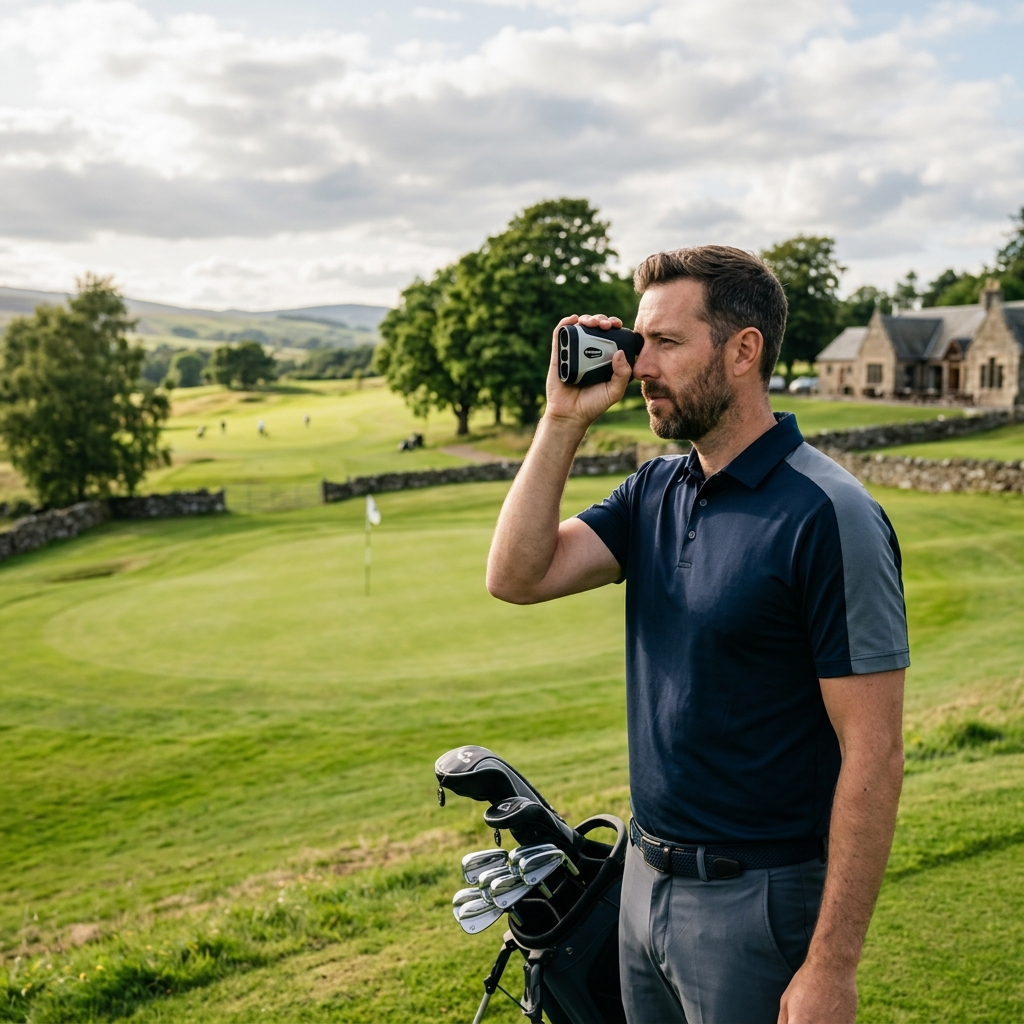
Key Features Breakdown
- Accuracy: Within +/- 1 yard is considered excellent.
- Range: 500-1000 yards is typical, but consider your needs.
- Magnification: 6x or 7x are common.
- Slope Adjustment: Essential for accurate distances on undulating terrain.
- R&A Compliance: Crucial for tournament play – ensure the device is approved.
- Display: Clear, bright, and easy to read in all conditions.
- Build Quality: Water resistance and robust construction are vital.
Understanding Golf Rangefinder Technologies: Laser vs. GPS
The two main types of golf rangefinders are laser and GPS. Each has its strengths and weaknesses.
Laser Rangefinders
Laser rangefinders use a laser beam to measure the distance to a specific target. They are incredibly accurate, providing precise yardages quickly. However, they rely on a clear line of sight – trees, buildings, or even heavy rain can interfere with the signal. Pinpoint accuracy is a key benefit, offering a definite reading to the flag.
- Pros: Highly accurate, fast readings, pinpoint targeting.
- Cons: Requires line of sight, can be affected by weather.
GPS Rangefinders
GPS rangefinders use satellite signals to determine your location and calculate distances to various points on the course. They offer course recognition and hazard information, providing a comprehensive overview of the hole. A significant advantage is that they don’t require a line of sight – you can get distances even if the flag is obscured.
- Pros: Course recognition, hazard distances, no line of sight needed.
- Cons: Less accurate than laser, can be slower to acquire a signal.
Hybrid Models
Hybrid rangefinders combine the benefits of both technologies. They use laser for precise yardages and GPS for course information and hazard distances. These represent the cutting edge, but often come with a higher price tag. The Bushnell Wingman GPS Speaker (£199.99) is a good example of integrating GPS data seamlessly.
Budget Breakdown: How Much Should You Spend?
The price of a golf rangefinder can vary significantly. Here’s a breakdown of what you can expect at different price points:
- Under £150: Entry-level models offering basic laser rangefinding capabilities. Accuracy may be slightly less precise, and features like slope compensation are often absent. Good for beginners or casual golfers.
- £150 – £300: Mid-range models providing improved accuracy, slope adjustment, and potentially some advanced features like PinSeeker technology. A solid balance of features and price.
- £300+: Premium models with the latest technology, including advanced optics, image stabilization, and hybrid capabilities. Ideal for serious golfers who demand the best performance.
Top 5 Golf Rangefinders for Value – Our 2026 Picks
We’ve tested a range of rangefinders to bring you our top picks for value in 2026, balancing features, accuracy, and price.
1. Bushnell Tour V6 Shift (Reviewed)
Price: £549.99
The Bushnell Tour V6 Shift builds on the legacy of the V5, offering even faster acquisition and enhanced slope technology. Its PinSeeker with JOLT technology provides visual and tactile feedback when you’ve locked onto the target. The new BITE magnetic mount is convenient for attaching to carts.
- Pros: Excellent accuracy, fast acquisition, reliable slope adjustment, BITE mount.
- Cons: Premium price point.
- Who this is best for: Serious golfers who want the best possible accuracy and features, and don’t mind paying for it.
2. Nikon Coolshot Pro Stabilized (Reviewed)
Price: £499.99
The Nikon Coolshot Pro Stabilized is a standout for its incredibly stable image, thanks to Nikon’s HYPERD CLARITY technology. This makes it easier to lock onto the target, even with shaky hands. It also boasts a long range and excellent accuracy.
- Pros: Image stabilization, long range, accurate readings, comfortable grip.
- Cons: Slope adjustment is an optional cartridge.
- Who this is best for: Golfers who struggle with shaky hands or need a rangefinder that performs well in low-light conditions.
3. TecTecTec ULT-X 900 (Reviewed)
Price: £149.99
The TecTecTec ULT-X 900 consistently impresses with its affordability and feature set. It offers slope adjustment, 6x magnification, and decent accuracy for the price. While it doesn’t match the performance of more expensive models, it provides excellent value for money.
- Pros: Very affordable, slope adjustment, good range, compact size.
- Cons: Accuracy isn’t quite as precise as premium models.
- Who this is best for: Budget-conscious golfers who want a basic, reliable rangefinder with slope adjustment.
4. Callaway 300 Pro (Reviewed)
Price: £279.99
The Callaway 300 Pro is incredibly user-friendly, with a simple interface and clear display. It integrates seamlessly with Callaway’s golf ecosystem, offering features like club tracking. It provides accurate readings and reliable slope adjustment.
- Pros: Easy to use, integrates with Callaway ecosystem, accurate readings, slope adjustment.
- Cons: May not have all the advanced features of higher-end models.
- Who this is best for: Callaway golfers who want a user-friendly rangefinder that integrates with their other Callaway equipment.
5. Motocaddy Pro 3000 Laser (Reviewed)
Price: £399.99
The Motocaddy Pro 3000 Laser is a fantastic option for Motocaddy trolley owners. It seamlessly integrates with Motocaddy trolleys, displaying distances directly on the trolley’s screen. It also offers a comprehensive feature set, including slope adjustment, PinLock technology, and a clear LCD display.
- Pros: Integration with Motocaddy trolleys, comprehensive features, accurate readings, slope adjustment.
- Cons: Best value for Motocaddy trolley users.
- Who this is best for: Golfers who own a Motocaddy trolley and want a seamless integration between their rangefinder and trolley.
Rangefinder Accessories: What Else Do You Need?
Beyond the rangefinder itself, consider these accessories:
- Carrying Case: Protects your investment during transport.
- Cleaning Cloth: Keeps the lenses clear for optimal performance.
- Batteries: Ensure you have spares, especially for laser rangefinders.
- Rangefinder Strap/Mount: Keeps the rangefinder secure and accessible.
Where to Buy Golf Rangefinders in the UK (2026)
You can find golf rangefinders at various retailers in the UK:
- American Golf: A wide selection of rangefinders and accessories.
- Direct Golf: Competitive prices and frequent sales.
- Golf Poser: Specialises in golf tech and offers expert advice.
- Online Marketplaces: Amazon UK and eBay UK offer a wide range of options, but be sure to check seller ratings.
Keep an eye out for seasonal sales and discounts, particularly during the off-season.
FAQs: Your Golf Rangefinder Questions Answered
Is a golf rangefinder legal for tournament play?
Not all rangefinders are legal. The R&A and USGA have specific rules regarding rangefinders. Generally, rangefinders must *not* provide other information, such as wind speed or temperature. Slope adjustment is often permitted, but must be switchable and set to zero for competitive play. Always check the tournament’s rules before using a rangefinder.
How accurate are golf rangefinders?
Good quality rangefinders are typically accurate within +/- 1 yard. However, accuracy can be affected by factors like weather conditions, target reflectivity, and user error.
How do I maintain my golf rangefinder?
Clean the lenses regularly with a microfiber cloth. Store the rangefinder in a protective case when not in use. Replace the batteries as needed. Avoid exposing the rangefinder to extreme temperatures or moisture.
What does ‘PinSeeker’ technology do?
PinSeeker technology helps you lock onto the flagstick even when surrounded by trees or other obstacles. It typically provides a small vibration or visual cue when the target is acquired.
Can a rangefinder be affected by rain?
Yes, heavy rain can interfere with the laser beam in laser rangefinders, reducing accuracy or preventing a reading altogether. Most rangefinders are water-resistant, but not waterproof. GPS rangefinders are less affected by rain.