
Table of Contents
As an Amazon Associate, we earn from qualifying purchases. This means we may receive a small commission at no extra cost to you when you buy through links on this page.
What is Golf Club Shaft Torque?
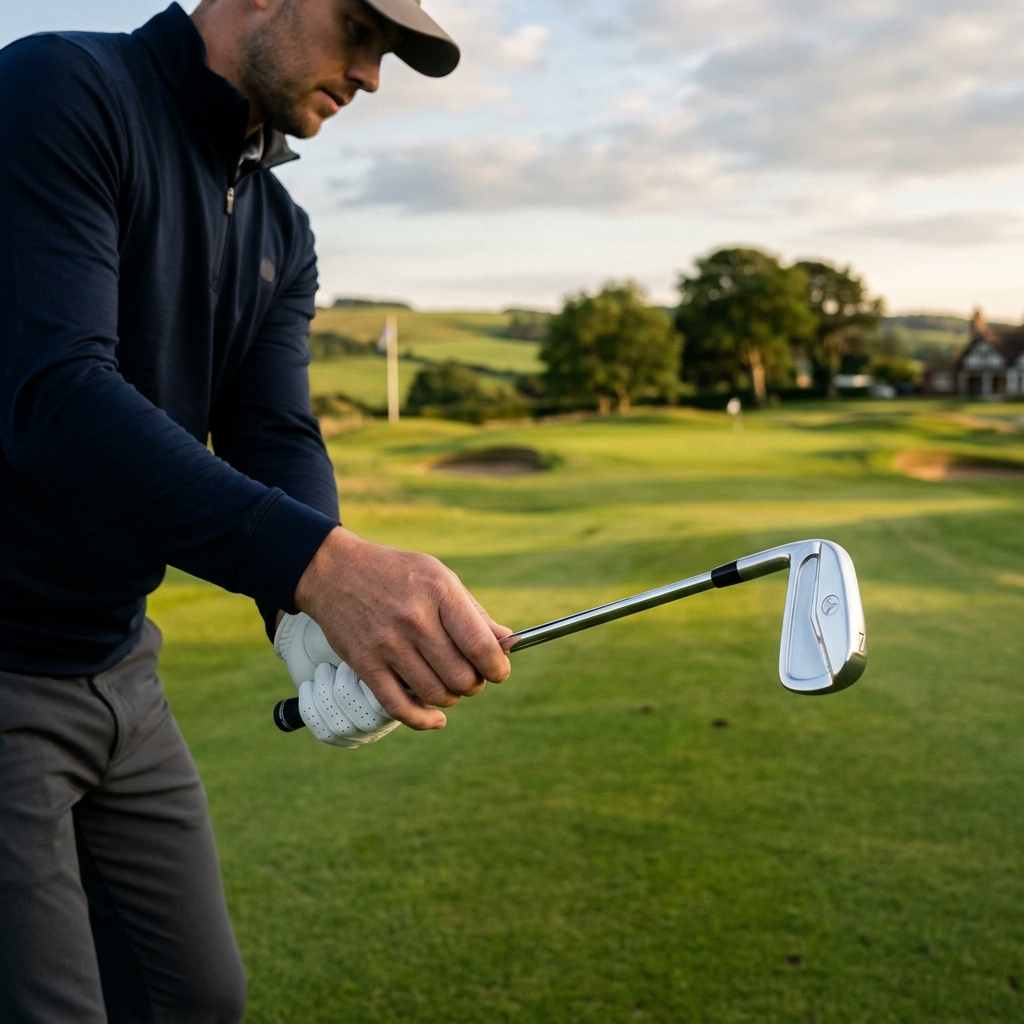
Golf club shaft torque refers to the degree of twisting a shaft undergoes during the swing. Measured in degrees, it represents the shaft’s resistance to rotational deformation. Think of it like trying to twist a towel – some towels twist easily (high torque), while others resist twisting (low torque). A higher torque number means the shaft twists more easily. Shaft torque is measured at a specific point along the shaft, typically just above the grip. Understanding torque is crucial for optimising your club’s performance to match your swing.
How Does Shaft Torque Affect Ball Flight?
Shaft torque significantly impacts several key aspects of ball flight:
- Launch Angle: Higher torque shafts generally promote a higher launch angle. As the shaft releases during the downswing, the clubface tends to close slightly, encouraging a higher trajectory.
- Spin Rate: Torque also influences spin rate. Higher torque often leads to increased spin, particularly with drivers, which can result in more carry, but potentially less roll.
- Ball Direction: This is where torque gets interesting. For golfers who struggle to square the clubface at impact, higher torque can help close the face, reducing slices. Conversely, for golfers who hook the ball, lower torque can help maintain a more open face angle.
Visual Representation (Conceptual):
[Imagine a diagram here showing a driver swing. One diagram shows a higher torque shaft twisting more and the clubface closing, resulting in a higher launch and more spin. The other shows a lower torque shaft with less twist and the clubface remaining more open, resulting in a lower launch and less spin.]
Here’s a breakdown of how different torque levels generally affect ball flight:
- High Torque (4.0°+): Higher launch, more spin, potential for draw bias.
- Medium Torque (3.0° – 4.0°): Balanced launch and spin, suitable for a wider range of players.
- Low Torque (Below 3.0°): Lower launch, less spin, more control, potential for fade bias.
Torque vs. Flex: What’s the Difference?
Shaft flex (Regular, Stiff, Extra Stiff, etc.) and torque are often confused, but they are distinct characteristics. Flex refers to the shaft’s bend during the swing, dictating how much the shaft bows towards the clubhead at address and throughout the swing. Torque, as we’ve established, is the twisting resistance.
They work together. A shaft with a high flex *and* high torque will feel very whippy and forgiving. A shaft with a low flex *and* low torque will feel very boardy and precise. However, you can have a stiff flex shaft with medium torque, or a regular flex shaft with low torque. Flex governs the overall power transfer, while torque governs the face angle at impact.
Who Benefits From High Torque Shafts?
High torque shafts are generally best suited for:
- Golfers with moderate to fast swing speeds: The extra torque helps load and unload the shaft efficiently, maximizing energy transfer.
- Golfers with a steep attack angle: A steeper angle creates more stress on the shaft; higher torque can handle this stress and promote a higher launch.
- Golfers who struggle with slicing: The tendency for the shaft to close the clubface can help correct a slice.
- Golfers seeking increased distance: The higher launch and spin generated by high torque can contribute to greater carry distance.
Who Benefits From Low Torque Shafts?
Low torque shafts are typically preferred by:
- Golfers with faster swing speeds: Lower torque provides more control and prevents the clubface from twisting excessively.
- Golfers with a shallow attack angle: A shallow angle requires more precision; lower torque offers greater accuracy.
- Golfers who struggle with hooking: The resistance to clubface closure can help prevent a hook.
- Golfers prioritising accuracy and control: Lower torque provides a more predictable and consistent ball flight.
How to Determine Your Ideal Shaft Torque
Determining the right shaft torque isn’t just about your swing speed. It requires a holistic assessment:
- Self-Assessment: Analyse your typical ball flight. Do you slice, hook, or hit it straight? What’s your launch angle like?
- Launch Monitor Data: Tools like Trackman or FlightScope provide detailed data on swing speed, attack angle, launch angle, spin rate, and clubface angle. This data is invaluable for pinpointing the optimal torque.
- Professional Fitting: The most accurate method is to get fitted by a qualified club fitter. They will assess your swing characteristics and recommend shafts with the appropriate torque, flex, weight, and kickpoint. Expect to pay between £150 – £300 for a comprehensive fitting session in 2026.
Shaft Torque in Different Club Types (Driver, Irons, Hybrids)
Torque considerations vary depending on the club type:
- Drivers: Typically have the highest torque (3.5° – 5.5°) to maximize distance and launch.
- Fairway Woods & Hybrids: Generally have medium torque (2.5° – 4.0°) for a balance of distance and control.
- Irons: Typically have the lowest torque (1.5° – 3.0°) for greater accuracy and precision.
These are general ranges, and manufacturers are constantly innovating, so specific torque values will vary between models. By 2026, we’re seeing increasingly sophisticated torque profiles in iron shafts, with varying torque levels within the shaft itself to optimise performance across different iron lengths.
New Shaft Technologies in 2026: Torque & Performance
In 2026, several new technologies are influencing shaft torque and performance:
- Advanced Materials: Toray T1100G and similar ultra-high modulus carbon fibres are becoming increasingly common, allowing for shafts that are both strong and lightweight, offering greater control over torque.
- Variable Torque Profiles: Shafts are being designed with varying torque levels along their length. For example, a shaft might have higher torque in the butt section for improved feel and lower torque in the tip section for greater stability.
- AI-Powered Shaft Design: Artificial Intelligence is being used to optimise shaft designs based on data from thousands of swings, creating shafts with tailored torque characteristics.
- Resin Matrix Enhancements: New resin formulations are improving energy transfer and dampening vibrations, contributing to more stable and consistent torque delivery.
Frequently Asked Questions (FAQs)
Is higher torque always better?
No, higher torque isn’t universally better. It depends entirely on your swing characteristics and what you’re trying to achieve. For some players, it can be a game-changer, while for others, it can lead to inconsistency.
How does shaft weight affect torque?
Generally, heavier shafts have lower torque, and lighter shafts have higher torque. However, this isn’t a hard and fast rule. Shaft material and construction also play a significant role.
Can I change the torque of my shaft?
Not directly. Torque is inherent to the shaft’s design and materials. You can, however, effectively change the feel and performance by switching to a different shaft with a different torque value.
What is kickpoint and how does it relate to torque?
Kickpoint refers to the point on the shaft that bends the most during the swing. A low kickpoint generally promotes a higher launch and more torque, while a high kickpoint promotes a lower launch and less torque. They work in conjunction to influence ball flight.
Are more expensive shafts always better in terms of torque management?
Not necessarily, but often they are. The higher price point often reflects the use of advanced materials, more sophisticated manufacturing processes, and more rigorous quality control, which can lead to more consistent and optimised torque characteristics.
Popular Shaft Options (2026)
Here’s a comparison of some popular shaft options available in the UK in 2026:
| Product Name | Price (GBP) | Typical Torque (Degrees) | Flex Options | Best Suited For |
|---|---|---|---|---|
| Fujikura Ventus TR Blue 2026 | £229.0 | 3.8 | Regular, Stiff, X-Stiff | Moderate to fast swing speeds, players seeking a smooth feel. |
| Titleist Tensei AV Blue with 60g | £199.0 | 3.2 | Regular, Stiff | Players wanting a balanced feel and consistent performance. |
| Mitsubishi Diamana PD 60 | £249.0 | 2.8 | Regular, Stiff, X-Stiff | Accurate players seeking control and a penetrating ball flight. |
| Aldila NV 2KXV Green 65g | £219.0 | 4.2 | Regular, Stiff, X-Stiff | Golfers looking for a high launch and maximum distance. |
| Project X Evenflow Blue 70 | £179.0 | 3.5 | Regular, Stiff, X-Stiff | Players wanting a stable feel with moderate spin. |