
Table of Contents
As an Amazon Associate, we earn from qualifying purchases. This means we may receive a small commission at no extra cost to you when you buy through links on this page.
Introduction: Why Shaft Material Matters
The golf club shaft is arguably the most crucial component influencing your performance, often overlooked in favour of the clubhead. It’s the engine that delivers the clubhead to the ball, impacting distance, accuracy, feel, and overall consistency. Choosing the right shaft material, flex, and weight is paramount for optimising your swing. In 2026, advancements in materials science are pushing the boundaries of shaft technology, offering golfers more tailored options than ever before. These advancements focus on energy transfer, stability and personalised performance profiles. This guide will break down the core materials, explore emerging technologies, and help you understand how to select the ideal shaft for your unique swing and skill level.
Steel Shafts: The Traditional Choice
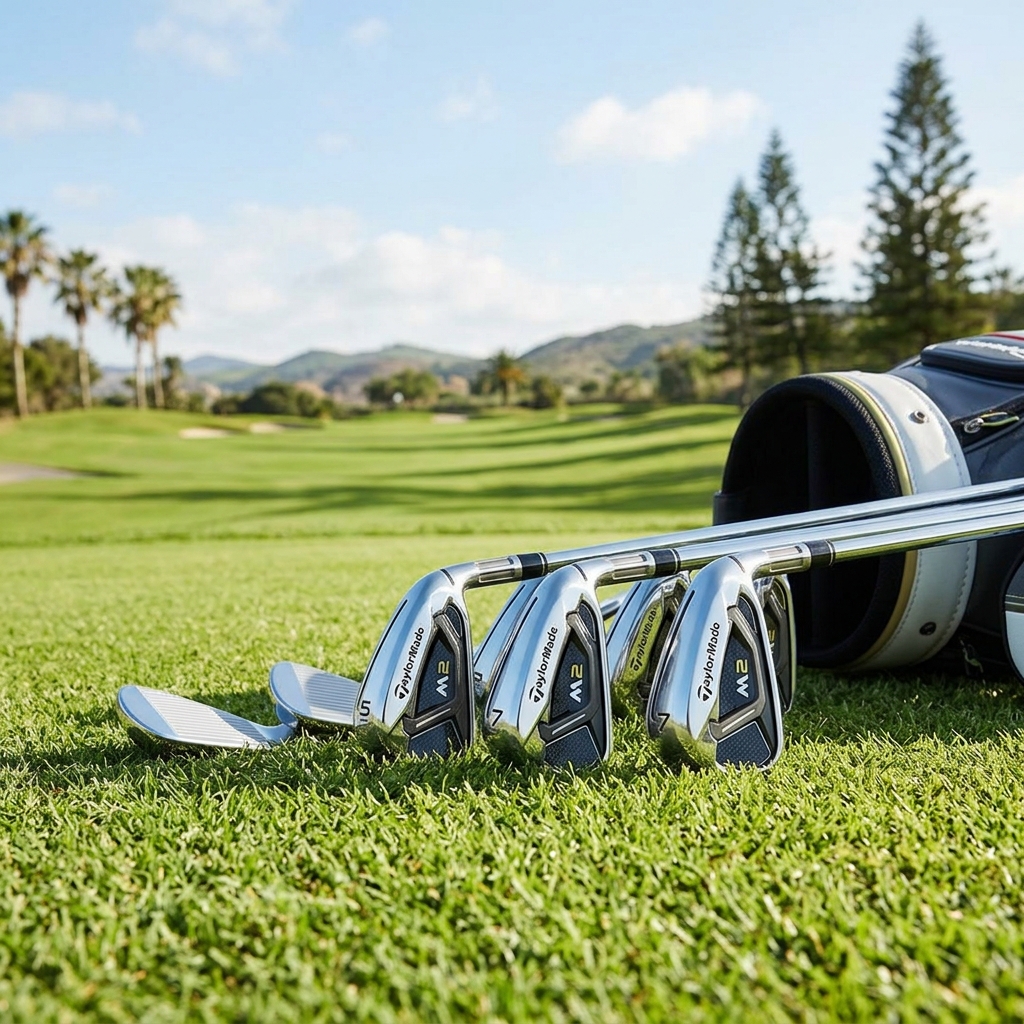
Steel shafts have been the industry standard for decades, and continue to be popular, particularly among skilled golfers. They are renowned for their durability and consistency.
Types of Steel Shafts
Common types include:
- Carbon Steel: Offers a more traditional feel and is often favoured by players who prefer feedback.
- Stainless Steel: Highly durable and corrosion-resistant, making them a reliable choice for all weather conditions.
Pros
- Durability: Steel shafts are incredibly robust and can withstand significant wear and tear.
- Consistency: They provide a predictable and consistent feel throughout the swing.
- Affordability: Generally less expensive than graphite options.
Cons
- Weight: Heavier than graphite shafts, requiring more strength and swing speed to achieve optimal distance.
- Less Forgiving: Can feel harsh on off-centre hits.
Who They Suit
Steel shafts are best suited for low handicap players and those with strong, consistent swing speeds. They provide the control and precision demanded by skilled golfers.
Popular UK Steel Shaft Models: True Temper Dynamic Gold 120 (£149.99 per set of 8) and KBS Tour 90 (£169.99 per set of 8) remain top choices for irons.
Graphite Shafts: Lightweight Power
Graphite shafts have gained immense popularity due to their lightweight nature and ability to increase swing speed. These are a great option for a wide range of golfers.
Pros
- Lightweight: Easier to swing, leading to increased clubhead speed and potentially greater distance.
- Increased Swing Speed: The lighter weight allows for a faster swing, which translates to more power.
- More Forgiving: Graphite absorbs some of the shock from off-centre hits, providing a more forgiving feel.
Cons
- Less Feedback: Can feel less connected to the clubhead compared to steel, making it harder to feel the swing.
- Potentially Less Durable: While improving, graphite can be more susceptible to damage than steel.
Graphite Grades
Graphite shafts come in different grades, influencing their performance characteristics:
- High Modulus Graphite: Stiffer and more responsive, offering greater control.
- Mid Modulus Graphite: A good balance of feel and performance.
- Low Modulus Graphite: More flexible, providing a higher launch and more forgiveness.
Multi-Material Shafts
Increasingly popular, these shafts combine graphite with other materials like boron fibres to enhance specific performance characteristics. They aim to provide the best of both worlds – the lightweight nature of graphite and the stability of other materials.
Who They Suit
Graphite shafts are ideal for mid-to-high handicap players, slower swing speeds, and seniors. They can also benefit golfers seeking increased distance and forgiveness.
Popular UK Graphite Shaft Models: Fujikura Ventus TR Blue 7 (£249.99) and Aldila NV 2KXV Green (£229.99) are highly regarded driver shaft options. Mitsubishi Tensei Blue (£199.99) and LA Golf Bachelorette 60g (£279.99) are popular choices for woods.
Beyond Steel & Graphite: Emerging Shaft Materials (2026 Outlook)
The landscape of golf shaft materials is evolving rapidly. By 2026, we’re seeing increased adoption of materials beyond traditional steel and graphite.
Boron
Boron fibres are exceptionally strong and lightweight, offering increased stiffness and responsiveness. They’re often incorporated into multi-material shafts.
Composite Materials
Combining carbon fibre with other advanced polymers allows manufacturers to fine-tune shaft characteristics, creating shafts that are both lightweight and durable.
Nanotechnology Applications
Nanomaterials are being used to enhance the strength and stability of shaft materials at a microscopic level, resulting in improved energy transfer and consistency. We’re seeing nano-tube reinforcements in certain high-end models.
Accra Tour Z (£299.99) exemplifies these advanced composite materials, offering a premium feel and performance.
Shaft Flex: Matching Flex to Your Swing
Shaft flex refers to the amount of bend a shaft exhibits during the swing. Choosing the correct flex is crucial for optimal ball flight and control.
Shaft Flex Options
- Ladies (L): Designed for golfers with very slow swing speeds.
- Senior (A): For golfers with slower swing speeds and a moderate arc.
- Regular (R): The most common flex, suitable for golfers with moderate swing speeds.
- Stiff (S): For golfers with faster swing speeds and a more aggressive swing.
- Extra Stiff (X): Designed for professional golfers with very fast swing speeds.
Swing Speed Chart (Approximate)
| Swing Speed (mph) | Recommended Flex |
|---|---|
| Under 75 | Ladies/Senior |
| 75 – 85 | Regular |
| 85 – 95 | Stiff |
| 95+ | Extra Stiff |
Shaft Weight & Torque: Fine-Tuning Performance
Shaft weight and torque further refine shaft performance. Lighter shafts encourage faster swing speeds, while torque influences clubface rotation.
Shaft Weight: Generally ranges from 40g (lightest) to 100g (heaviest). Lighter shafts promote faster swing speeds but can be less stable. Heavier shafts offer more stability but require more strength.
Torque: Measures the shaft’s resistance to twisting. Lower torque values result in more control, while higher torque values can lead to more forgiveness, but potentially less accuracy.
Shaft Material Comparison Table (2026)
| Characteristic | Steel | Graphite | Emerging Materials (Boron/Composite) |
|---|---|---|---|
| Weight | Heavier | Lightweight | Very Lightweight |
| Flex | Wide Range | Wide Range | Highly Tunable |
| Cost | £80 – £300+ (set) | £150 – £500+ (shaft) | £250 – £600+ (shaft) |
| Feel | Precise, Responsive | Dampened, Forgiving | Customisable, Balanced |
| Distance | Consistent | Potential for Increased Distance | Optimised Distance & Control |
| Accuracy | High | Good | Excellent |
| Durability | Excellent | Good (Improving) | Very Good |
| Ideal Player Profile | Low Handicap, Strong Swingers | Mid-High Handicap, Slower Swing Speeds, Seniors | Serious Golfers Seeking Ultimate Performance |
Finding the Right Shaft for You: Getting Fitted
While this guide provides valuable information, the absolute best way to find the right shaft is to get a professional club fitting. This involves assessing your swing speed, launch angle, spin rate, and swing plane to determine the optimal shaft material, flex, weight, and torque.
What to Expect During a Fitting:
- Static Analysis: Measuring your swing speed and other physical characteristics.
- Dynamic Analysis: Using launch monitors to track ball flight data with different shaft options.
- Professional Advice: Receiving recommendations from a qualified fitter.
Reputable Club Fitting Services in the UK:
- American Golf (Nationwide)
- Scottsdale Golf (Various Locations)
- Custom Golf (Nationwide)
Conclusion: Optimizing Your Game with the Right Shaft
Choosing the right golf club shaft material is a critical step in optimising your game. Understanding the characteristics of steel, graphite, and emerging materials will empower you to make an informed decision. Remember, advancements in materials science are continually pushing the boundaries of what’s possible. Don’t underestimate the impact a properly fitted shaft can have on your distance, accuracy, and overall enjoyment of the game. Investing in a professional club fitting is the best way to unlock your full potential on the course.