
Last updated:
Organise a golf bag around when you use each item, not around filling every pocket. The essentials should be easy to reach in the bag’s normal playing position, spare clothing should stay separate from damp items, and small accessories should have a consistent home. Start with the bag you own. A clearer packing system may solve the problem before you spend money on a bag with more compartments.
Link disclosure: This guide links directly to manufacturer and retailer information. No commission is assumed from these links.
Guide checked: 8 September 2026. This article uses the linked manufacturer and retailer information. We have not carried out hands-on product testing. Confirm the exact specification and current offer before buying.
| Zone | Typical contents | Working rule |
|---|---|---|
| Frequent access | Balls, tees and markers | Reach without disturbing other items |
| Clothing | Spare layers and waterproofs | Keep separate from damp equipment |
| Valuables | Only what you need to carry | Use the intended pocket and suitable protection |
| After-round return | Items needing cleaning or drying | Remove promptly rather than storing forgotten |
Table of Contents
Empty the bag and choose a realistic inventory
Lay everything out and divide it into items used during a normal round, occasional extras and things that can stay at home. Count repeated accessories and check whether several half-used packets serve any purpose. The aim is a useful load, not an artificially minimal bag that leaves you without essentials.
Give occasional items a reason to be present. If an accessory is included for a particular course or weather forecast, add it deliberately before that round. Avoid allowing old receipts, damaged tees and unused extras to become permanent contents simply because a pocket has space.
Arrange frequent-use items in the playing position
Put the bag on its stand or mount it on the trolley before allocating pockets. The pocket easiest to reach while the bag is upright at home may be less convenient once a trolley strap is fastened. Open and close it with the arrangement you will actually use.
Keep tees, markers and other small items together in an appropriate small compartment or pouch so they do not spread across the bag. Use an arrangement you can remember without labels on every zip. The objective is to retrieve one item without unpacking several others.
A cart-bag example: assess access, not the pocket total
The PING Pioneer is a cart-bag reference with a cart-strap channel. Use that type of arrangement to test whether the strap and supports leave the key compartments accessible. A channel is useful only when the actual trolley pairing works as intended.
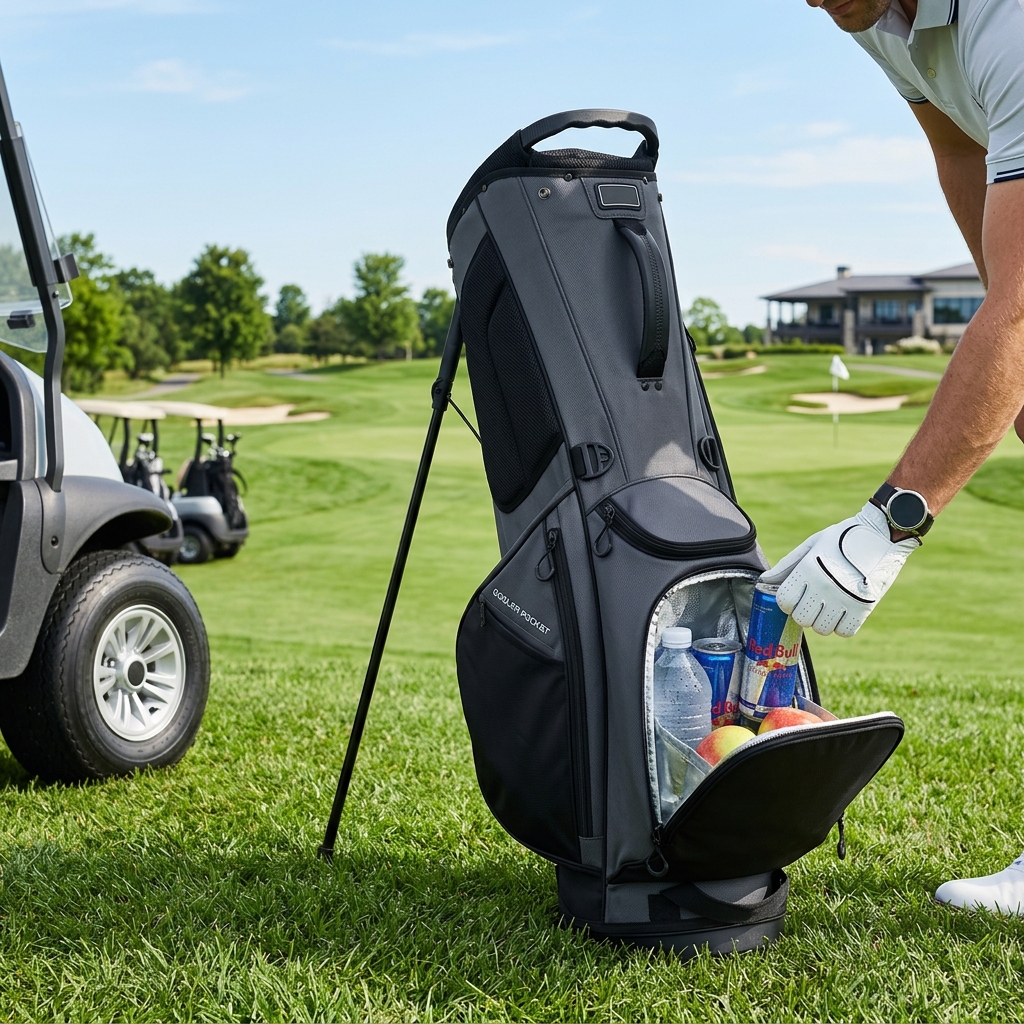
Do not assume an insulated compartment is waterproof or that every pocket is suitable for every valuable. Read the exact description and protect items according to their own requirements.
Keep dry storage and damp returns distinct
Choose where spare layers will go before the round and keep that space available for them. Plan separately for a damp glove or towel that needs to come home. Putting a wet item beside dry clothing defeats the organisation system even if the bag’s exterior has a weather-protection specification.
After the round, remove items that need drying or cleaning and follow their care instructions. Do not make the bag a long-term storage place for wet clothing. A simple habit of opening the relevant pocket at home is more useful than relying on memory the next time you play.
Another example: check compartments in a mounted Pro-Series
The checked Motocaddy Pro-Series has a trolley-oriented arrangement and a putter well. Its source has inconsistent pocket counts, which is another reason to assess the compartments you need directly rather than buying by a headline number.
The bag itself is not treated here as waterproof. Check the actual construction and closure instructions rather than inferring whole-bag protection from a supplied rain hood.
Read the product details for Motocaddy Pro-Series bag at Motocaddy UK
Give power and valuables a deliberate home
If you carry a rangefinder spare battery, keep it correctly identified and protected according to its instructions rather than loose among metal accessories. A phone or GPS charging arrangement also needs a plan appropriate to the equipment; do not assume a bag pocket provides weather protection or safe charging conditions by itself.
Carry only the valuables you need and use the bag’s intended storage thoughtfully. Avoid placing heavy loose accessories where they can press on a screen or fragile item. The right protection depends on the item, not simply on a pocket being labelled for valuables.
Use a two-minute reset before the next outing
Check balls and small accessories, restore dry clothing as needed, remove rubbish and confirm the power arrangements for any devices. Keep this reset short enough to repeat. If a pocket repeatedly causes confusion, change the allocation rather than adding another miscellaneous pouch.
Our bag-organiser guide covers storage accessories. Buy an organiser or a different bag only when you can name the remaining problem, such as inaccessible pockets or insufficient room for essential clothing. A consistent system should make the next round easier to prepare for.