
Last updated:
Golf club length should be measured consistently and fitted to the golfer’s setup and ball striking. Height alone is not enough to prescribe a finished set. Start with the exact club model and its standard specification, take appropriate static measurements, then refine the choice by hitting shots. If changing existing clubs, assess the completed build afterwards rather than assuming that an extension or cut affects length and nothing else.
Link disclosure: The manufacturer and retailer links in this guide are direct links. They are included to help you check the named products and do not use affiliate tracking.
Guide checked: 8 September 2026. This guide compares the linked manufacturer and retailer information. We have not carried out hands-on product testing. Check the exact specification and current offer before buying.
| Information | Purpose | Keep in mind |
|---|---|---|
| Exact model standard | Baseline for a custom specification | Standard varies by model and build |
| Height and wrist-to-floor | Initial iron-fitting information | They do not replace hitting shots |
| Finished measurement | Verify the assembled club | State the measurement convention |
| Strike and setup | Refine the practical fit | Assess more than how the club looks at address |
Table of Contents
PING fitting: static information followed by shots
PING describes using height, wrist-to-floor and hand measurements in an iron fitting, then analysing shots to refine the specifications. Its process considers launch conditions and the golfer’s feedback.
This is a fitting sequence, not a universal height-to-length chart. Use an appropriate session to establish what works with your actual swing.
Define the complete measurement
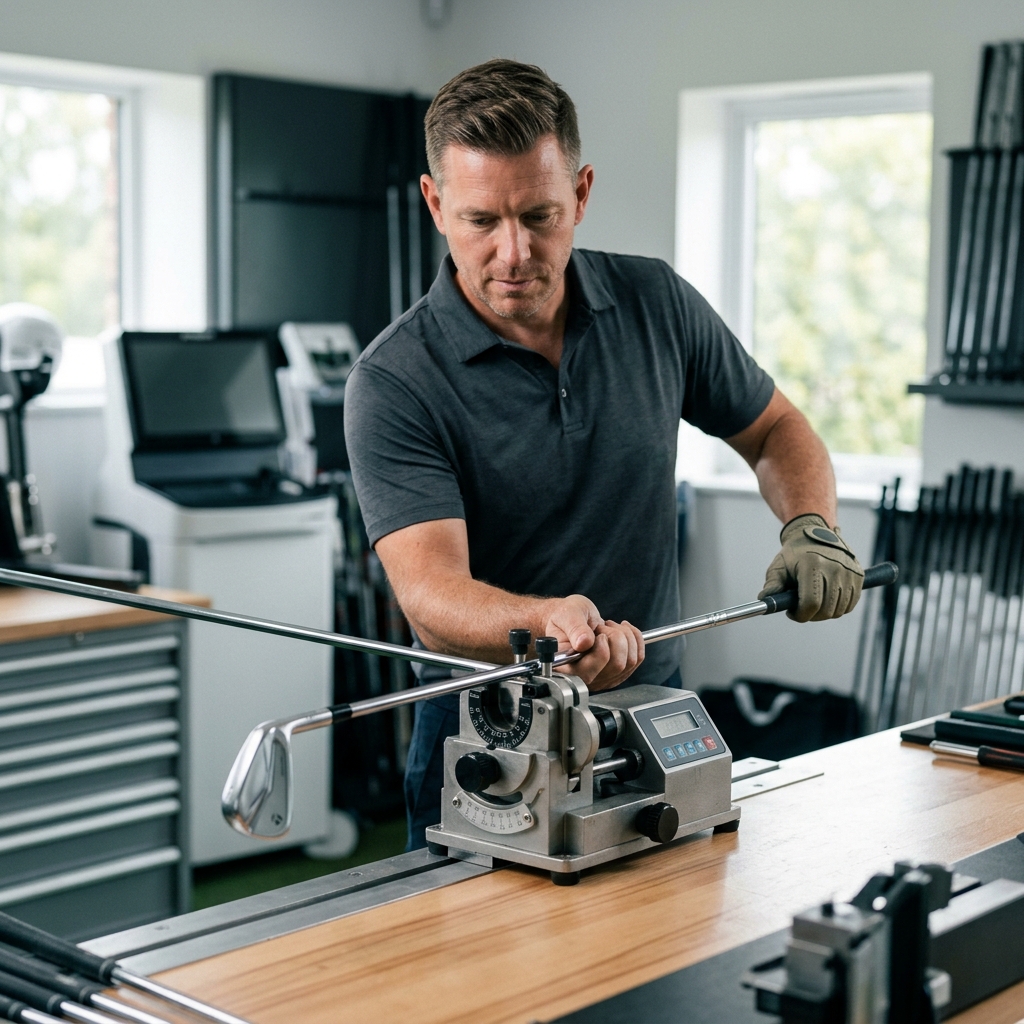
The R&A equipment convention for woods and irons uses a horizontal plane and a 60-degree sole plane, measuring from their intersection to the top of the grip. Putters have a separate measurement description. A loose shaft measurement is a different quantity from the finished club length.
Ask the clubmaker or seller how the quoted length was taken. Small differences can be difficult to interpret if people use different endpoints or setups. Record the method when checking a used or modified club so later comparisons have a common reference.
Identify what standard means
A specification such as half an inch over standard is incomplete without the reference model and build. Manufacturers can use different stock lengths, and a shaft option can carry its own footnote. Keep the original catalogue reference separate from the actual measured club.
For a used set, ask whether it has been extended, shortened or reshafted. The label on the head cannot reveal every previous alteration. If the purchase depends on a precise custom length, obtain a measurement rather than relying on an assumption about factory specifications.
Use static measurements to begin the fitting
Height and wrist-to-floor can help establish a starting point for irons when taken according to the fitting method. They are more useful together than height alone, because golfers with similar height can have different proportions and setups.
Follow the fitter’s instructions rather than improvising a measurement while holding an awkward pose. Bring the shoes you normally use for golf if the session requests them. The aim is consistent initial information that can then be checked with actual shots.
Refine the choice through contact
Try suitable lengths and observe the strike pattern, comfort at address and resulting shots. A club that appears to match a chart still needs to work when swung. Conversely, an unusual-looking specification should be evaluated from the fitting evidence rather than rejected only because it differs from a friend’s.
Consider the whole set’s job. A long iron or hybrid may need a different solution from a short iron if contact is difficult. Do not assume one successful adjustment to a single club settles every other club automatically.
Consider lie and balance alongside length
Length is part of a connected build. After a proposed change, ask the clubmaker to check the relevant specifications and assess how the completed club behaves. Do not assume that cutting or extending a club preserves every aspect of the previous feel.
Any lie-angle alteration also needs to be appropriate for the specific head and performed by someone with the necessary equipment and knowledge. A general fitting recommendation is not permission to bend every material or model by the same amount.
Choose a proportionate modification plan
For a full set, discuss whether a trial club can establish the result before changing everything. Obtain a quote that includes extensions or shafts, grips, labour and final checks where needed. A small component cost does not represent the full finished job.
If you are still choosing a first package, use these checks alongside the beginner-set shortlist. If a grip change is part of the work, include a separate regripping quote in the modification budget.
Compare the modification with retaining the set or buying an appropriately fitted alternative. Existing condition matters: a worn head or damaged shaft may make a different route more sensible. Base the decision on the set you own, not an abstract promise about custom length.
Save the finished specification
Keep a club-by-club record of length and other relevant build details. It helps when replacing one iron, arranging a repair or checking a later purchase. The useful outcome is a repeatable setup that fits your golf, with measurements that another clubmaker can understand.
See our golf fitting service guide for planning the session and comparing what is included.