
Last updated:
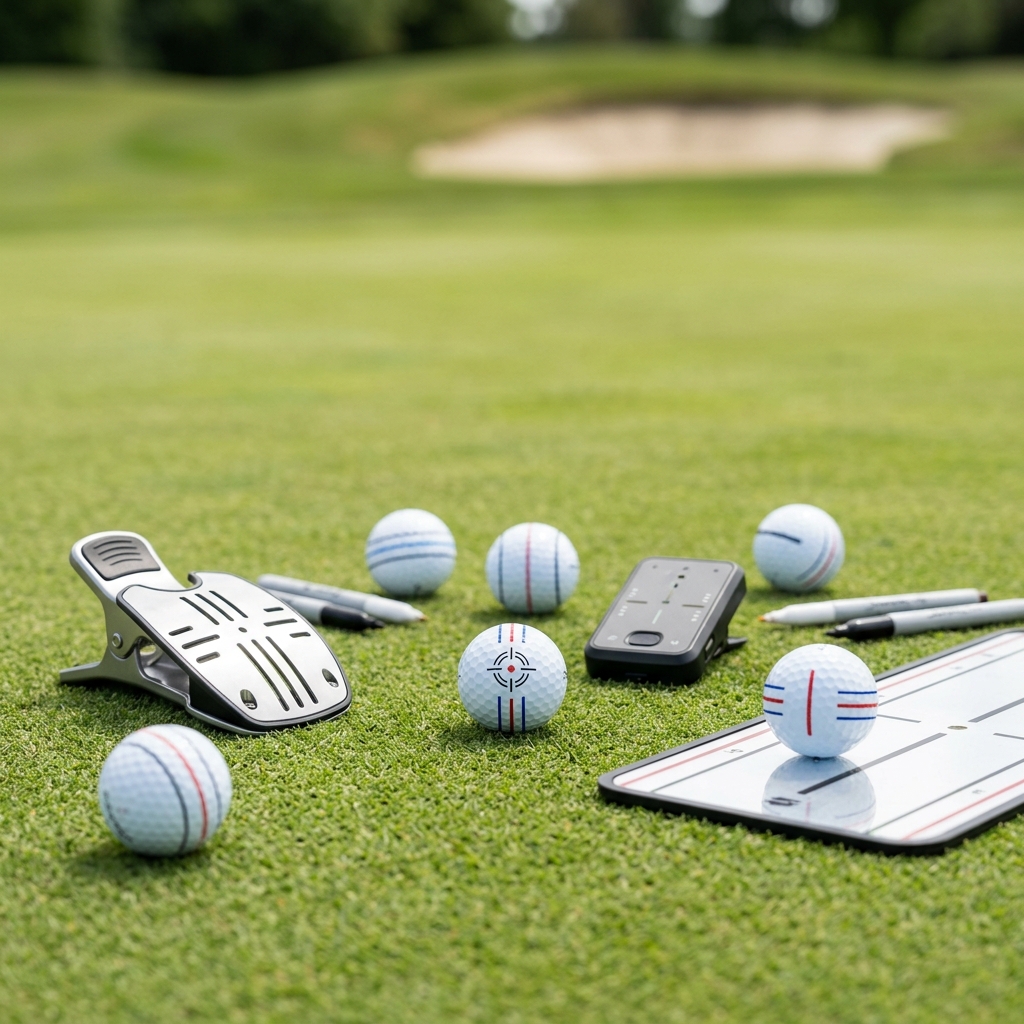
Several different markings can appear on the same golf ball, and they do different jobs. The brand and model help identify the product, a play number helps distinguish balls, and a line or logo may support alignment or personal identification. Reading them carefully is useful both when buying loose balls and when avoiding confusion with another player's ball on the course.
Link disclosure: The manufacturer and retailer links in this guide are direct information links. We have not added affiliate tracking to them.
Guide checked: 8 September 2026. This guide uses the linked manufacturer and retailer information. We have not carried out hands-on product testing. Specifications describe the identified models; confirm the selected variant before ordering.
| Marking | Typical purpose | Do not infer |
|---|---|---|
| Brand and model | Product identification | Generation from the brand alone |
| Play number | Distinguish otherwise similar balls | An automatic compression or handicap rating |
| Alignment graphic | Visual reference for the player | A guaranteed improvement in putting |
| Personal ink mark | Recognise your own ball | Permission to alter its performance |
Table of Contents
Identify the model before its performance
Start with the complete model wording and compare it with the packaging or manufacturer's information. Small suffixes can identify a different ball, not simply a different play number. If a loose-ball seller uses a broad family name, ask which models and generations are included. A photograph of one clean example does not establish the contents of a mixed batch.
Keep older and newer generations separate during a comparison. Similar cover graphics do not guarantee an identical construction, and a year added by a marketplace seller may describe the listing rather than the release. Ask for the packaging where available. If exact identification is not possible, treat the purchase as mixed practice stock rather than a controlled sample of one current product.
Treat a play number as identification context
Do not assume that a single printed number is a universal compression value or a skill rating. Brands can offer different numbering and customisation options, so read the actual product description if a number matters to you. The practical use is often simply to distinguish otherwise similar balls. A personal mark provides another check when two players choose the same brand and number.
The Titleist custom-ball service illustrates how product identification and personalisation can be separate choices. Review the selected model, colour and available print options before ordering. A custom number or message should not distract from buying the intended ball. Check the proof and the complete pack contents, particularly if the order is a gift or a large society purchase.
Make your personal mark easy to recognise
The R&A Rule 6.3a says a player should put an identifying mark on the ball. Choose something distinct enough to recognise in combination with the model and number, such as a small arrangement of coloured dots. Mark the balls before the round, and tell playing partners what you are using when it is helpful to avoid confusion.
Use an appropriate ball-marking pen and allow the mark to dry. Keep it simple enough to recognise when only part of the ball is visible. Do not rely solely on a common logo if several players received the same event ball. Recheck marks that have worn away between rounds, and distinguish the next ball clearly when playing another ball under an applicable rule.
Keep alignment separate from ball identification
A factory line, arrow or multicolour graphic can provide an aiming reference, while a personal dot pattern is primarily an identification tool. You may prefer one graphic when putting and another when teeing off. Try the visual setup before ordering a large supply. A bold line that seems helpful in a photograph may become distracting from your normal address position.
Compare graphics using the same ball model where possible, so the visual preference is not mixed with a change in construction. Do not assume a line makes the face square or guarantees a particular start direction. The benefit, if any, depends on how you use it. Keep normal putting practice and a consistent routine alongside any alignment preference.
Check special markings and rules questions directly
If a ball is labelled practice, refinished, X-out or with another unfamiliar term, obtain the maker's explanation and the relevant competition requirements before assuming it is equivalent to a standard retail ball. Do not guess from the word alone. For an event that requires an exact conforming-list match, ask the committee how the markings should be checked.
Keep ordinary ink identification distinct from physical or chemical modification intended to change flight. The equipment rule addresses deliberate performance alteration. Buy a known ball in suitable condition, add a recognisable personal mark and retain enough product information to identify replacements. That simple sequence is more useful than trying to decode every printed symbol into an unsupported promise about distance, spin or player ability.
If you want a tool for adding a consistent personal line, the golf-ball alignment marker guide covers the separate accessory choice.