
Last updated:
Choose junior golf clubs around the child's current height and ability to handle the clubs comfortably. An age label is a rough shopping filter, not a measurement. Check the manufacturer's sizing instructions, the contents of the exact size and the child's coach's advice. Buying a large set to grow into can leave the child learning with equipment that does not suit the way they stand or swing now.
Link disclosure: The manufacturer and retailer links in this guide are direct information links. We have not added affiliate tracking to them.
Guide checked: 8 September 2026. This guide uses the linked manufacturer and retailer information. We have not carried out hands-on product testing. Specifications describe the identified models; confirm the selected variant before ordering.
| Check | Why it matters | Practical action |
|---|---|---|
| Current height | Size systems differ by maker | Measure using the selected brand's instructions |
| Club count | Different sizes may contain different clubs | Read the contents for the chosen size |
| Manageable bag | The child may carry it | Try the loaded bag and straps |
| Experience | Lessons and courses require different shots | Ask the coach which clubs are useful now |
Table of Contents
Measure before choosing a size
Take a fresh height measurement when you are ready to order. Do not rely on a measurement from the start of the school year or assume that one brand's size corresponds to another's. Read whether the manufacturer specifies footwear and how the height bands work. If the child falls near a boundary, speak to the coach or supplier about the actual club lengths rather than automatically choosing the larger box.
Ask the child to address a ball with a suitable club, not simply hold it upright for a photograph. Can they stand in a comfortable posture and make an unforced practice swing? Give the professional time to assess that movement. A child who is taller than peers may still need junior equipment designed for their present strength and coordination; moving to adult clubs is a separate fitting decision.
Team TaylorMade Junior Sets: size changes the contents
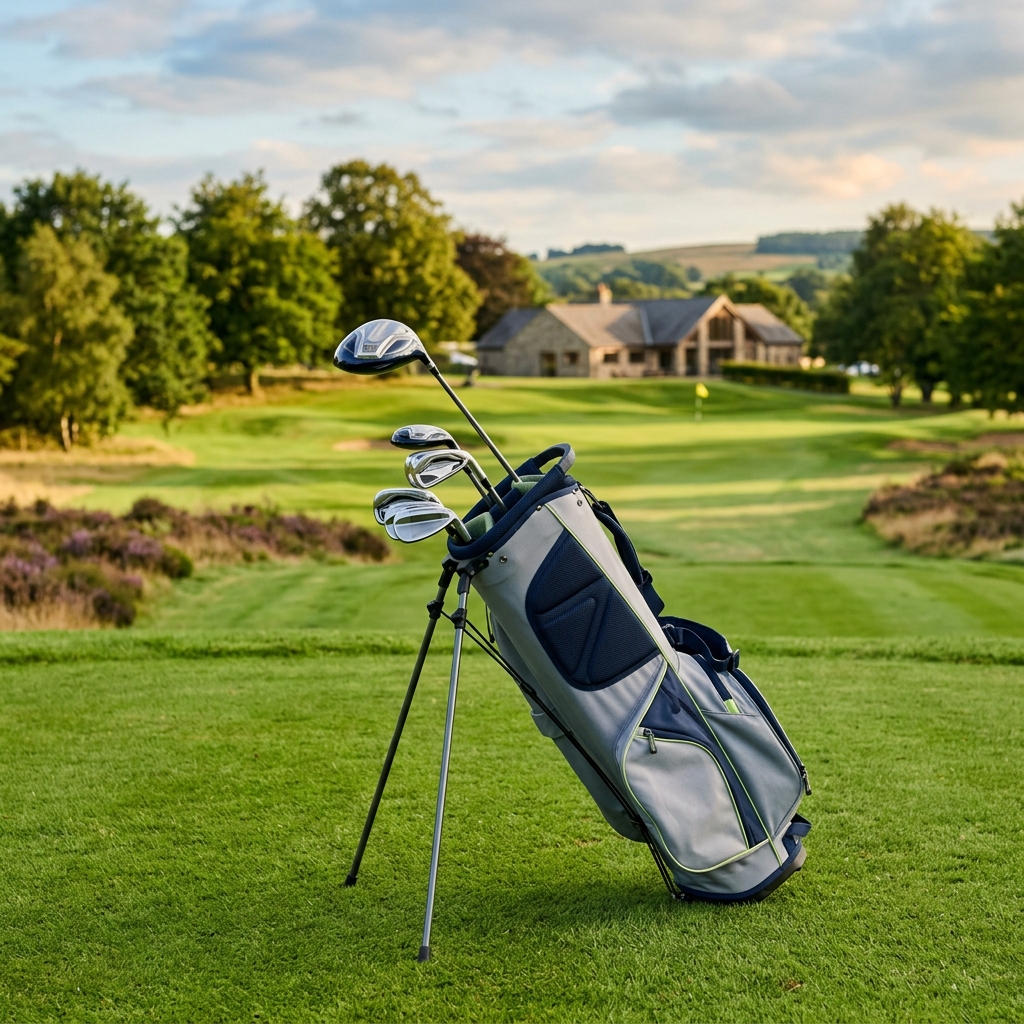
The Team TaylorMade Junior Sets list three height bands: 42–47, 48–53 and 54–59 inches. The corresponding sets contain four, five and seven clubs. The smallest configuration includes a fairway wood; do not assume every box contains a driver just because a larger set photograph shows one. Use the contents and sizing information for the selected option.
This is a useful package to compare when you want a coordinated junior setup with a clear size structure. Its limitation is the same as any fixed package: the supplied mix may include a club the child is not ready to use, or omit something their coach wants them to practise. Confirm the hand and UK delivery destination. TaylorMade pages can change regional storefront, so check the final retailer and selected variant before payment.
U.S. Kids: another height-led route
The U.S. Kids Golf Ultralight overview describes several club-count configurations depending on player height. It provides another structured route to discuss with a junior coach or stockist. Use the brand's current size guide to identify the starting range, then compare the actual clubs needed. A photograph of an extensive set does not mean every size is supplied with the same equipment.
These options should be compared by fit and usefulness rather than by the largest number of pieces. If the child currently practises putting and short shots, a smaller selection may cover the immediate lessons. If they play longer holes and can distinguish more distances, a larger selection may make sense. Ask what can be added later and whether the matching individual club remains available in the correct size.
Make carrying and choosing clubs straightforward
Put the actual clubs into the bag when checking the straps and balance. A bag that looks light when empty may feel quite different loaded with balls, a drink and a jacket. If an adult will carry it at first, still consider whether the child can lift and move it sensibly during a lesson. Check that the clubs can be removed without excessive tugging or tangling.
Give each club a clear purpose in early practice. For example, the putter is for learning roll and pace, while a short iron can be used for a small airborne shot. Let the coach introduce additional choices when they help the child learn. Buying every available club before the child understands those differences can make a simple practice task unnecessarily complicated.
Plan growth without guessing future fit
Keep a note of the size, height measurement and date of purchase. Revisit the fit when the child has grown or the coach notices a change in setup. There is no need to replace equipment simply because another child uses a larger set. Equally, an apparently serviceable club may no longer suit a child who is bending or reaching to accommodate it.
For used junior equipment, inspect the grips, shafts and set completeness and ask whether any clubs have been cut down or altered. A size label only tells you the original configuration. Before buying, check hand, current height band, contents, bag and return arrangements. A fitting-led purchase and a manageable first session give the child a more useful start than choosing the package with the boldest graphics.
For the questions to take to a fitting appointment, use our golf club fitting guide alongside the junior brand’s own height and system guidance.