
Last updated:
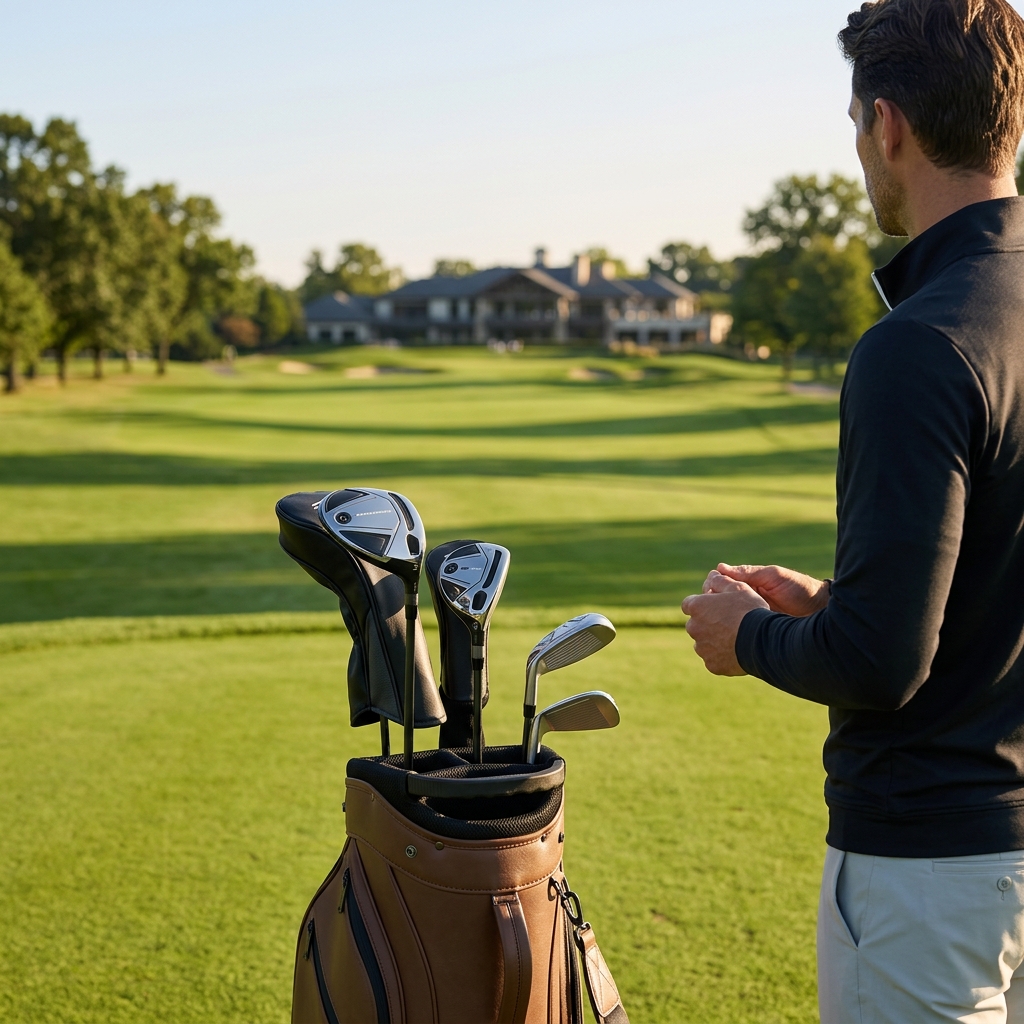
A 7-wood can be an attractive long-approach option, while a 4-hybrid may offer a more compact-looking alternative. They are not necessarily loft-matched, and either can overlap another club in your bag. Begin with the carry and landing flight you need, then compare the actual models from representative lies rather than assuming a 7-wood replaces a 4-iron or 4-hybrid by definition.
Link disclosure: The manufacturer and retailer links in this guide are direct information links. We have not added affiliate tracking to them.
Guide checked: 8 September 2026. This guide uses the linked manufacturer and retailer information. We have not carried out hands-on product testing. Specifications describe the identified models; confirm the selected variant before ordering.
| Question | Useful evidence | Why it matters |
|---|---|---|
| Are the lofts comparable? | Manufacturer specification and sleeve setting | Numbers do not establish equivalence |
| Can I make reliable contact? | Normal strike sample from the ground | Potential flight needs usable delivery |
| Will it hold the intended target? | Carry and landing behaviour | Long approaches need more than total distance |
| Does it fit the bag? | Distances of adjacent clubs | Avoid an expensive duplicate role |
Table of Contents
Read the loft rather than the replacement label
In the documented TaylorMade Qi4D range, the 7-wood is listed at 21 degrees. The PING G440 4-hybrid reference is 23 degrees. That two-degree difference is a reminder to compare actual specifications; the clubs also have different head shapes and playing lengths. Other models can create a different comparison again.
Write down the complete build before testing, including any adjustment. A used hybrid or fairway may have a shortened shaft or a different sleeve setting from the stock reference. Matching the loft more closely does not guarantee equal carry, but it makes the test easier to interpret. Ask the fitter which specifications are being compared and why they suit the intended role.
Set an approach task that reflects your course
Choose a target distance and describe the landing requirement. You may need to carry a front bunker, reach a shallow green or advance safely to a broad lay-up area. These are different tasks. A high flight is useful only when its ordinary distance and landing pattern suit the target; an attractive trajectory alone does not establish the better club.
Keep the ball consistent and compare several ordinary shots. Record where the ball lands separately from where it finishes. If the test is indoors, ask how landing and rollout are calculated. A club's simulator total on a firm surface should not be treated as the same thing as predictable stopping on the soft or sloping greens you actually play.
Compare how the two builds meet the ball
A fairway wood's larger footprint and longer build can feel quite different from a hybrid at address. View both behind the ball, then assess contact from the ground. Do not assume that the head you prefer visually will produce the more repeatable strike. Keep ordinary thin, heel or toe contacts in the evaluation when they resemble your real play.
Try suitable light-rough lies where the facility allows, while keeping expectations realistic. A hybrid is not a guarantee of success from heavy grass, and a 7-wood is not limited to one perfect lie. The purpose is to understand the actual options in your hands. Let the lie and required shot determine when the club is used rather than using its category as a fixed instruction.
Check the overlap above your irons
Include the longest iron and your current hybrid or fairway in the comparison. A 4-hybrid can duplicate a longer iron in one set, while a 7-wood can sit close to an existing 3-hybrid. Those overlaps are not visible from the club numbers alone. Record normal carries and decide which club would leave the bag if the new one is bought.
If both candidates provide similar distance but different flights, consider how often each role occurs. Carrying two specialised options can make sense, but it uses a slot that might solve a larger gap elsewhere. Avoid building the bag around rare ideal shots while the common approach distance remains awkward. The final choice should reflect the course and situations you face most often.
Choose the configuration you can reproduce
Keep the chosen head, loft, sleeve setting, shaft and playing length in writing. Recheck a delivered club against that specification, especially after custom ordering or buying the demo itself. Inspect a pre-owned head and adapter for condition, and account for any grip or fitting work in the cost. A successful test loses value if the purchased build is materially different.
The custom fitting guide explains how to prepare the appointment. Choose a 7-wood or 4-hybrid because it produces a useful approach option with acceptable misses. We have not tested these products against each other, and neither club number promises a universal replacement distance. The relevant evidence is the complete specification and the result of the task you set.